
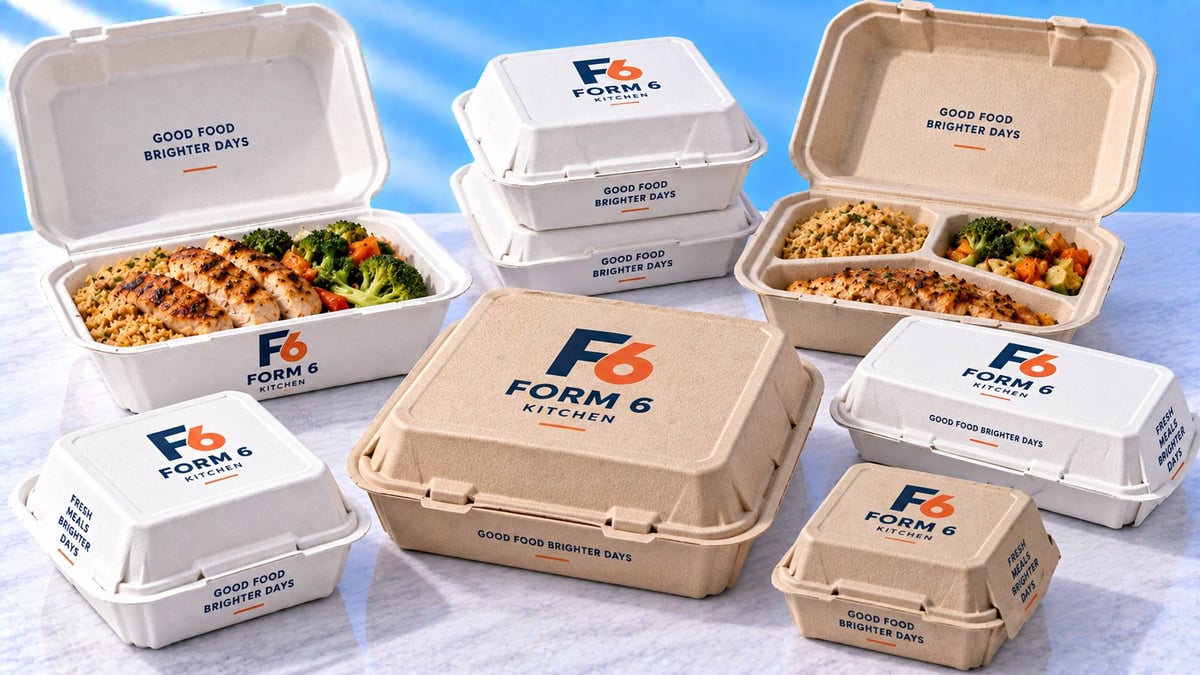
Custom Sugarcane Clamshells
Composed plates that need to arrive intact, single or multi-compartment.
View & Configure →Packaging chosen for the journey: containers and closures that survive being bagged, stacked and carried, for businesses whose food is eaten somewhere else.
Takeout and delivery packaging is the only collection defined entirely by the journey rather than by the food or the business. The customer is not in the room, the packaging is the only thing representing you at the point the food is opened, and anything that fails has already failed before you hear about it.
That reframes the whole decision. A container that looks right on the pass is not the same as one that arrives intact. Closures have to hold under movement, bases have to stay rigid when lifted, and components have to stay separated when a bag is set down at an angle. Delivery is where weak packaging fails visibly and in front of the customer.
This collection is for restaurants, ghost kitchens, food trucks and any operation where most of the food leaves the building. It is organized around the two things that decide delivery packaging: holding the food, and surviving the trip.
A lid that seats correctly on a counter can still lift under vibration and tilt in a bag. This is the single most common delivery failure and it is a function of the closure and the base, not of how carefully the order was packed. It is why we ask how the order travels before recommending a container.
Sauces, dressings and anything with liquid will find the lowest point of a container in a tilted bag. Compartment count and closure are what contain it, and a dish served with a sauce needs those components separated rather than pooled together on arrival.
Hot food in a sealed container steams and softens anything crisp; cold food in a closed bag warms. Neither can be fully solved by packaging, but the material and whether a container vents changes how the food arrives, and it is worth telling us what the dish is.
Delivery bags carry more than a counter handoff: several containers, a drink, and whatever else is in the order. Load is the constraint, and a bag chosen for counter service can be the wrong choice for a stacked delivery.
In takeout and delivery, the packaging is the experience. There is no room, no table, no server, and no atmosphere. A printed bag, a labelled container and a branded napkin are what stands in for all of it, and that makes takeout packaging a marketing decision as much as a practical one.
A delivery order typically needs a container, a bag, a napkin and often a label, which sit across several product families. Sourcing them separately multiplies suppliers and delivery days for something that goes out the door as one package.
Containers and closures first, then the bags and counter items that complete a delivery order. Each card opens the product page to configure size and print.
Composed plates that need to arrive intact, single or multi-compartment.
View & Configure →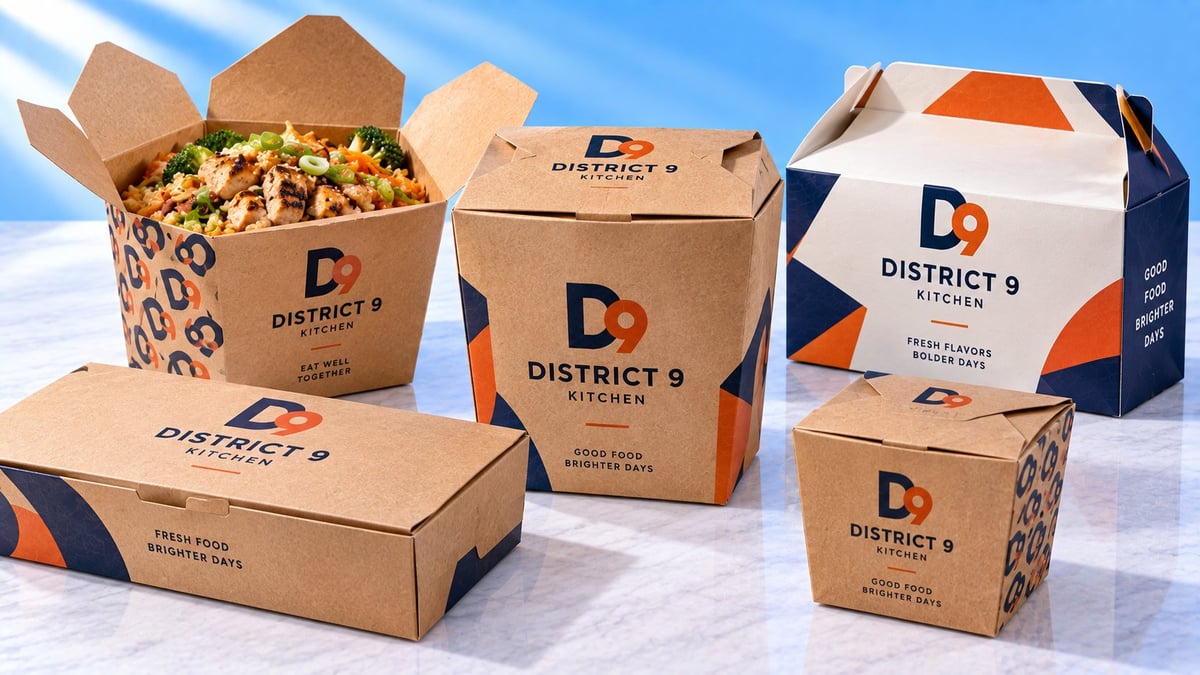
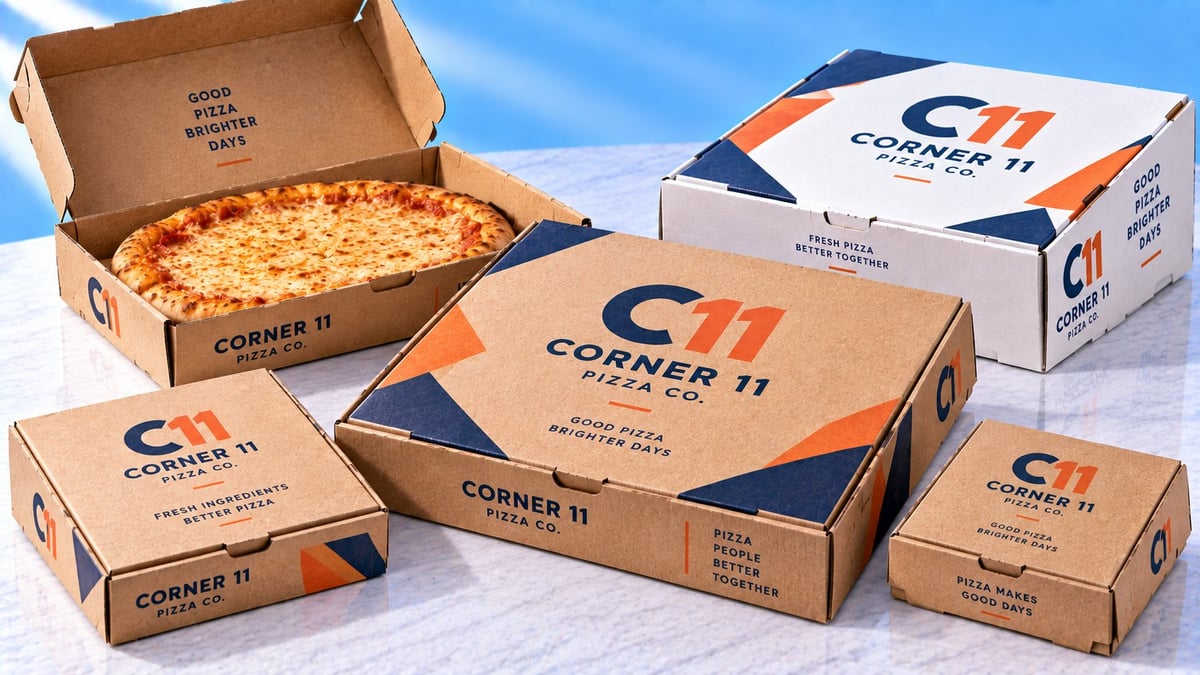
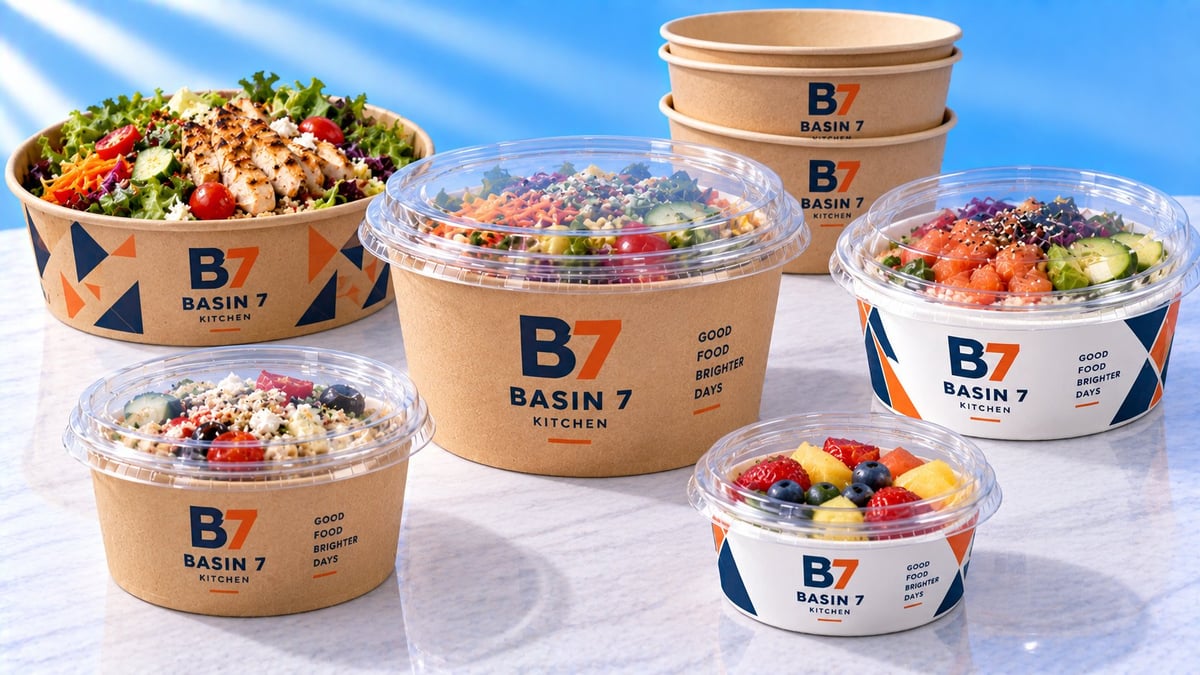
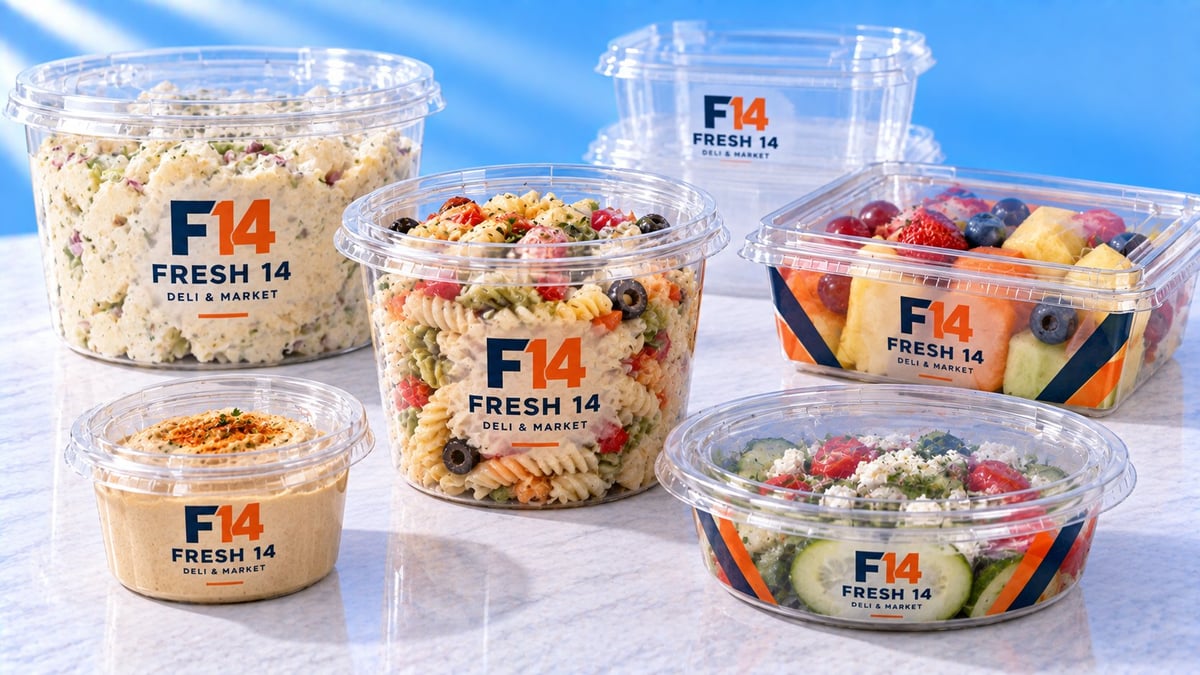
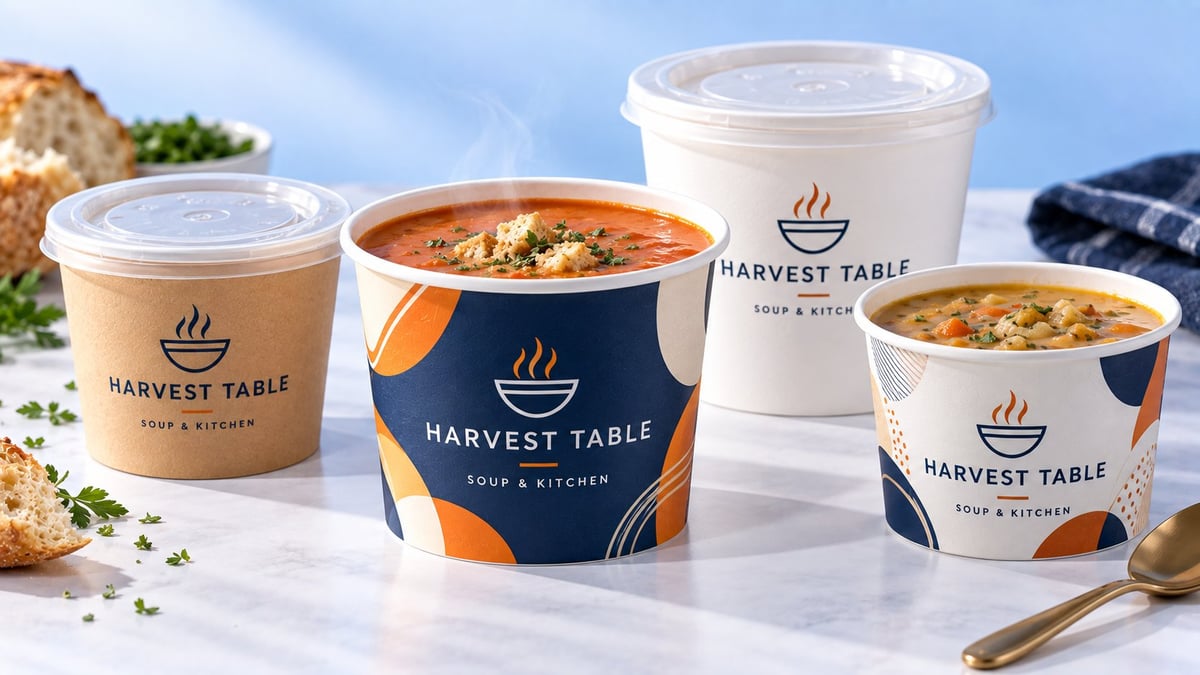
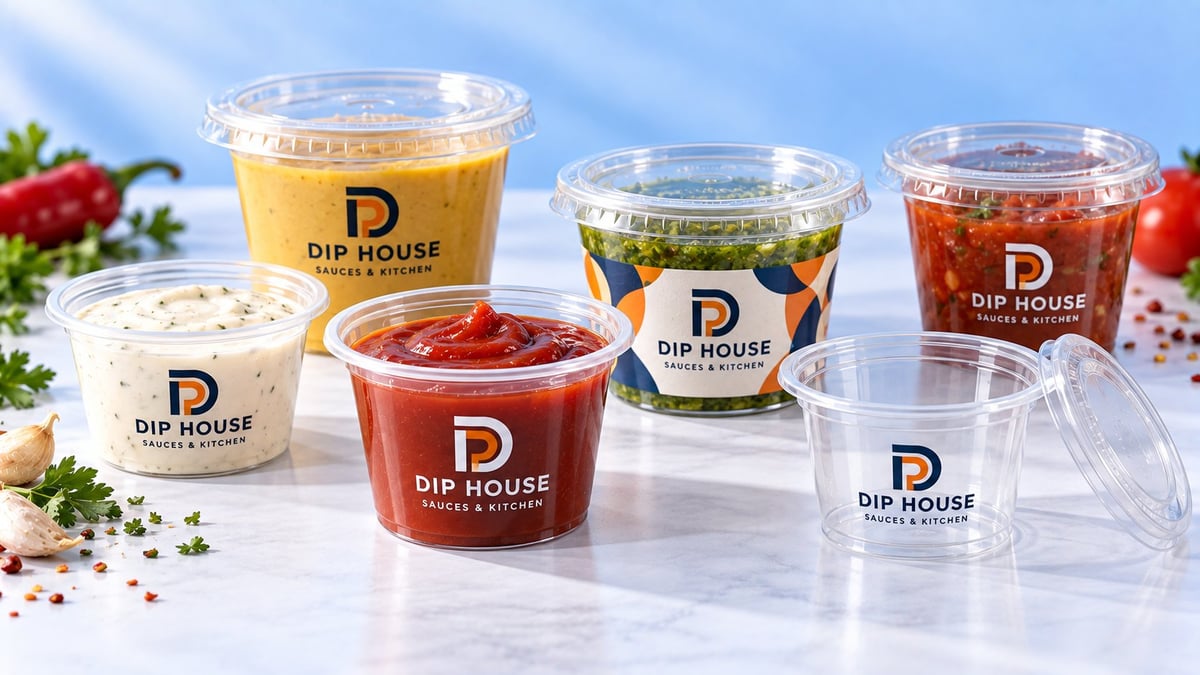
Sauces and dips that should travel apart from the food.
View & Configure →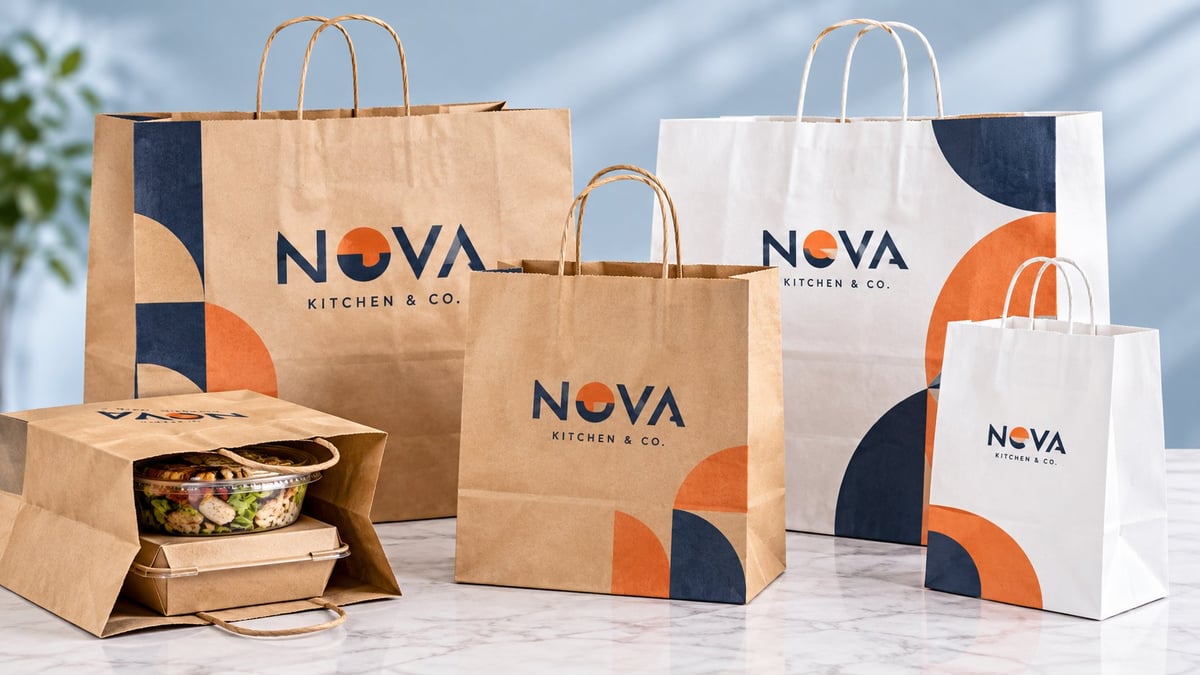
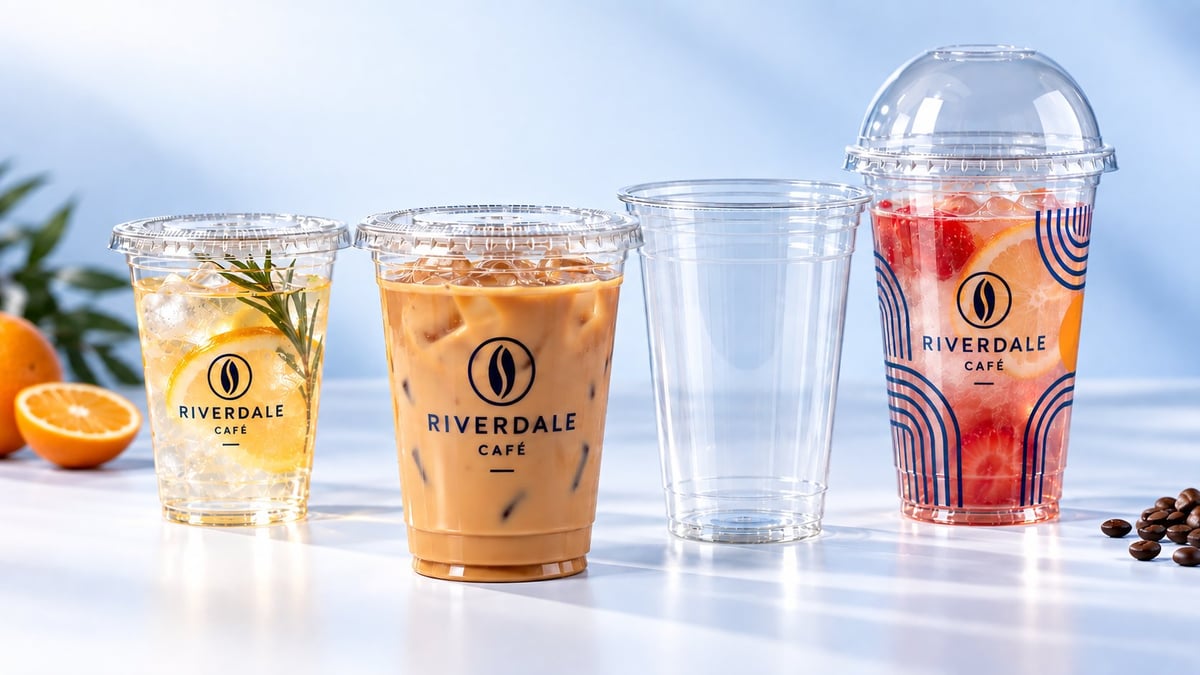
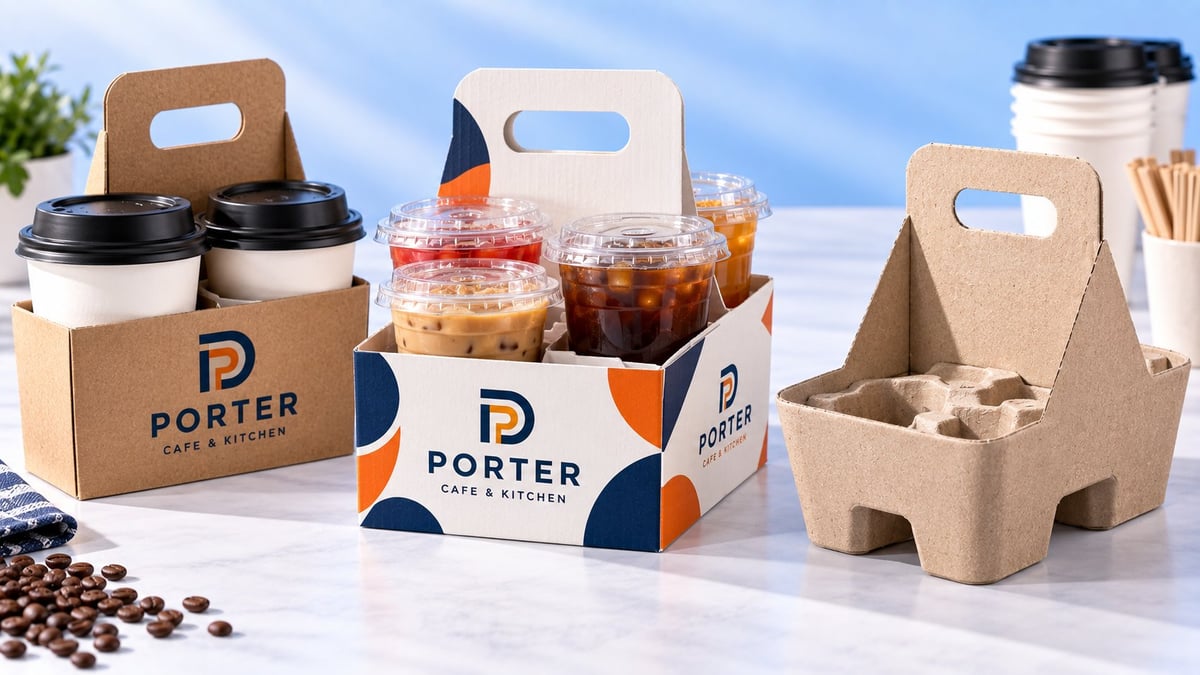
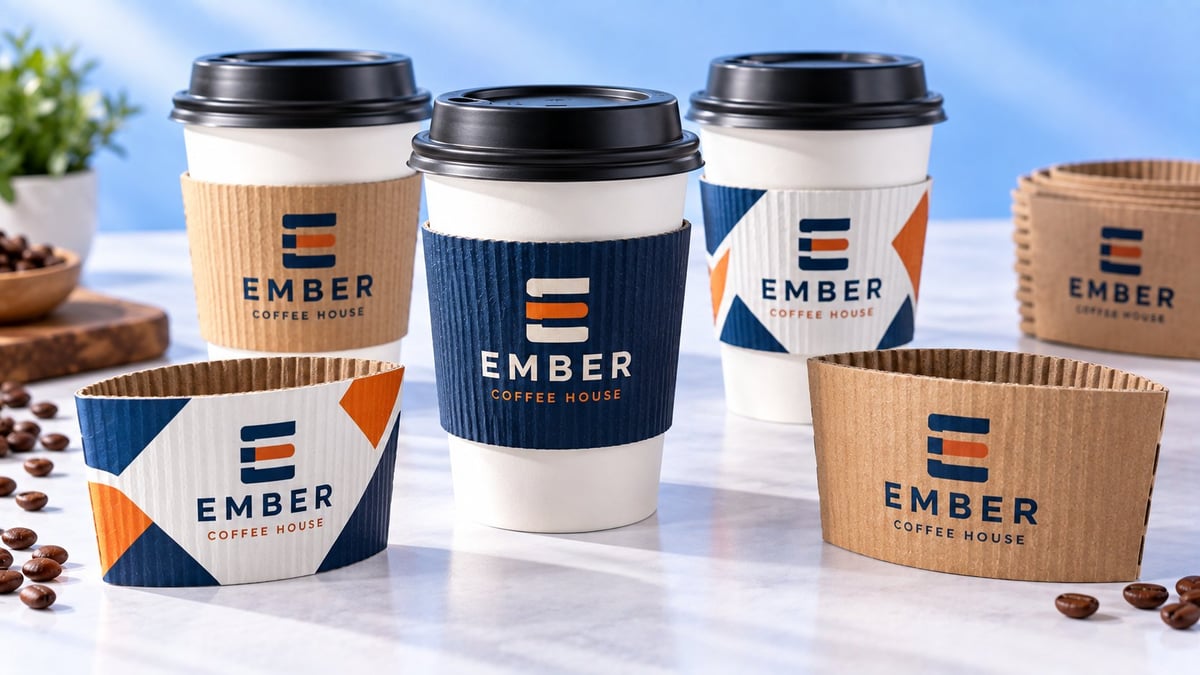
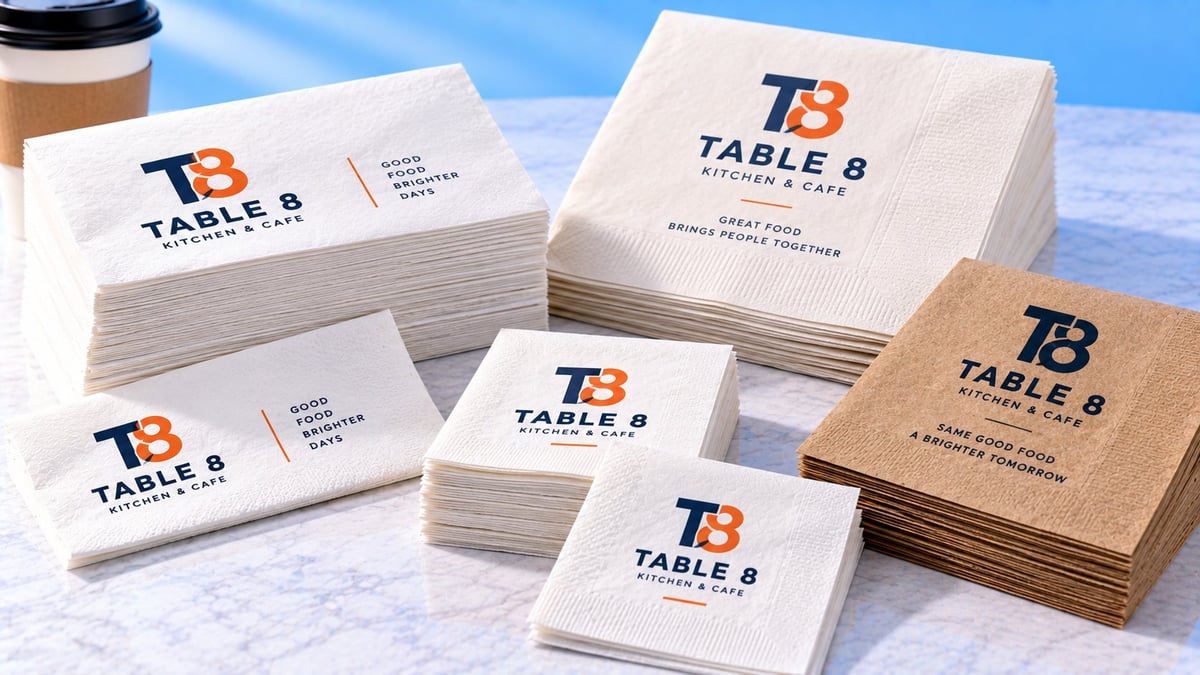
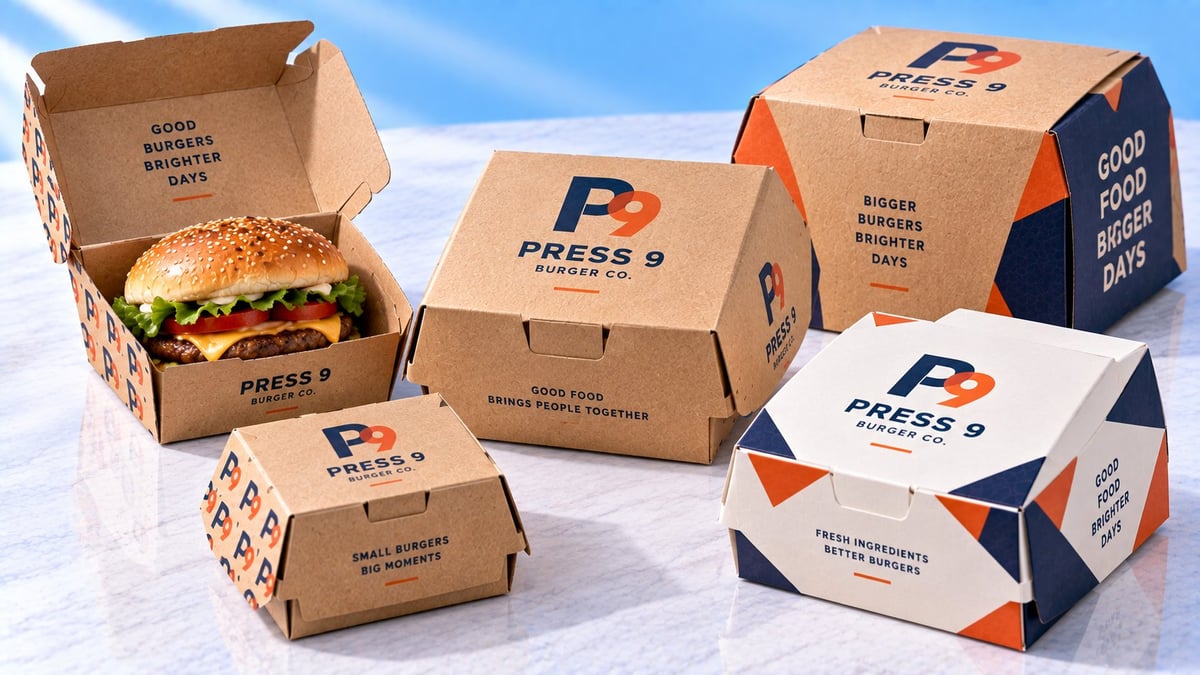
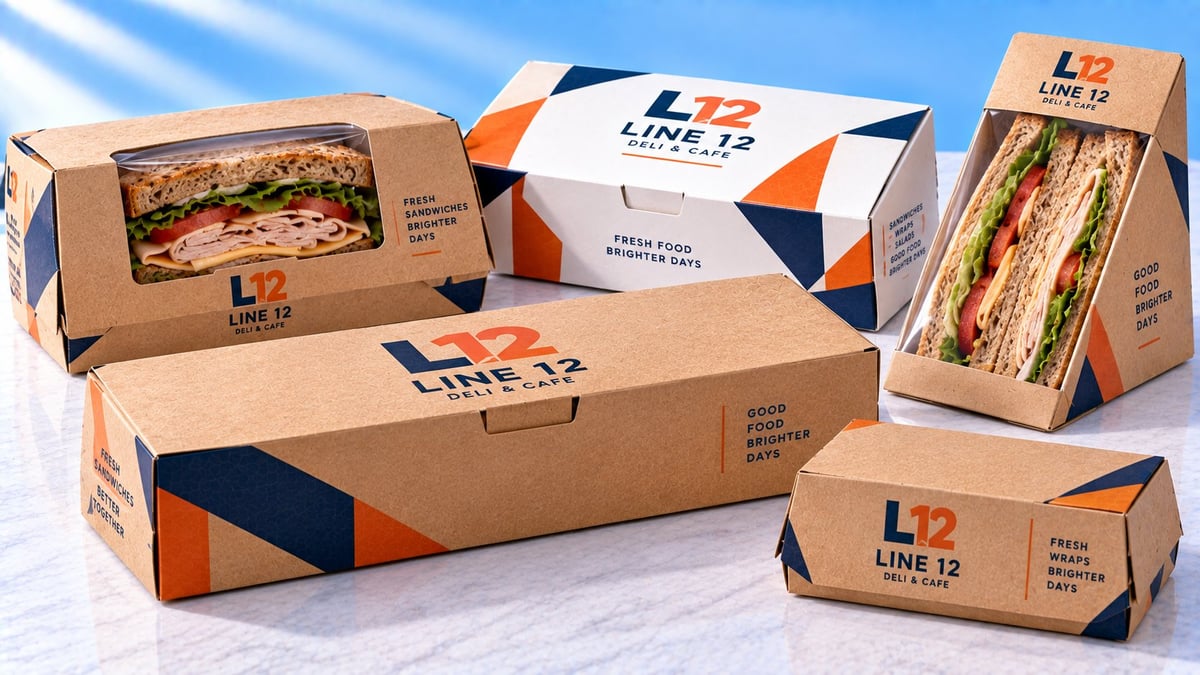
This is the decision everything else depends on. What matters is not how the container looks but whether it holds under movement: a closure that seats, a base that stays rigid when lifted, and a format that matches what the dish is. Clamshells suit composed plates, boxes suit burgers and hot sandwiches, bowls suit anything with a sauce or a grain base.
Anything served with a sauce, a side or a garnish arrives as one mixed dish unless the container separates them. Compartment count is decided by the menu, and portion cups handle sauces that need to travel separately rather than sit on the food.
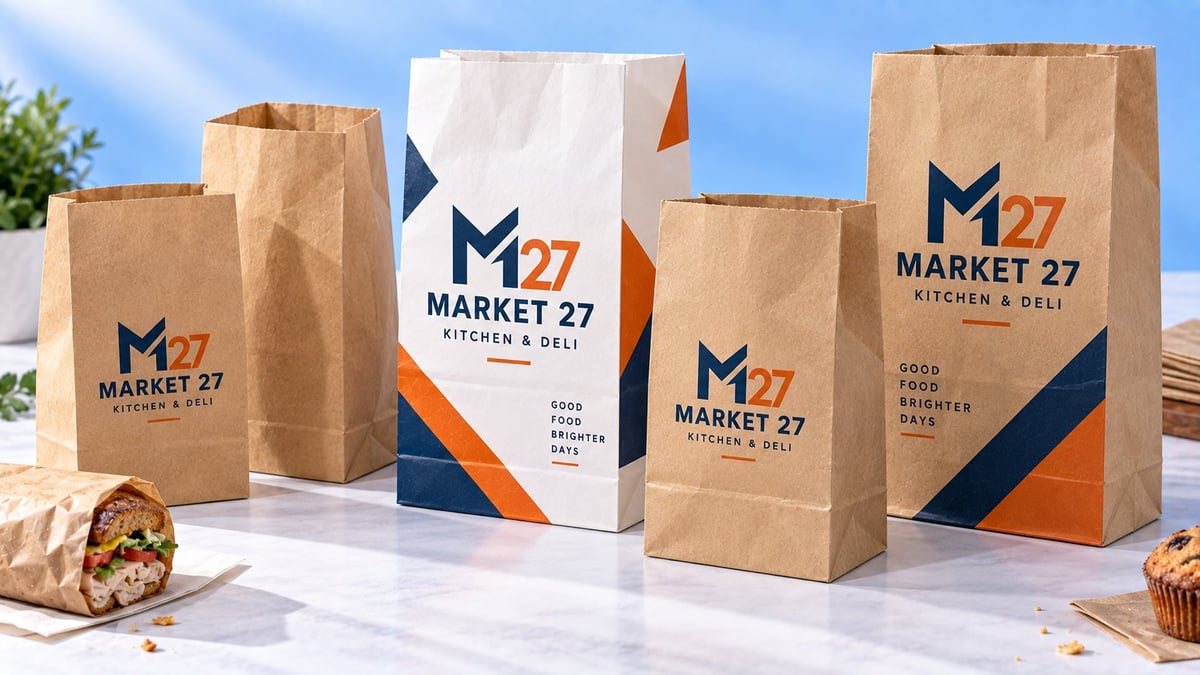
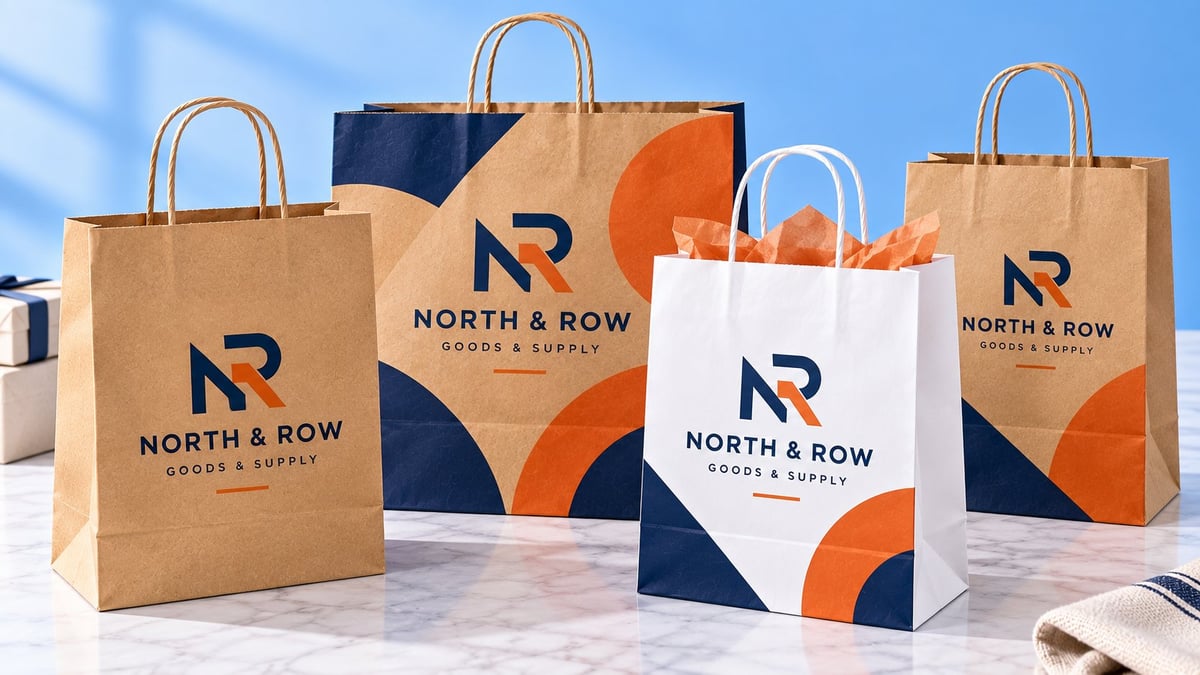
The bag is what survives the trip and the last thing the customer handles. Takeout and SOS bags carry the load, and the printed bag is the highest-visibility branded item in a delivery order because it is seen in public on the way to the door.
A drink in a delivery bag is the hardest item to get right, because it cannot be kept upright for the whole journey. The lid matters more than the cup here, and a carrier keeps a multi-drink order from moving around inside the bag.
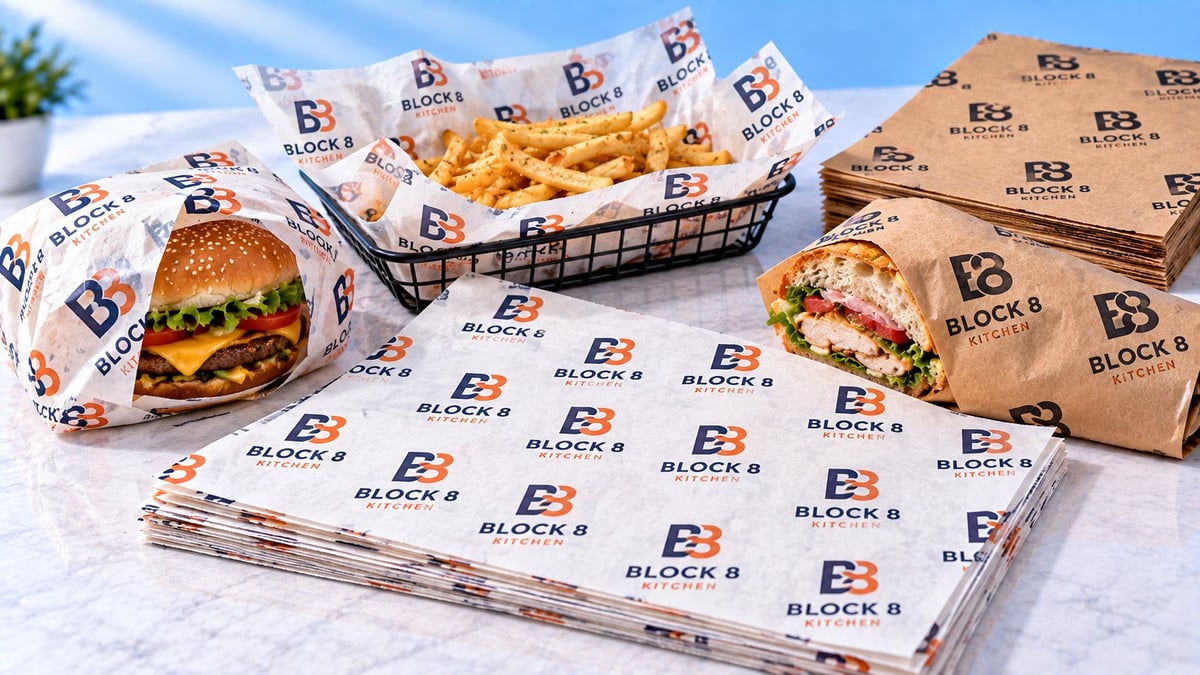
With no table and no server, these are what the customer actually interacts with when the order is opened. A branded napkin, a wrap that presents the food, and a label carrying the order details are what make a delivery order feel like it came from somewhere specific.
Tell us how the order travels before we recommend a container. Bike, car, and a customer walking out with it are three different loads, and the closure and base that suit one may not suit another. This is the question that most changes what we would specify.
Order the whole delivery package together. A delivery order needs a container, a bag and counter items, and quoting them as one order shares the artwork setup and the freight and gives you one delivery instead of three.
If you are testing a new dish for delivery, tell us at the quote stage. Some dishes need a different container once you account for the journey, and it is far cheaper to find that out at mockup stage than after a run.
It is a function of the closure and the container base rather than of packing care, so it is decided at specification. Tell us the dish and how it travels and we will recommend a container and closure that hold under movement.
Something that keeps the components apart. A multi-compartment container, or a portion cup for the sauce to travel separately. Pooling on arrival is the thing to avoid.
Yes, and that is the point of this collection. Containers, bags, drinks and counter items are quoted as one order so you get one delivery and one point of contact.
No packaging solves temperature entirely. The material and whether a container vents affect how food arrives, so tell us what the dish is and we will account for it rather than promise a result we cannot control.
It usually should be. A container chosen for a pass is not automatically right for a bag, because the load and the movement are different. If you run both, tell us and we will specify for each.
Tell us what is on the menu, how the order travels, and how many components sit in a typical delivery. We will match the containers and closures to the trip and prepare a digital mockup and pricing.
Free digital mockup. Nationwide delivery from YaSeen WholeSale.