
Pouches and Retail Food
Custom Printed Pouches for Your Products
Custom printed pouches for food and product brands, produced around the construction, size, branding and functional configuration your product needs. Tell us what you are packaging and we will work out the format around it.
No obligation, and a free digital mockup before anything is manufactured.
- Free Digital Mockup
- Custom Configurations
- Nationwide Delivery
Three ways to build a pouch
- 1Stand-up pouchPresents a tall front panel and holds its own shape on the shelf, which gives the brand and product name a clear vertical space to work in.
- 2Flat-bottom pouchKeeps a broader, more stable footprint and a wider printable face, which suits detailed front-panel design and heavier fills.
- 3Flat pouchTakes up little depth and stores efficiently, which helps when the pack is displayed in a container rather than left free-standing.
The construction decides how the pack sits on a shelf, so it is usually the first choice to settle.
Find the right custom pouch
Choosing a pouch starts with what goes inside it. Find the situation closest to yours and start there.
It needs to stand on a shelf
Shelf-ready pouch
A pouch that holds itself upright and presents a face to the shopper, for products sold from a shelf rather than handed over.
Stand-up pouchesIt needs a premium shelf presence
Structured presentation
A wider, more structured base that keeps its shape on the shelf and carries a larger printable front panel.
Flat-bottom pouchesIt is flat, small or a sample
Compact or flat pouch
A simple sealed pouch for flatter items, single servings, sample packs and products merchandised in a tray or hung on a peg.
Flat pouchesI package coffee
Coffee packaging
Formats sized and optioned around how coffee is bought, packed and stored, including whether the pack needs to let gas out.
Coffee bagsI package tea or spices
Tea and spice packaging
Smaller formats for loose leaf, blends, ground spices and seasonings, where portion size and labelling carry more weight.
Tea packagingI package snacks, nuts or frozen food
Food product pouches
Formats for granola, nuts, confectionery, snack items and frozen products, where how the product packs decides the size.
Compare food formatsWhat are you packaging?
Every product category brings its own decisions. Find yours and the questions that matter for it are listed with it.
Coffee
Coffee packaging is selected around the roast, the amount sold in one pack, the freshness the product needs and how customers will use the package after opening.
Decisions that matter
- Whether the pack should let gas escape after roasting
- Portion size, from a single brew to a bulk bag
- Whether it reseals for a customer using it over weeks
- How the roast date and origin information fit the panel
Tea
Tea covers loose leaf, blends and bagged formats, and the amount sold at once is usually smaller than coffee. Portion size tends to settle the format before anything else.
Decisions that matter
- How much is sold in one pack, from a sampler to a bulk pouch
- Whether the leaf or blend should be visible through the pack
- Whether the pouch reseals between uses
- How the blend name and ingredient information are laid out
Spices and seasonings
Spices are dense by weight and often sold in small quantities, so a pouch that suits the weight can still look too large or too small on the shelf.
Decisions that matter
- The actual fill weight against the pouch footprint
- Whether the product is ground, whole or a blended rub
- Whether the pack reseals, since a little is used at a time
- How the front panel carries the product name and heat or ingredient detail
Snacks
Snack items range from light and bulky to dense and flat, and that difference matters more than the weight on the label when the pouch is sized.
Decisions that matter
- How the product settles inside the pouch once filled
- Whether it is eaten in one sitting or over several
- Whether the product should be visible before opening
- How the pack behaves in a display box, a clip strip or on a shelf
Nuts
Nuts are dense, so a modest weight takes up less room than the same weight of a lighter product. Working from weight alone usually undersizes the pouch.
Decisions that matter
- The fill weight against how the nuts actually pack
- Whether the pouch reseals after opening
- Whether the contents should be seen through a window
- How the pack stands and holds its shape once opened
Granola and cereal
Granola is light and bulky and settles as it is filled, so the pouch is often larger than the weight alone suggests it needs to be.
Decisions that matter
- The volume the product occupies rather than only its weight
- Whether the pouch needs a wide enough opening to fill and pour
- Whether it reseals between servings
- How the pack sits in a breakfast or health-food shelf set
Candy and confectionery
Confectionery is sold by count as often as by weight, and the count per pack usually decides the size before the weight does.
Decisions that matter
- How many pieces go in one pack
- Whether the product should be visible through the pack
- Whether the pack is a single serving or a share format
- How the pouch sits in a counter display or a pick-and-mix set
Frozen foods
Frozen products are usually packed before freezing, so the fill step and how the pack behaves cold are part of choosing the format rather than an afterthought.
Decisions that matter
- How the product is filled and sealed before it goes into the freezer
- How the pack is stored once frozen and how it stands there
- Whether the pack reseals for a product used over several meals
- How the pack is labelled for storage and cooking information
Other packaged products
If your product is not on this list, that does not put it outside the family. The same questions settle the format, and the starting point is the product itself rather than a category.
Decisions that matter
- What the product is and how it behaves once packed
- The quantity sold in one pack
- Whether it should be visible to the customer
- How it is filled, sealed and then stored
The pouch collection
Explore 11 custom pouch options, each with its own product page covering configuration, printing and ordering.
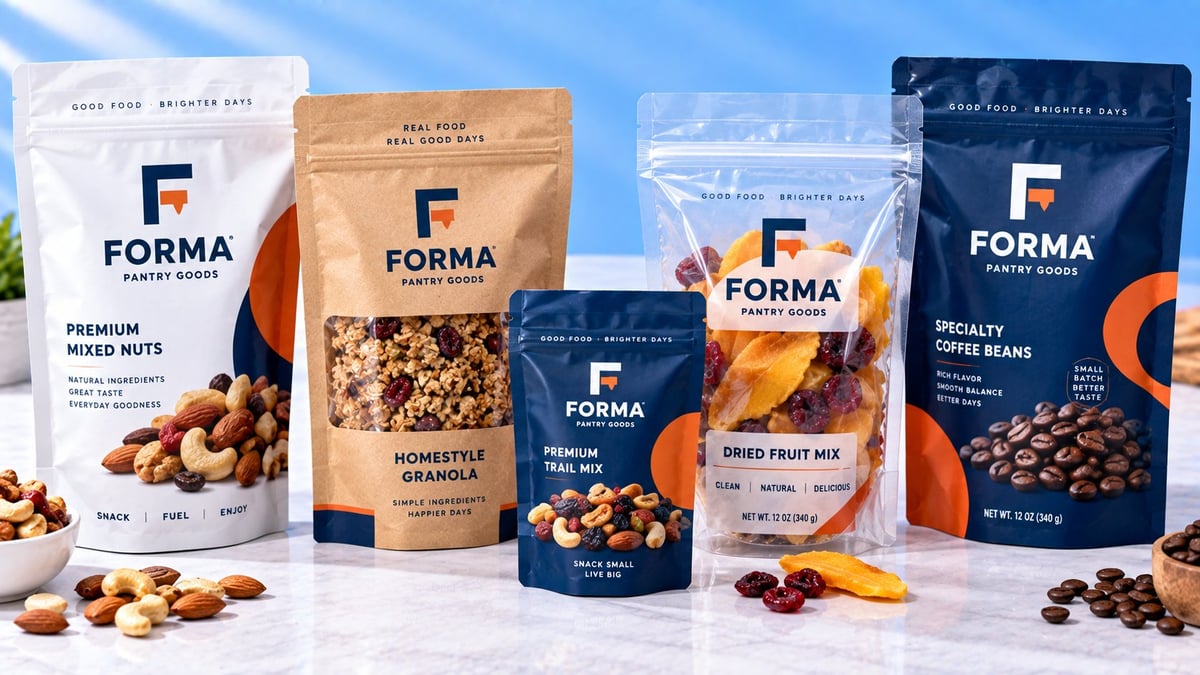
Custom Stand-Up Pouches
Self-standing flexible pouches for retail shelf display.
View & Configure →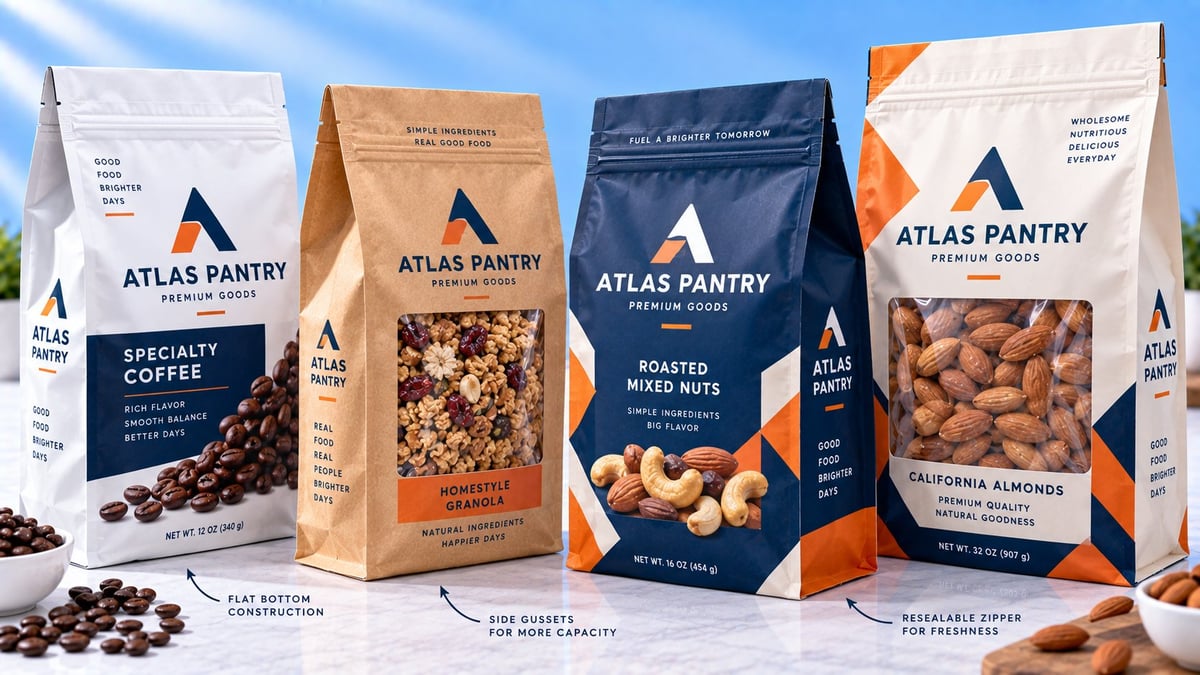
Custom Flat-Bottom Pouches
Flat-bottom pouches that hold their shape on the shelf.
View & Configure →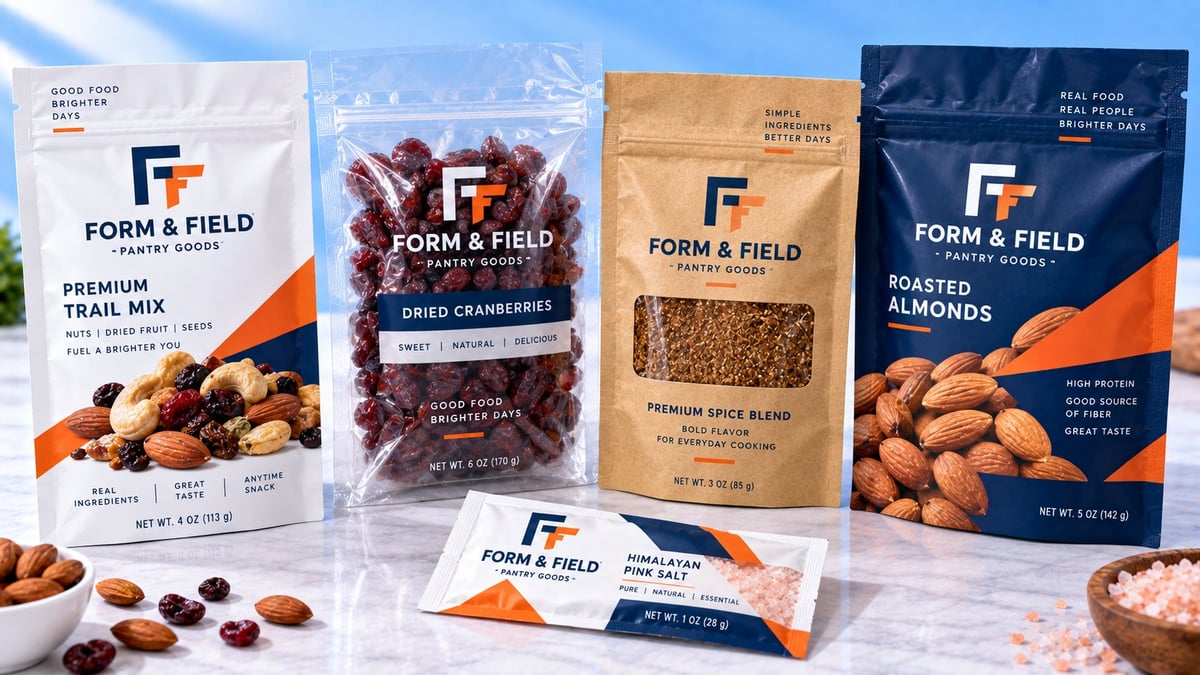
Custom Flat Pouches
Three-side-seal pouches for compact retail packaging.
View & Configure →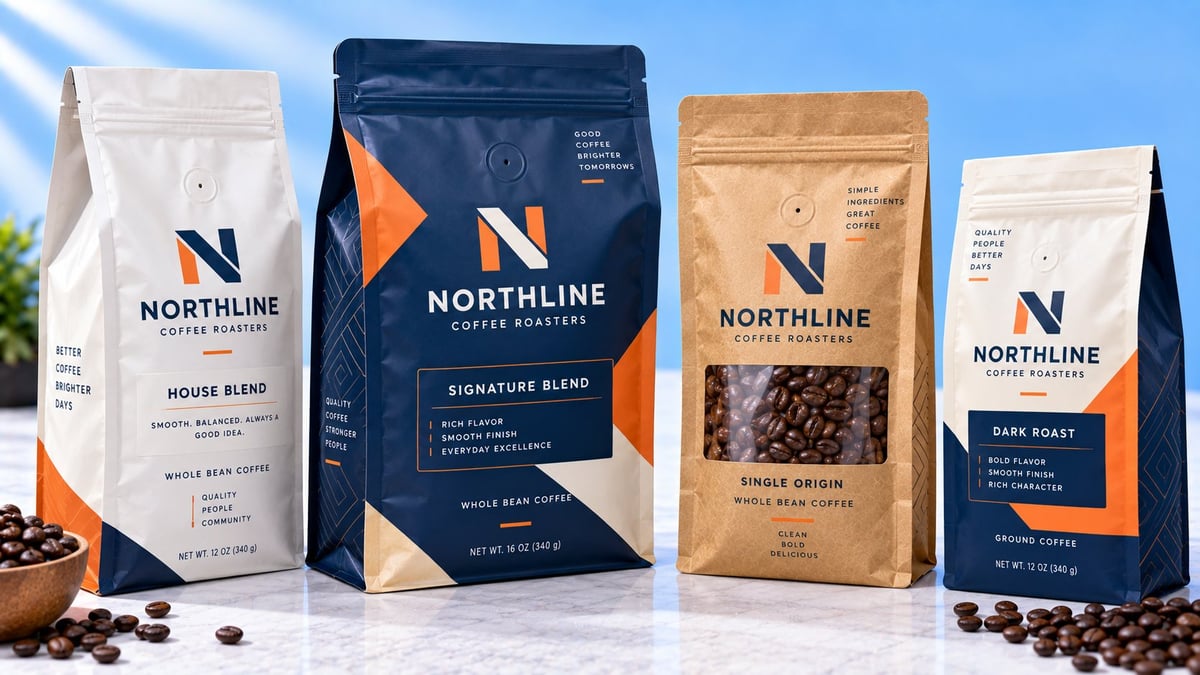
Custom Coffee Bags
Valve and zipper coffee bags for roasters and cafés.
View & Configure →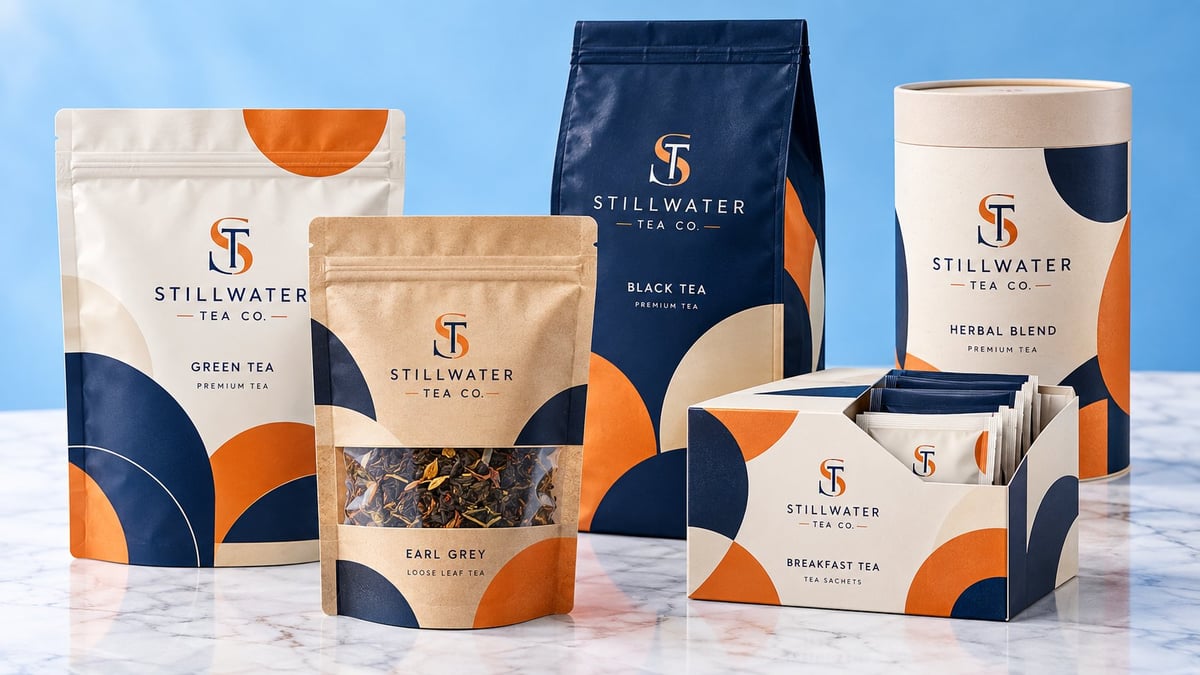
Custom Tea Packaging
Pouches and cartons for loose-leaf and tea brands.
View & Configure →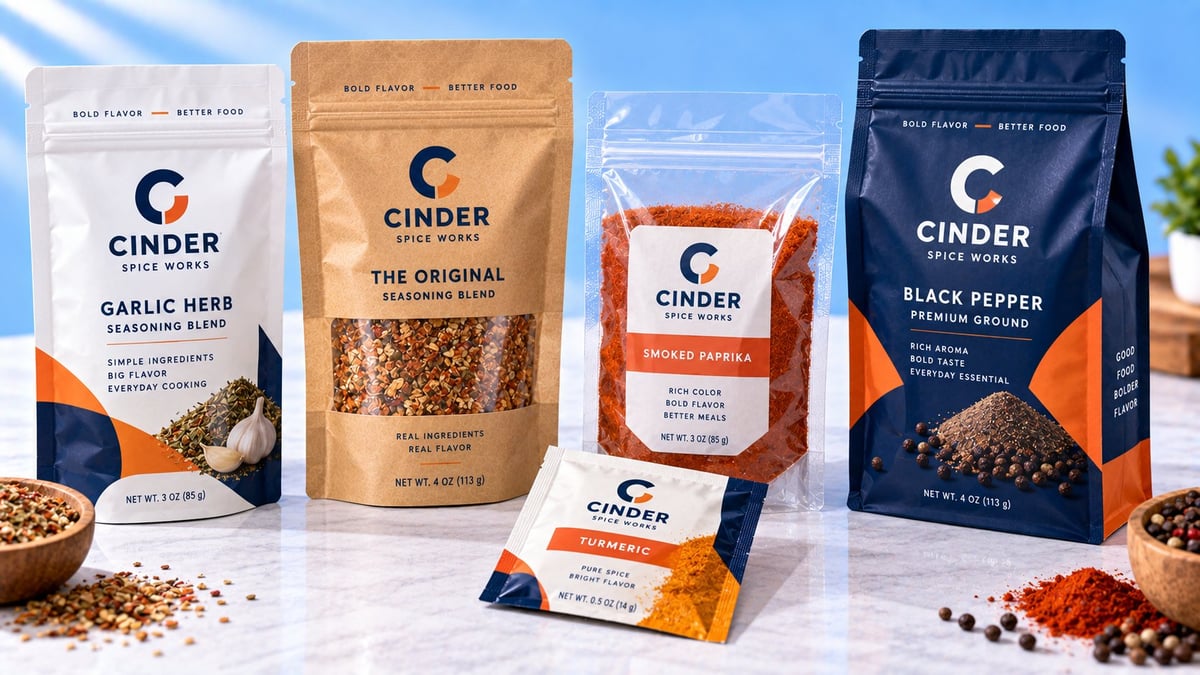
Custom Spice Packaging
Pouches and jars for spices, blends, and seasonings.
View & Configure →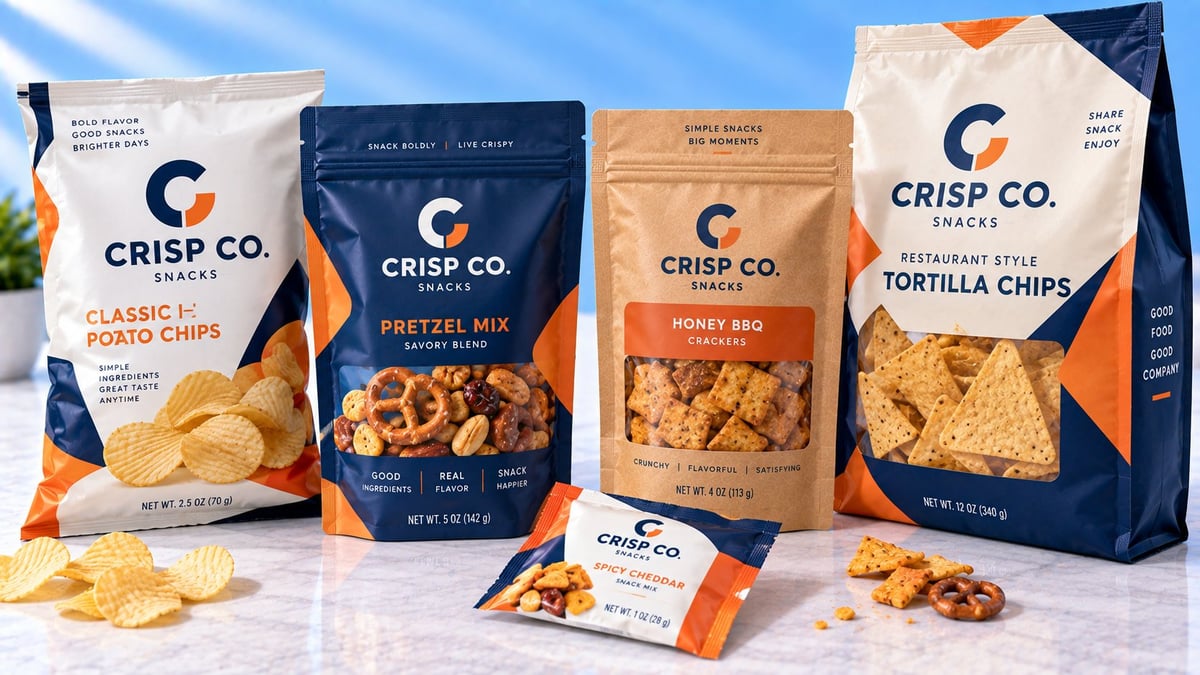
Custom Snack Pouches
Pouches for snacks, chips, and grab-bag retail lines.
View & Configure →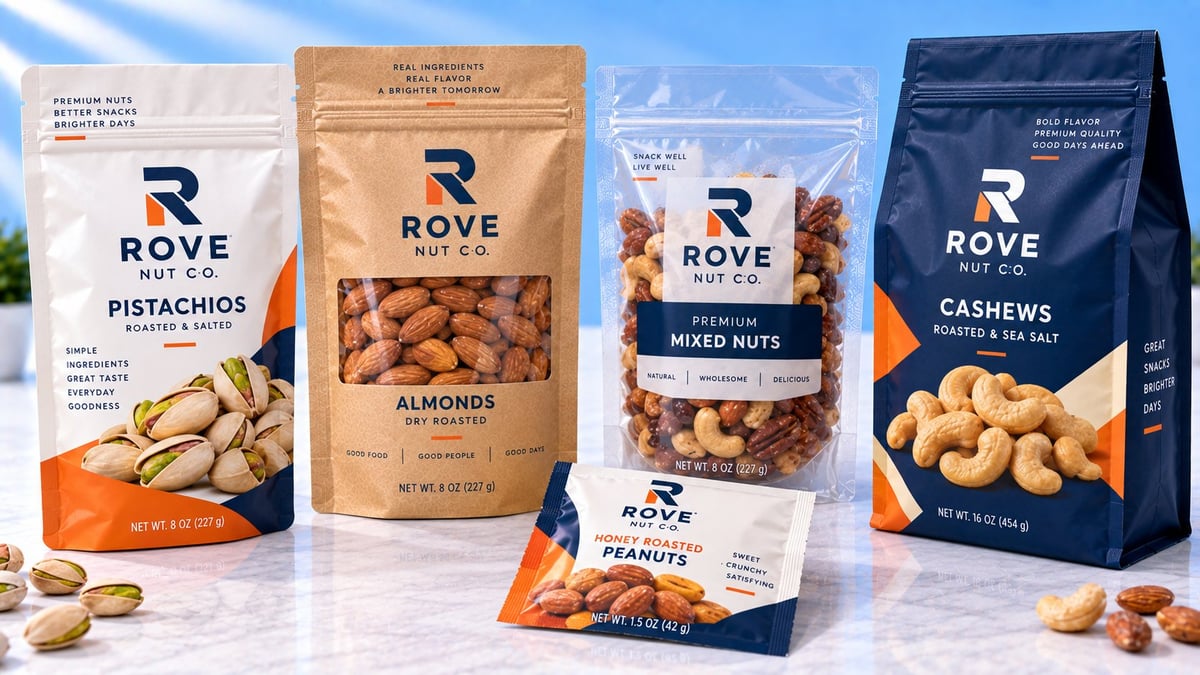
Custom Nut Pouches
Pouches for nuts, trail mix, and dried goods.
View & Configure →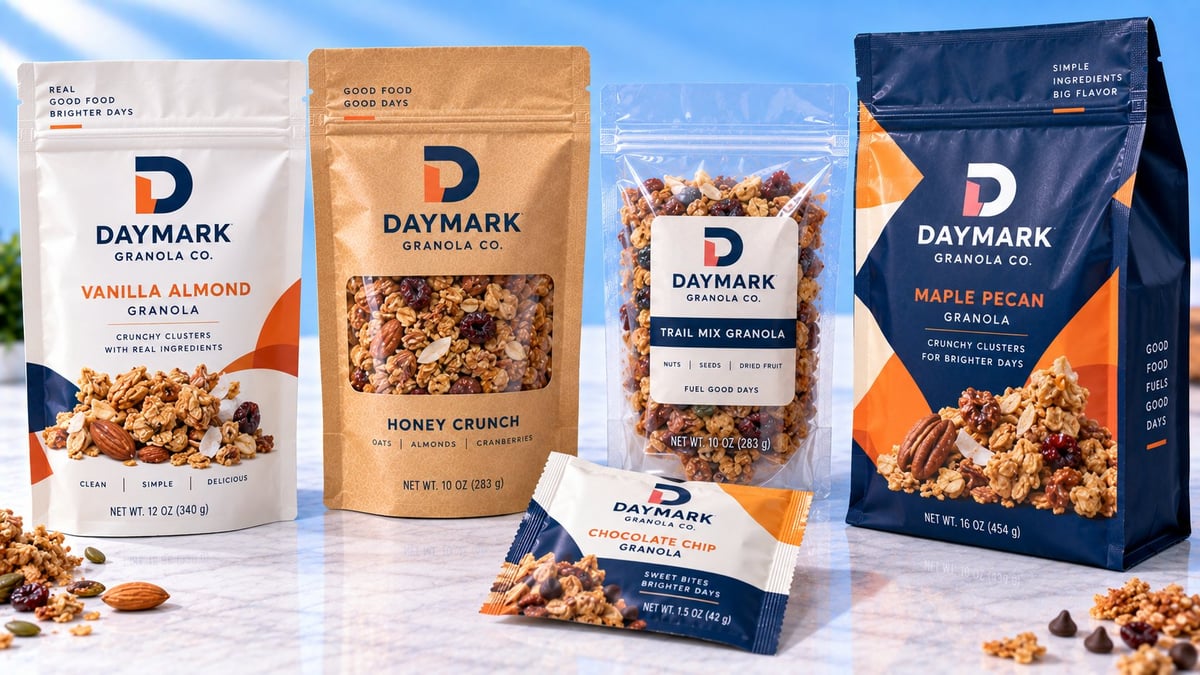
Custom Granola Pouches
Pouches for granola, muesli, and breakfast retail lines.
View & Configure →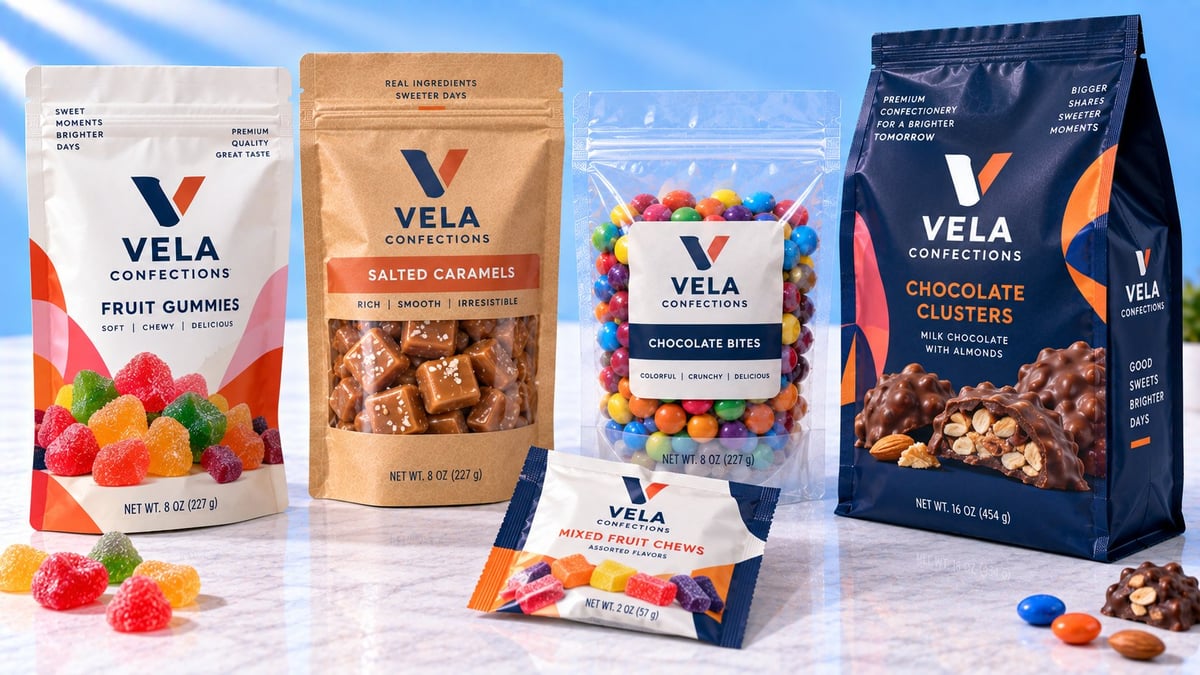
Custom Candy Pouches
Pouches for candy, confectionery, and sweets.
View & Configure →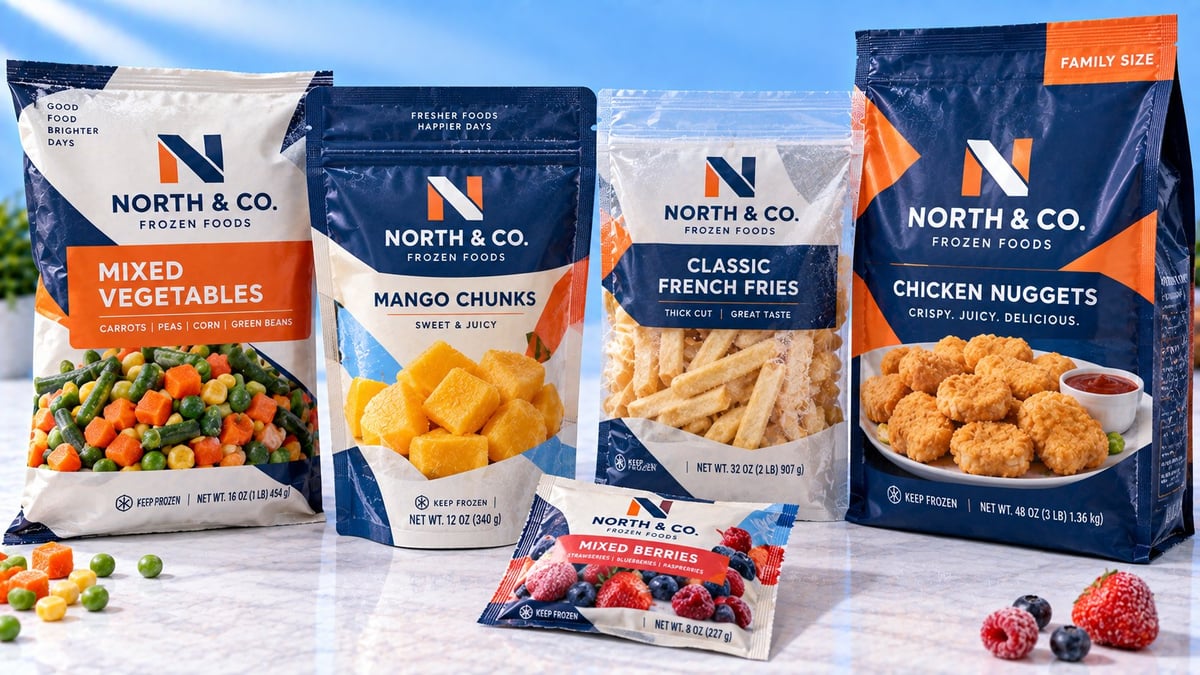
Custom Frozen Food Pouches
Packaging for frozen foods and cold-chain retail.
View & Configure →Choose your pouch construction
Three directions cover most of what this family is built from. What separates them is how they sit once filled, and that decides how the product is displayed.
Stand-up pouch
A pouch closed along the sides and across the top, with a gusseted base that folds out so the pouch sits upright on a flat surface when filled.
- Worth comparing when
- Often considered when the product is sold from a shelf and needs to look after itself without a box or a tray holding it up.
- On a shelf
- Presents a tall front panel and holds its own shape on the shelf, which gives the brand and product name a clear vertical space to work in.
- Look at this if
- Worth comparing if you want a single structure that covers a range of products without changing how the pack is displayed.
Flat-bottom pouch
A pouch built with a wider, more structured base than a standard stand-up format, so the body holds a boxier shape once filled.
- Worth comparing when
- Often considered when the product should read as a considered or premium pack on the shelf, or when the front panel needs more room.
- On a shelf
- Keeps a broader, more stable footprint and a wider printable face, which suits detailed front-panel design and heavier fills.
- Look at this if
- Worth comparing if your product is sold alongside boxed goods, or if the artwork needs more front surface than a narrower pouch gives.
Flat pouch
A pouch sealed on all sides with no gusseted base, so it stays flat rather than standing once filled.
- Worth comparing when
- Often considered for flatter products, single servings, sample packs and anything merchandised in a tray, a box or on a peg rather than stood on a shelf.
- On a shelf
- Takes up little depth and stores efficiently, which helps when the pack is displayed in a container rather than left free-standing.
- Look at this if
- Worth comparing if you are packing samples, a thin product, or something that will be displayed inside another piece of packaging.
Build the pouch around the product
These are the questions that settle a configuration. You do not need an answer to every one before enquiring, but the more you have, the closer the first quote lands.
- 1
What is being packaged?
The product itself sets the direction. A powder, a roast, a flat item and a frozen portion each behave differently once the pouch is filled.
- 2
How much goes inside?
Fill quantity drives the pouch size, and it needs to be the amount sold in one pack rather than the total you produce.
- 3
How large is the product itself?
The physical size of the item matters as much as its weight, since a bulky product can fill a pouch the same weight of a dense one would rattle around in.
- 4
How will the pouch be filled?
Hand filling and machine filling suit different openings and shapes, so the filling method is part of the configuration rather than a step after it.
- 5
How will it be sealed?
The seal area is where the pack is closed, so it needs to stay clear of artwork and clear of any feature placed near the top.
- 6
How will it be displayed?
A shelf, a tray, a counter and a peg each ask the pouch to do something different, and that decides whether it needs to stand.
- 7
Does the customer need to reseal it?
A product used over several sittings may need to close again after opening, while a single-serving pack may never be reopened.
- 8
Should the contents be visible?
A window lets the product be part of the presentation, while an opaque pack keeps the front panel entirely for the brand.
- 9
What branding area do you need?
The space your artwork requires is a real constraint on the format, so it is worth settling before the structure rather than after it.
Choosing the right pouch size
Choosing the right pouch size takes more than knowing the product weight. Products of the same weight can occupy very different amounts of space, so the dimensions, the fill volume and how the product settles all matter.
- Dimensions from packaging you already use
- If you have a pouch in hand, its measurements are the fastest starting point and the least likely to be misread.
- The quantity sold in one pack
- State the amount that goes into a single unit on the shelf, in the unit you actually sell it in.
- The physical size of the product
- Useful for anything sold by piece or count, where the item's own dimensions decide the fit more than the weight does.
- An existing pouch sample
- If you have a pouch you like the look and feel of, its structure and dimensions tell us more than a description does.
- A target shelf footprint
- If the pack has to fit a defined space on a shelf, a display box or a shipping case, that space is a real constraint.
- Custom dimensions
- If none of the above applies, or the product is unusual, the configuration can be worked from the product itself.
Why there is no size chart here
The same weight of coffee, ground spice, candy and granola takes up different amounts of space, even before any of them is packed. A conversion chart that worked for one would be wrong for the others, so a single table would send buyers toward the wrong pouch more often than the right one.
Send the quantity sold in one pack and roughly how the product settles, and the dimensions can be worked from that.
Send us your sizeCustom size
Size is part of the configuration rather than a fixed menu. If nothing in a standard range fits the product, the pouch can be worked from the product itself.
Closures and opening features
What happens at the top of the pouch is decided as much by how the product is used as by how it looks.
Resealable zipper
Considered when the product is used over several sittings and the customer needs to close the pack again between them.
Available configurations depend on the pouch construction, so it is confirmed against the format rather than assumed across the family.
Tear notch
Considered when the pack needs a clear, obvious place to open without scissors, which matters most for single-serving formats.
Its position is set during production and has to work with the artwork, so it is agreed as part of the layout rather than added afterward.
Heat-seal area
Every pouch is closed by sealing, so the seal area is always part of the configuration rather than an optional extra.
Where it sits decides how much of the pouch is left for artwork and for any feature placed near the top.
Hang hole
Considered when the product is merchandised on a peg or a clip strip rather than stood on a shelf.
It is placed in the seal area at the top of the pouch, which is worth knowing if the artwork runs close to that edge.
Custom or other closure
If the product needs something not covered above, the requirement can be described and evaluated against the format.
Any closure requirement is confirmed for the selected configuration before production, and it is worth raising at the quote stage.
Should the pouch have a window?
On a shelf, a window lets the product itself become part of the presentation rather than something described on the panel.
Ask about a windowLet the product sell itself
A window puts the product on the shelf as part of the presentation, which suits anything whose appearance is the reason a customer picks it up.
When an opaque pack does more
A fully printed pouch keeps the whole front panel for the brand and the product name, which can be the stronger choice when seeing the contents would not help the sale.
Shape, size and placement
The window shapes, sizes and positions available depend on the construction and dimensions of the pouch you select, so it is confirmed against that format rather than chosen on its own.
Different products can use different packs
A business selling several lines can use a window where the product is worth showing and a printed pouch where it is not.
Choose the pouch around what the product needs
How a pouch is built depends on what it has to do. These are the considerations that come up most often, and each one points toward a question rather than a material.
Moisture exposure
How much moisture a product takes on or gives off, and how long it sits before use, both bear on how the pouch is specified.
Oxygen exposure
Products that change once they meet air present a different requirement from those that do not, and coffee adds its own case because it releases gas after roasting.
Light exposure
Some products are better kept out of the light, which is a point in favour of a fully printed pack or one that limits what is visible.
Oils and product characteristics
Products carrying oils, strong colours or fine powders can call for a different construction from a dry, inert product.
Storage conditions
How and where the pack is stored between filling and use is part of the brief, and it is worth stating plainly at the quote stage.
Filling and sealing
How the pouch is filled and closed is a practical requirement rather than a preference, and it can rule a format in or out.
About certifications and compliance
We do not publish general statements about barrier ratings, material composition, recyclability, compostability or food-contact status that would have to hold for every pouch in the range, because a blanket claim is not accurate for every product. If your product carries a specific requirement, raise it at the quote stage and we will tell you what documentation is available for the exact configuration you choose.
Printing and branding
On a retail pouch, the printed panel needs to communicate the brand and product clearly before a customer reads the supporting details. Artwork placement therefore needs to be considered alongside the pouch structure.
Logo prominence
How large the logo sits relative to the product name is a real decision on a shelf pack, where a shopper looks at the panel before reading it.
Front and back
The front carries the brand and the product name. The back carries ingredients, weight, storage detail and anything required by law, and it needs planning space rather than leftovers.
Product name hierarchy
The product name usually has to be readable from a distance, which sets how much of the panel is left for supporting detail.
Required product information
Whatever your product has to declare by law takes up panel space, so it is better counted at layout stage than discovered later.
Relationship with a window
On a windowed pouch the artwork has to work around the opening rather than across it, which changes the layout before the design begins.
Structural features in the print area
A zipper, tear notch or hang hole occupies part of the pouch, so those features are placed with the artwork rather than after it.
Matte and gloss
Matte
A softer, low-reflection surface that keeps its appearance under shop lighting and can read as more restrained on the shelf.
Gloss
A more reflective surface that increases contrast and colour depth, which tends to make a shelf pack stand out from the ones beside it.
Which finishes are available depends on the material and the pouch you select, so it is confirmed with the configuration rather than chosen separately from it.
You do not need finished artwork to start
Plenty of brands want custom printed pouches with their logo and hold nothing more than the logo file itself. That is enough to begin.
Send what you have. We will review it and show you what is needed to prepare the pouch for production, so there is no guessing about whether it will work.
What you can send
- Finished artwork, if you already have it
- A logo file on its own
- Existing packaging or a photograph of it
- Brand colours, or a rough direction
What we review
- The quality of the file you send
- Where the artwork should sit on the pouch
- How it works with the pouch you selected
- Whether anything needs preparing first
Accepted starting formats: AI, EPS, SVG, PDF, PNG, JPG or JPEG
Vector is the cleanest starting point for print, but it is not a requirement to enquire.
Free, and part of the process
Free digital mockup
Submit your artwork and you receive a digital mockup showing it on the pouch before anything is produced. No production order is required to receive it, and there is no charge for it.
It is the point where the pouch, the size, the features and the artwork are seen together for the first time, which is why it comes before you commit to anything.
Get a Free Digital MockupOptional physical sample
If you want to hold the pouch before committing to a run, an optional custom physical sample can be produced. It is a paid extra, and it is separate from the digital mockup.
- Artwork is approved before the sample is made, so the sample matches what you would actually run
- Approximately 2 to 3 weeks after artwork approval
- Approximately $150 to $250 depending on the product and configuration
- Credited toward your production order if you go ahead
Compare pouch constructions
What each direction does differently, on the things that decide how a product is displayed and packed.
How it sits when filled
- Stand-up pouch
- Stands upright on a folded base
- Flat-bottom pouch
- Stands on a wider, more structured base
- Flat pouch
- Stays flat and lies down
Shelf presence
- Stand-up pouch
- Tall front panel that holds its shape
- Flat-bottom pouch
- Broader, more stable footprint that reads as a structured pack
- Flat pouch
- Little shelf presence on its own
Often considered for
- Stand-up pouch
- Everyday shelf goods across a range
- Flat-bottom pouch
- Premium or boxed-goods sets
- Flat pouch
- Samples, flat items and tray-displayed products
Storage before filling
- Stand-up pouch
- Packs flat, opens out when filled
- Flat-bottom pouch
- Takes more space than a flat pouch
- Flat pouch
- Takes up the least storage space before filling
How it is displayed
- Stand-up pouch
- Free-standing on a shelf
- Flat-bottom pouch
- Free-standing, reads alongside boxed goods
- Flat pouch
- In a tray, a box or on a peg
Artwork surface
- Stand-up pouch
- A tall, narrow front panel
- Flat-bottom pouch
- Broad front and back panels, with additional printable surfaces depending on the construction
- Flat pouch
- A simple panel, often with little room for detail
Bulk and wholesale custom pouches
Custom pouches are quoted around the product, configuration and quantity you need. For larger orders, quantity becomes an important part of the quote.
Does ordering more lower the unit price?
Custom pouch pricing is quantity-dependent, and higher quantities can change the unit economics. Exact pricing is based on the pouch, the configuration, your printing requirements and the quantity you request.
Is there a minimum order?
Minimum quantities vary by pouch type and configuration, so there is no single minimum that applies across the entire range. Your quote will confirm the minimum for the exact pouch you need.
How custom pouch pricing works
A custom pouch is quoted rather than listed, because the price depends on what you specify. These are the things that move it.
What moves the price
Pouch and construction
- Pouch type
- Different pouch styles use different constructions, materials and features, so the pouch type is one of the first factors considered when preparing your quote.
- Size
- The selected dimensions and the capacity they give change how much material the pouch takes.
- Material and construction
- Material and construction choices can affect the final configuration and price.
- Structural features
- Zippers, tear notches, hang holes, valves, windows and other features are considered when the configuration and quote are prepared.
Branding
- Printing requirements
- How much of the pouch carries artwork, and how many colours it takes, both affect the quote.
- Printed areas
- The number and location of printed areas can affect the quote, since the front, back and other surfaces are not the same job to print.
- Finish
- The selected finish is part of the configuration being quoted, since it is applied to the artwork rather than chosen separately from it.
Order
- Quantity
- Quantity is a significant factor. Larger runs can change the unit economics, and the exact figure is confirmed with the quote.
- Delivery and freight
- Freight depends on how the order packs, the destination and the quantity shipped, so it is confirmed with the quote rather than estimated on the page.
Why we do not publish one price per pouch
A useful quote requires the actual pouch type, size, configuration, printing requirements and quantity. A single published number would have to assume all of those, and any one of them changing makes it wrong for your project.
Tell us what you are packaging and we will put a real figure against your configuration instead of an estimate you have to correct later. There is no charge for asking.
Get Custom PricingWho orders custom printed pouches
Businesses packing their own product to sell, rather than serving it across a counter. We supply them nationwide from Minneapolis.
Food and drink brands
Businesses packing their own product to sell on a shelf.
Food businesses selling retail packs
Businesses that serve customers and also sell a packaged product.
Retail and market sellers
Businesses where the pouch is what the customer takes home.
- Retail stores
- Grocery stores
- Farmers market brands
- Jam, sauce and condiment makers
Go straight to a decision
Every question above is covered in full further down the page. Jump to the one you are weighing.
How the process works
Eight steps from first contact to delivery, with the free mockup and the optional sample in their actual places rather than described separately.
- 01
Choose a pouch direction
Tell us what you are packaging and we will narrow it to the constructions that genuinely fit.
- 02
Share your specification
Size or capacity, quantity, any closure or opening requirement, and how the pack will be displayed.
- 03
Submit your artwork
A logo or an existing brand file is enough to begin. We will review it and tell you what it supports.
- 04
Receive a free digital mockup
You see your artwork on the pouch before anything is produced, and no production order is needed to receive it.
- 05
Approve the specification
You confirm the pouch, the size, the features and the artwork before the order moves forward.
- 06
Optional physical sample
An optional custom sample can be produced if you want to hold the pouch first. It is paid, and it comes after artwork approval.
- 07
Production
Produced to the approved specification and artwork. The schedule is confirmed with your quote.
- 08
Delivery
Shipped to your address. Production and transit are separate stages and each is confirmed for your order.
Why brands order pouches from YaSeen Packaging
Produced around your product
The configuration starts from what you are packaging rather than from a preset list of sizes.
Free digital mockup
You see your artwork on the pouch before anything is produced, and no production order is needed to receive it.
Configuration that fits
Size, closure, opening features and printing are settled against the product before the order is quoted.
Artwork reviewed before production
Send a logo or an existing brand file. We review it and tell you what it supports rather than assuming it will work.
More of your packaging in one place
Pouches can be ordered alongside cups, bags, bottles, jars and foodservice packaging, helping businesses coordinate more of their packaging through YaSeen Packaging.
Nationwide delivery
Produced to your specification and shipped to your address, with freight confirmed on the quote.
YaSeen Packaging works directly with packaging manufacturers to provide custom packaging built around your product and brand.
Questions about custom pouches
The things brands ask before committing to a pouch format. If yours is not here, tell us what you are packaging and we will answer it directly.
Ask about your pouchWhich type of custom pouch should I choose?
What is the difference between stand-up, flat-bottom and flat pouches?
Can I order custom pouches with my logo?
Do you offer custom pouch sizes?
How do I know what pouch size I need?
Can custom pouches include a zipper?
Can pouches include a clear window?
Can I order custom pouches for food products?
What information do I need to get a quote?
Do you offer bulk or wholesale custom pouches?
Does quantity affect custom pouch pricing?
Is there a minimum order?
Do I need production-ready artwork to start?
Do you provide a free digital mockup?
Can I order a physical sample?
How long does production and delivery take?
Guides that help with this family
Ready to build your custom pouch order?
Tell us what you are packaging, how much goes in a pack and how it is sold. We will work out the construction, prepare a free digital mockup and put pricing against your configuration.
Free digital mockup before production. No obligation.