Bags and bakery packaging
Custom Printed Bags for Your Business
Custom printed bags for retail, restaurants, bakeries and food businesses. Compare bag styles, find the format that fits what you are packaging, add your branding and request custom pricing.
No obligation, and a free digital mockup before anything is produced.
What every bag order includes
- A free digital mockup of your artwork on the bag you select
- Shopping, bakery, takeout and specialty formats from one supplier
- Delivery to businesses nationwide
- Pricing prepared around your exact configuration and quantity
Find the right custom bag
Start with what you are packaging and how it leaves your counter. Those two answers narrow the format faster than any product list can.
I need a carryout bag
Shopping and carryout
Handled bags for customers leaving with a purchase, built for weight carried at distance.
I sell bakery items
Bakery and pastry
Counter bags for pastries and baked goods, with or without a window to show the product.
I sell bread
Bread and sourdough
Long-format bags sized for a whole loaf rather than a slice or a pastry.
I run foodservice
Sandwiches and counter food
Bags for grab-and-go service, deli counters and orders assembled behind the counter.
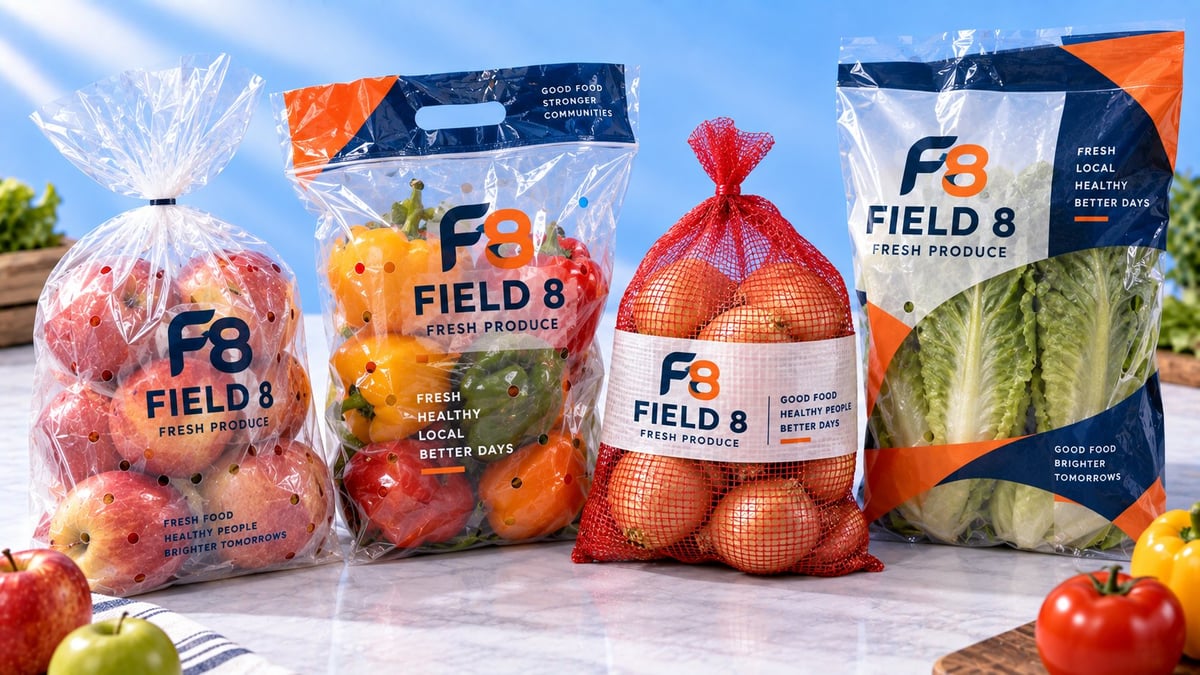
I sell produce or bulk goods
Produce and grocery
Bags for fresh items, loose goods and self-service display.
I know my dimensions
Match a size you already know
Start from the measurement rather than the product name and we will confirm the closest format.
Custom Bags & Bakery Packaging
12 bag formats, grouped by what they are used for. Open any one for its specifications, customization options and ordering details.
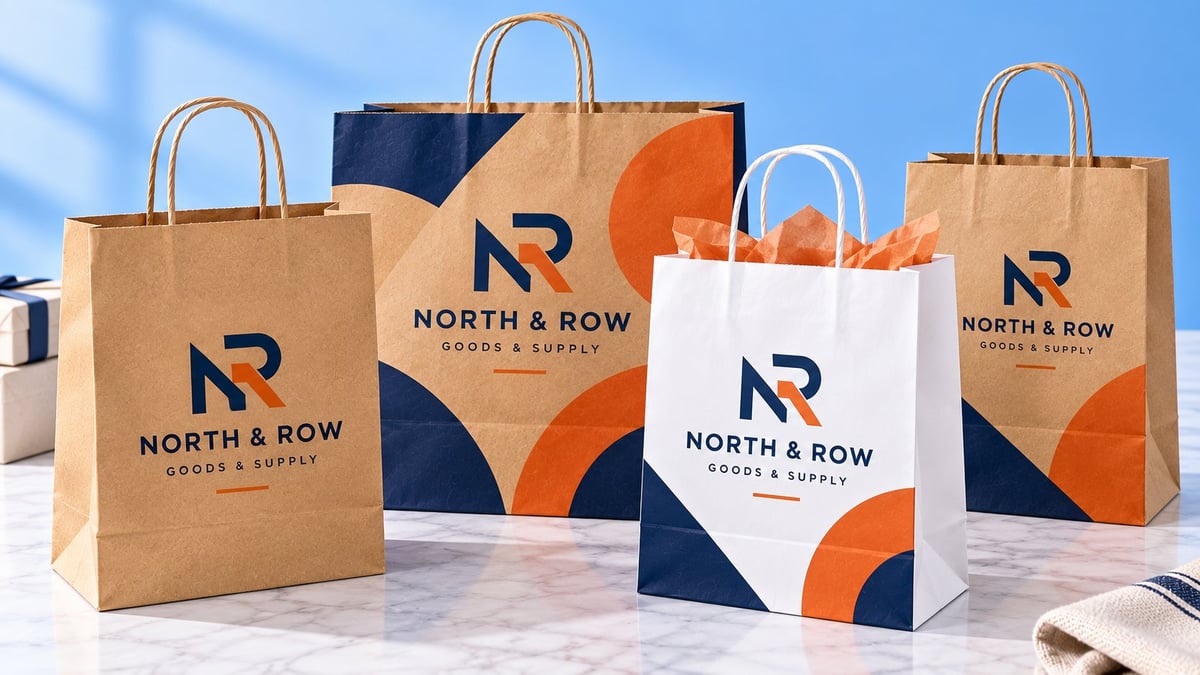
Shopping and carryout
For a purchase that leaves in the customer's hand and has to survive the trip.
3 formats
Bakery and bread
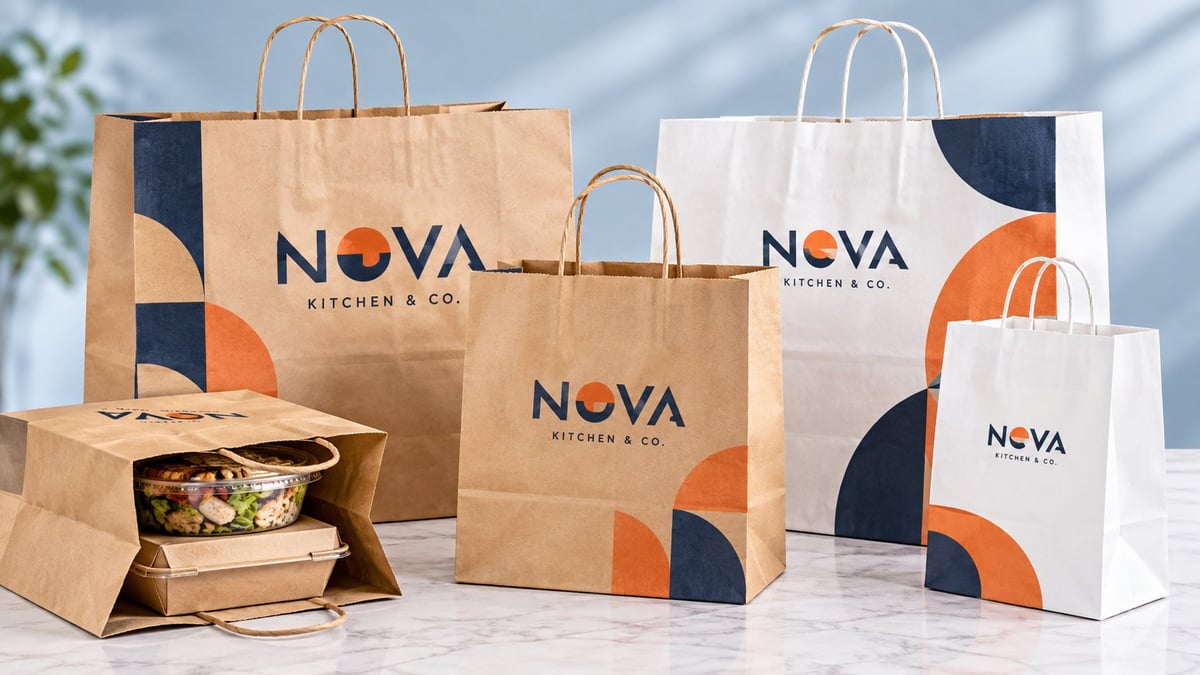
For baked goods, where the bag is often part of how the product is presented.
6 formats
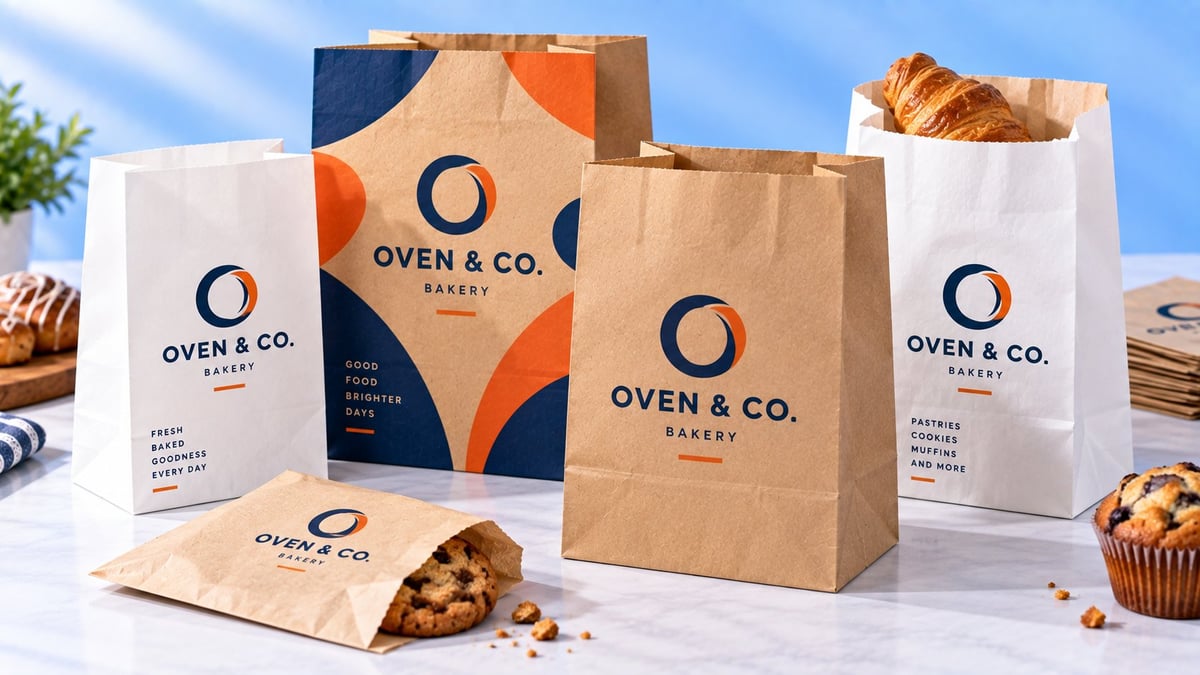
Custom Bakery Bags
Bags for breads, pastries, and counter bakery sales.
View & Configure →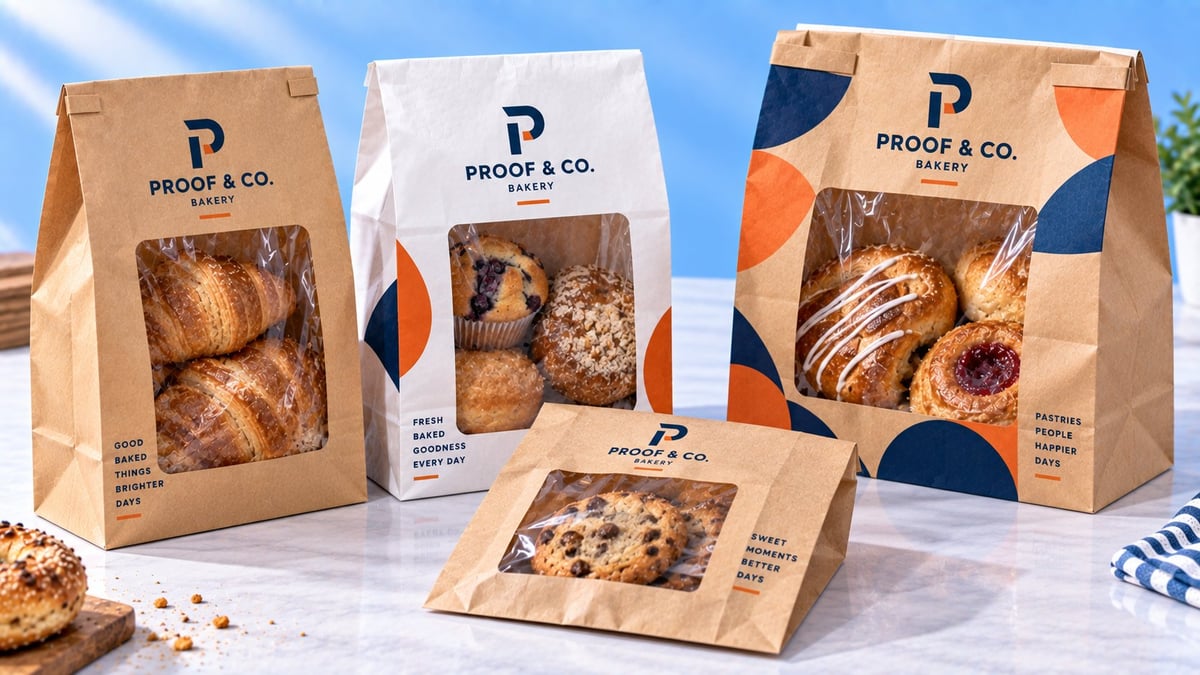
Custom Bakery Window Bags
Window bags that show the product while carrying your brand.
View & Configure →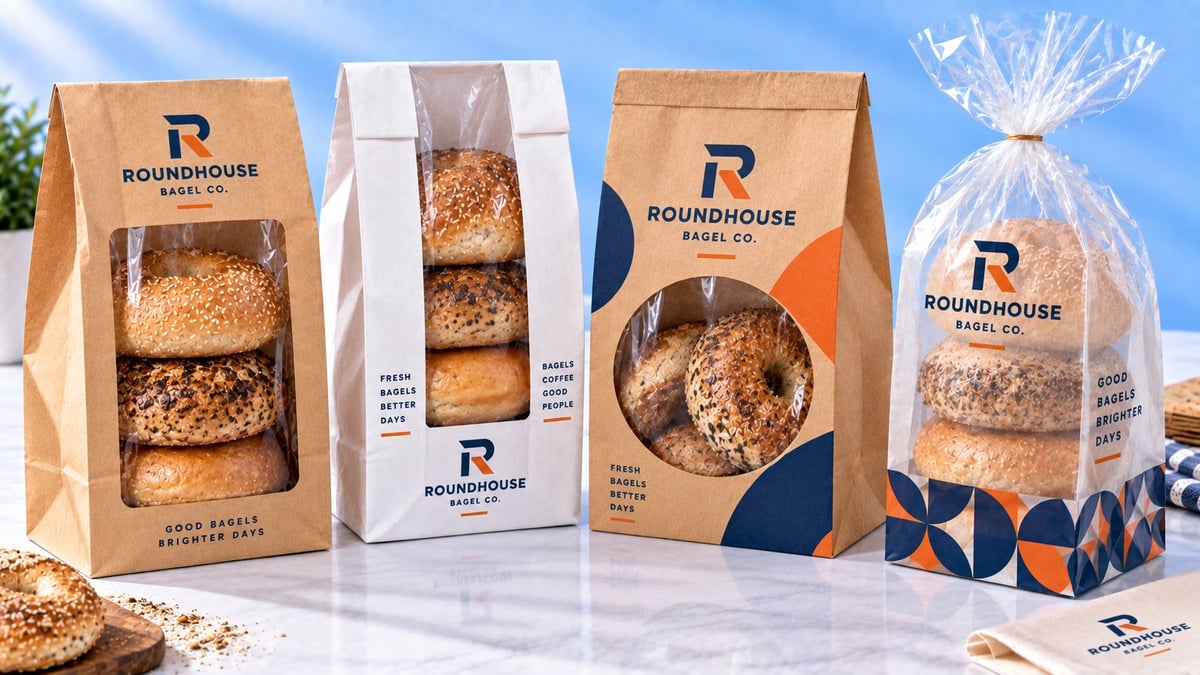
Custom Bagel Bags
Bags sized for bagels and breakfast counter service.
View & Configure →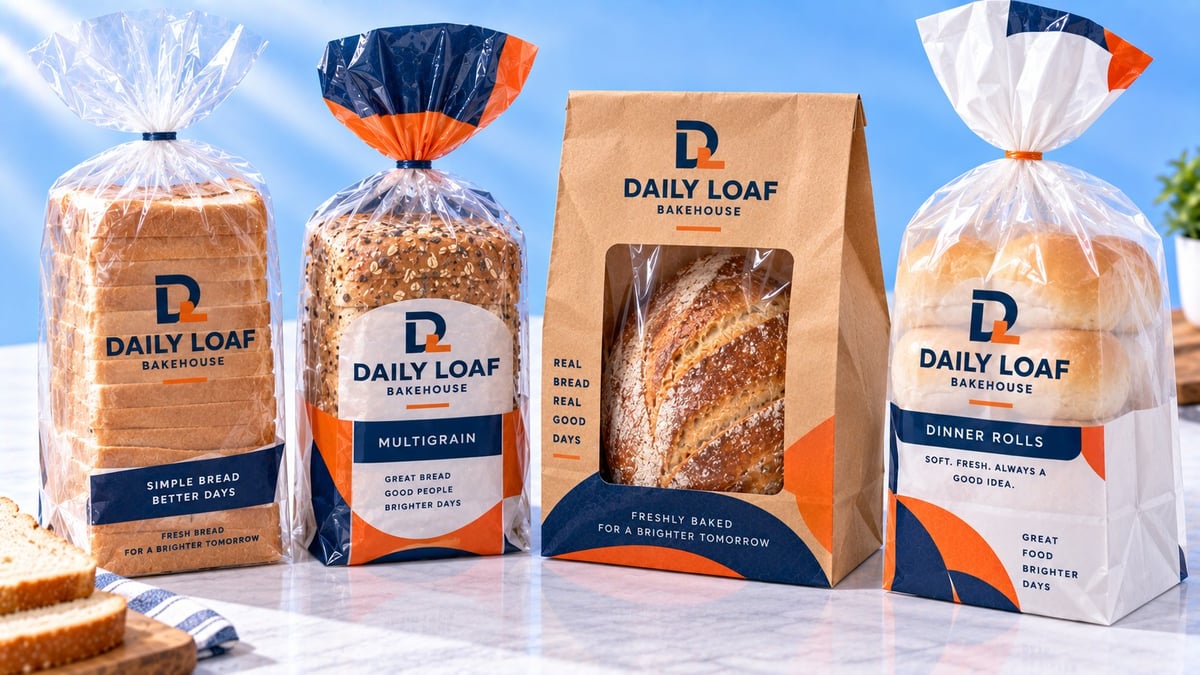
Custom Bread Bags
Bags for loaves, rolls, and everyday bakery service.
View & Configure →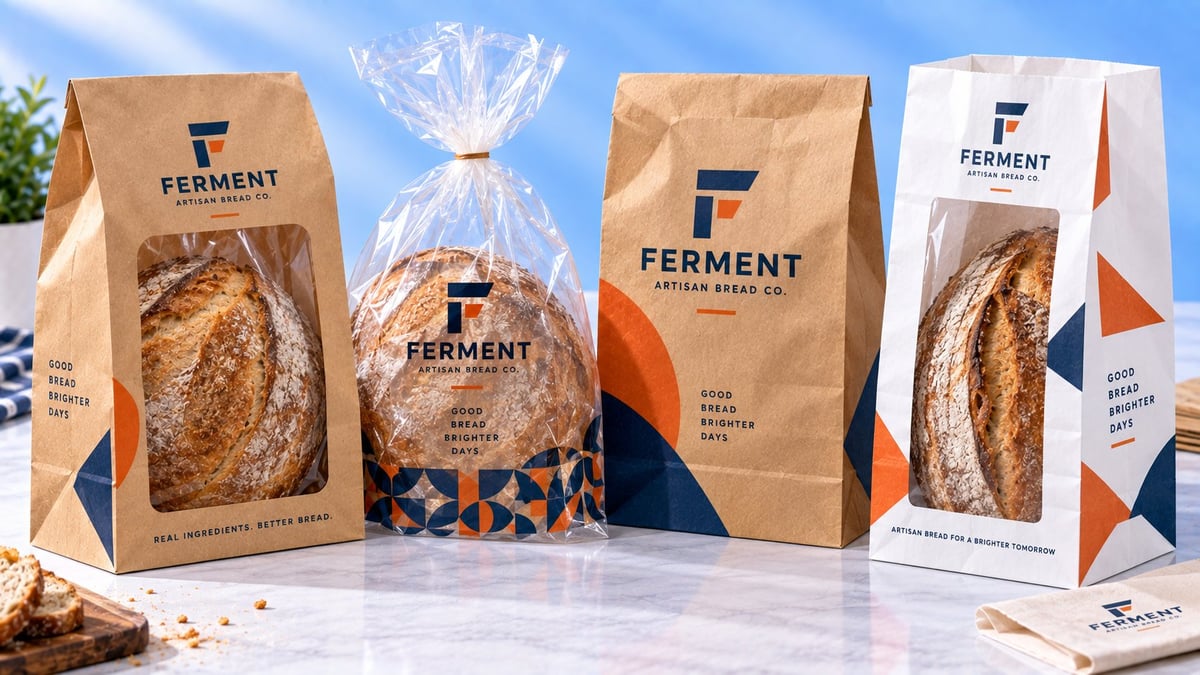
Custom Sourdough Bread Bags
Long-format bags sized for sourdough and artisan loaves.
View & Configure →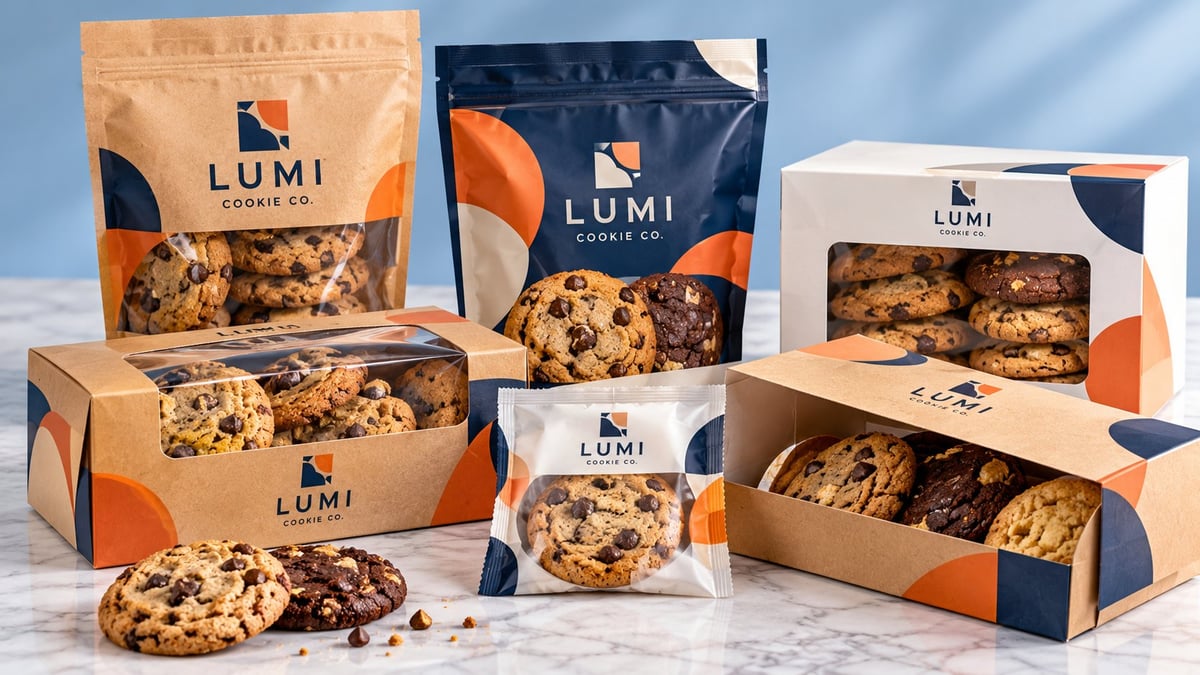
Custom Cookie Bags
Bags for cookies, pastries, and small-batch bakes.
View & Configure →Food and counter service
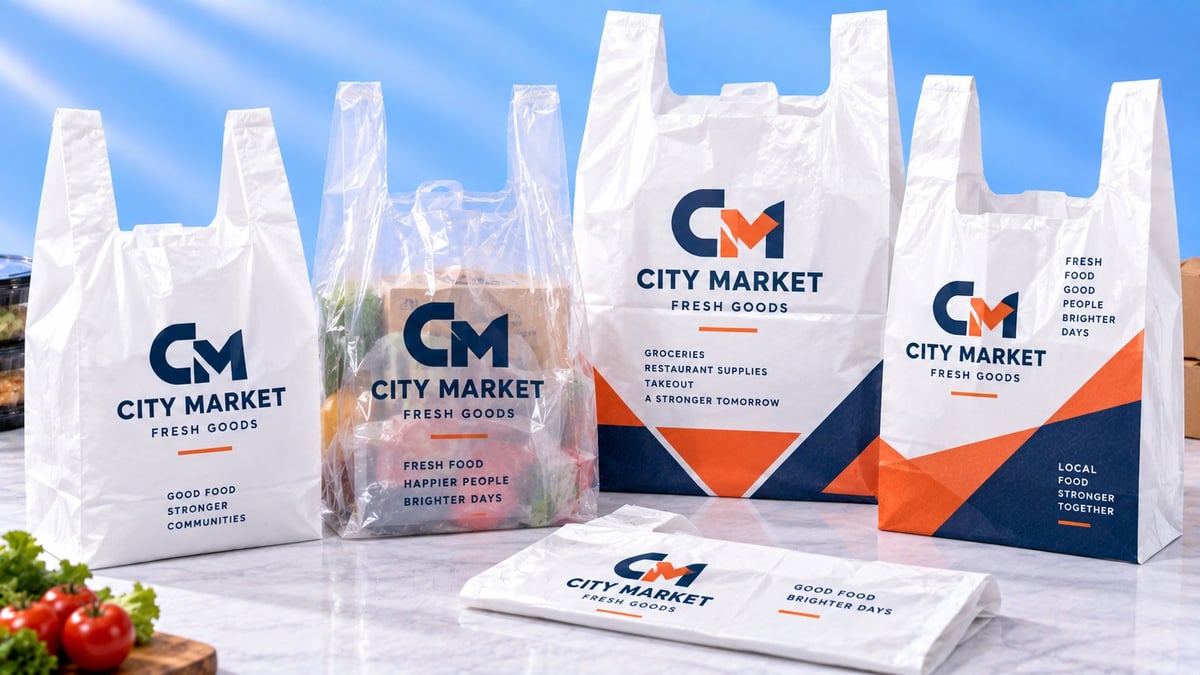
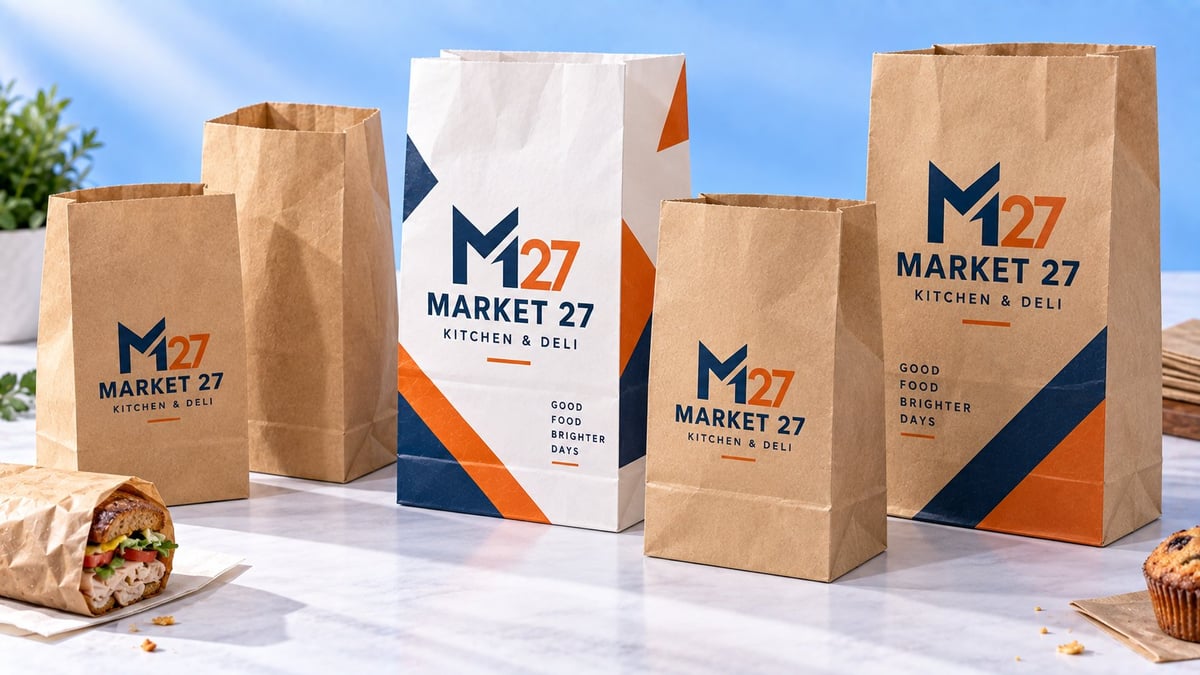
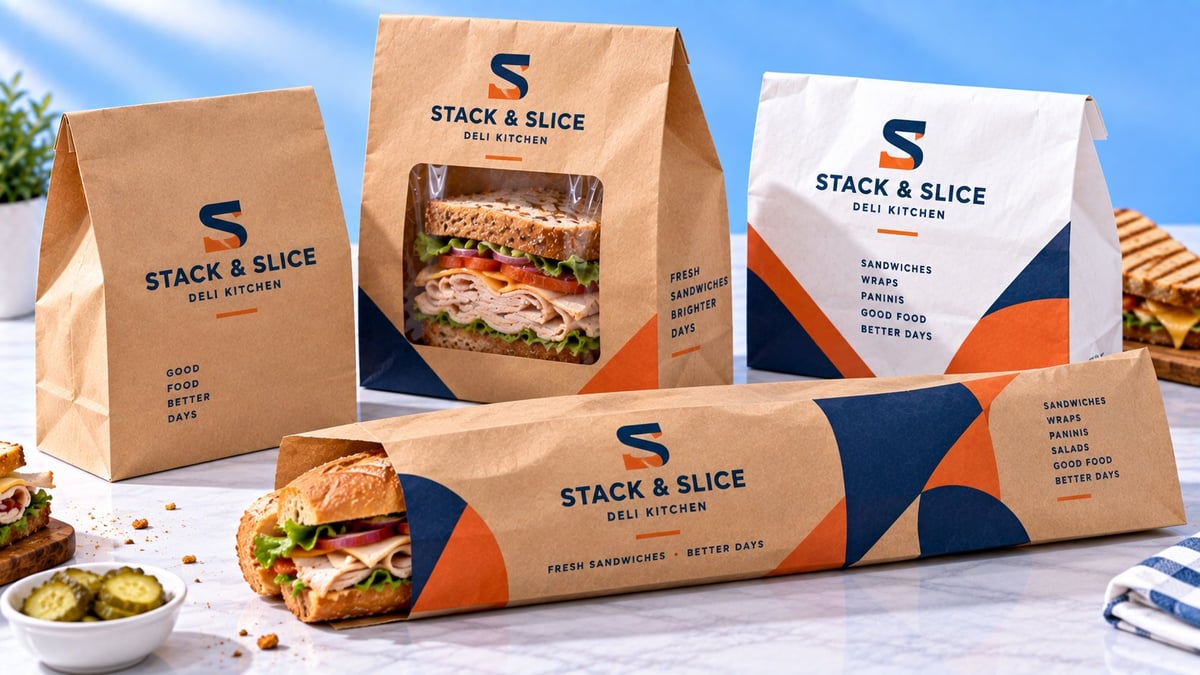
For counter handoffs, prepacked items and loose goods sold by the item.
3 formats
How to choose a custom bag
Six questions, in the order that actually narrows the choice. Answer the first one and most of the rest follow.
- 1
What are you putting inside?
The product comes first. Its size, shape, quantity and how it will be handled narrow the construction more than anything else does.
- 2
How will it be carried?
A bag handed over a counter is under a different load from one carried down the street. A bag that goes inside a delivery order is carried by the outer bag, so its own handle may never be used.
- 3
Does the product need to be visible?
A window lets the product sell itself while the bag still carries your branding. It also commits you to a particular construction, so it is worth deciding deliberately.
- 4
Do you need depth as well as width?
A flat bag suits a flat item. Anything with thickness, or several items packed together, needs a bag that opens out, and the depth becomes the measurement that decides the fit.
- 5
Do you need the bag to close?
Some bags are open at the top and handed straight over. Others fold, roll or seal, which changes both what the bag holds and how it looks leaving your counter.
- 6
Do you already know your size?
A measurement from a bag you already use is the fastest place to start. Send it and we will confirm the closest format rather than working from a size name.
Getting the size right
Most bag problems are sizing problems, and almost all of them come from measuring the product instead of what actually goes in the bag.
- The packed size, not the product size
- A loaf straight from the oven and the same loaf in its liner are two different measurements. Measure what actually goes into the bag, not the item on its own.
- Depth as well as width
- A flat measurement ignores anything with thickness. If the item is bulky, or you are loading several at once, the bag needs a gusset and the depth becomes the measurement that decides the fit.
- How many go in one bag
- One pastry and six pastries need different bags. Decide the typical count per bag first, because that is what the size is actually built around.
- How the item goes in
- Loading through the top of an open bag is not the same as sliding something in flat. The way it enters can rule out a size that fits on paper.
- Room for the closure
- If the bag folds, rolls or seals at the top, that fold needs empty bag above the contents. A bag that fits the product exactly can still be too short once it has to close.
- Clearance for handles
- Where a handle attaches takes up part of the bag face and part of the opening. On a handled bag, the usable space is smaller than the outside measurement suggests.
Three ways to land on a size
A standard size
Start from a format that already exists and is made regularly. Fastest route, and usually the best value.
An exact dimension
Send the measurement you need and we will confirm the closest available format or what a custom configuration would involve.
A size you already buy
If you hold a specification from a current supplier, send it and we will work to that requirement rather than to a size name.
Already know your dimensions?
Send them and start there. Working from a measurement you already hold is faster and more accurate than working from a size name, and a requirement outside a standard list is a question worth asking rather than a dead end.
Send us your dimensionsMaterials and construction
The material sets how a bag looks and carries. The construction decides what it can do, so the two are chosen together.
Kraft paper
An unbleached brown paper with a natural finish. Printed artwork reads as a deliberate contrast against it, and the material itself is part of the presentation for bakeries and artisan food brands.
Usually suits: Bakeries, delis, food producers, brands selling on a handcrafted look
White paper
A bright paper that gives printed colour the cleanest background, so brand colours stay close to how they look on screen.
Usually suits: Retail, restaurants and any business where brand colour accuracy matters
Plastic and poly
Used where a bag has to handle load, moisture or cost in a way paper does not. Checkout bags are the main example in this family.
Usually suits: Grocery, retail checkout and high-volume carryout
Clear formats
Where the product itself is the display. Visibility is built into the material rather than added as a window.
Usually suits: Produce, loose goods and self-service display
Construction features that change the bag
Windows
A clear panel that shows what is inside. The available shapes and placements depend on the bag construction, so the window is confirmed as part of the specification rather than chosen separately.
Gussets
The folded side or base that lets a bag open out and take on depth. A bag without one stays flat, which suits thin items and nothing else.
Handles
Fitted to bags meant to be carried rather than handed over. Paper handles and cut-out handles are both commercial formats, and which suits you depends on load and presentation.
Base construction
Some bags stand on their own once opened, which matters when a bag has to sit on a counter or shelf without being held. Others are built to be packed and carried immediately.
Paper, plastic or specialty
This is the choice a grocery or retail counter usually faces, and it comes down to what the bag has to carry rather than to a ranking between materials.
What it carries well
- Paper
- Bakery, deli, retail goods and foodservice orders
- Plastic
- Grocery loads, heavy carryout and high-volume checkout
- Specialty and clear
- Fresh produce and loose goods sold by display
Presentation
- Paper
- Printable across the whole face, with a matte or natural finish
- Plastic
- A working look rather than a display look in most use cases
- Specialty and clear
- The product is the presentation
How it is carried
- Paper
- Handed over or carried with a fitted handle
- Plastic
- Integrated handles built into the bag shape
- Specialty and clear
- Usually opened at the counter and packed on the spot
Moisture and grease
- Paper
- The construction matters more than the material, so tell us what you are packing
- Plastic
- Handles moisture and grease without the paper face being affected
- Specialty and clear
- Suits fresh items where airflow and visibility matter more than rigidity
Branding surface
- Paper
- The largest uninterrupted printable face of the three
- Plastic
- Printable, with artwork usually working within the bag shape
- Specialty and clear
- Limited surface, so a simple mark reads better than a detailed design
Where it usually fits
- Paper
- Bakeries, restaurants, cafes, delis and retail
- Plastic
- Grocery, convenience and volume retail checkout
- Specialty and clear
- Produce counters, markets and self-service
We will not claim an environmental advantage for any material unless it is verified for the exact product you order. If that matters to your business, raise it at the quote stage and we will tell you what documentation is available for the configuration you have chosen.
Should the bag have a window?
A window can be useful when customers benefit from seeing the product before they buy. That is most relevant for bakery items, bread, cookies and other products where appearance is part of the presentation.
See bakery window bagsShow the product
A window can display pastries, bread, cookies and other products that look good on the shelf, while your branding stays on the outside of the bag.
Consider what the product needs
Some products may need packaging that limits light exposure or uses a different construction. The product should decide the bag before the window does.
Window size and placement
The window shapes, sizes and positions available depend on the construction and dimensions of the bag you select, so it is confirmed against that bag rather than chosen on its own.
Different products can use different bags
A business selling several products can use window bags where the product is worth showing and other bag styles where the packaging needs are different.
Handles and how the bag travels
A handle is worth paying for when the bag is carried by it, and wasted when it is not. Two questions settle it.
Handles suit distance
A customer walking several blocks or balancing other bags needs a handle. One taking a pastry from the counter to the table does not, and paying for handles on every bag is avoidable.
Handles are wasted inside another bag
If your bag goes into a delivery bag or a larger carryout bag, it is carried by the outer bag. A handled bag inside it adds cost and bulk without doing anything.
The bag shape decides the handle
Some bags take a fitted paper handle, some use a cut-out, and some are built with the handle as part of the bag shape itself. That is set by the construction, not chosen freely.
Presentation counts here too
A handled paper bag is carried past other people on the way home, which makes it a moving piece of branding in a way a counter bag never is.
Bags for food and bakery businesses
Foodservice buyers usually arrive knowing the product and not the bag. These are the six things worth settling before you choose a format.
What kind of food
A dry pastry, a greasy sandwich and a damp produce item put different demands on a bag. This is the first thing to tell us, ahead of size.
How much goes in one bag
A single cookie and a box of six are different orders. The count per bag decides the size before anything else does.
Whether the food should be seen
Bakery counters and dessert businesses usually want visibility. Anything that needs protecting from light usually does not.
How long it sits in the bag
A bag that holds a sandwich for two minutes in the store is doing a different job from one that travels across town.
Whether it needs to close
Items that are stacked or carried loose need a bag that holds them in. Where a closure is needed, it is confirmed against the bag construction.
How the order leaves the counter
Handed over directly, placed in a larger order, or packed for delivery. Each changes which bag is the right one.
Tell us the food, and we will narrow the bag
What you are packing decides more than the bag name does. Describe the product, how many go in a bag and how the order leaves your counter, and we will recommend a format rather than asking you to arrive with the answer.
Printing your bags
Businesses usually come to this family to put a logo on a bag. What that looks like depends on the format you choose.
A bag is the most forgiving surface we print
Large flat faces take detailed artwork, full-colour designs and edge-to-edge coverage in ways a tapered cup or a curved jar cannot. If your design is intricate, a bag is usually where it prints best.
What goes on the front is what gets seen
The face that points outward is the one customers read. On a handled bag that is the side facing away from the body; on a counter bag it is the front panel. Placement is decided against the bag, not against a template.
Two printed faces is its own decision
Printing the back as well as the front doubles what the bag can carry, and whether it is worth it depends on the format and the run. Raise it at the quote stage and it is priced into the order rather than assumed.
The bag keeps working after the sale
A handled shopping bag is carried through the street and often reused, which makes it a piece of branding that keeps travelling after the customer has left.
Print coverage, colour requirements and placement are confirmed against the bag and quantity you order, since they depend on the product rather than on a rule that applies across the range. Send us the design and we will tell you what it supports.
You do not need finished artwork to start
Plenty of businesses want custom bags with their logo and hold nothing more than the logo file itself. That is enough to begin.
Send what you have and we will review it and show you what is needed to prepare the bag for production, so there is no guessing about whether it will work.
What you can send
- Finished artwork, if you already have it
- A logo file on its own
- Existing packaging or a photo of it
- Brand colours, or a rough direction
What we review
- The quality of the file you send
- Where the artwork should sit on the bag
- How it works with the bag you selected
- Whether anything needs preparing first
Accepted starting formats: AI, EPS, SVG, PDF, PNG, JPG or JPEG
Vector is the cleanest starting point for print, but it is not a requirement to enquire.
Free digital mockup
See your bag before it is produced
Submit your artwork and we will place it on the bag you selected so you can see placement and colour. There is no production order required to receive it, and no charge for it.
- 1Choose your bag direction
- 2Share your size and quantity
- 3Submit your artwork
- 4Receive your free digital mockup
- 5Approve the specification
- 6Optional physical sample
- 7Production order
If you want to hold it first
- Artwork is approved before the sample is made, so the sample matches what you would actually run
- Approximately 2 to 3 weeks after artwork approval
- Approximately $150 to $250 depending on the product and configuration
- Credited toward your production order if you go ahead
The physical sample is optional and paid. The digital mockup above it is free.
Compare bag types
What each format is used for, how it travels, and what your artwork gets to work with.
SOS paper bags
- Best suited for
- Counter service and carryout orders
- How it is carried
- Handed over at the counter
- Visibility
- Closed
- Branding
- A large flat face that takes a full design
Paper shopping bags
- Best suited for
- Retail purchases carried away from the store
- How it is carried
- Fitted paper handle
- Visibility
- Closed
- Branding
- Two large faces, and the bag travels through public space with your brand on it
Takeout paper bags
- Best suited for
- Restaurant and delivery orders
- How it is carried
- Handed over or packed into a larger order
- Visibility
- Closed
- Branding
- Flat printable face sized for an order rather than a single item
Bakery bags
- Best suited for
- Pastries and counter bakery sales
- How it is carried
- Handed over at the counter
- Visibility
- Closed
- Branding
- Short front face, so a simple mark reads better than a detailed design
Bakery window bags
- Best suited for
- Bakery counters where the product sells itself
- How it is carried
- Handed over at the counter
- Visibility
- Window
- Branding
- Artwork works around the window, which is confirmed with the bag
Cookie bags
- Best suited for
- Cookies, small bakes and counter treats
- How it is carried
- Handed over or packed with other items
- Visibility
- Closed or window, depending on the format
- Branding
- Small surface, so keep the design legible at a glance
Bagel bags
- Best suited for
- Bagels and breakfast counter service
- How it is carried
- Handed over at the counter
- Visibility
- Usually closed
- Branding
- Print runs across the bag front
Bread bags
- Best suited for
- Loaves, rolls and everyday bakery service
- How it is carried
- Handed over or carried home
- Visibility
- Closed or window, depending on the format
- Branding
- A long printable face that suits a horizontal logo
Sourdough bread bags
- Best suited for
- Long artisan loaves
- How it is carried
- Handed over or carried home
- Visibility
- Closed or window, depending on the format
- Branding
- Extended face, so artwork can run along the length
Sandwich bags
- Best suited for
- Sandwiches, wraps and grab-and-go service
- How it is carried
- Handed over or packed with the order
- Visibility
- Usually closed
- Branding
- Compact face that suits a single clear mark
Plastic T-shirt bags
- Best suited for
- Grocery, retail checkout and volume carryout
- How it is carried
- Integrated handles built into the bag
- Visibility
- Closed
- Branding
- Printed within the bag shape, with artwork sized to the face
Produce bags
- Best suited for
- Produce, bulk goods and self-service display
- How it is carried
- Opened at the counter and packed on the spot
- Visibility
- Clear, so the contents are the display
- Branding
- Limited surface, so a simple mark reads better than detail
Still unsure which fits how you work? Tell us what goes in the bag and where it goes afterwards, and we will recommend a format.
Bulk and wholesale custom bags
Custom bags are quoted around the product, configuration and quantity you need. For larger orders, quantity becomes an important part of the quote.
- Does ordering more lower the unit price?
- Custom bag pricing is quantity-dependent, and higher quantities can change the unit economics. Exact pricing is based on the bag, the configuration, your printing requirements and the quantity you request.
- Is there a minimum order?
- Minimum quantities vary by bag type and configuration, so there is no single minimum that applies across the entire range. Your quote will confirm the minimum for the exact bag you need.
How custom bag pricing works
A custom bag is quoted rather than listed, because the price depends on what you specify. These are the things that move it.
What moves the price
Bag and construction
- Bag type
- Different bag styles use different constructions, materials and features, so the bag type is one of the first factors considered when preparing your quote.
- Size
- Within one bag type, each size uses different amounts of material.
- Material
- Material and construction choices can affect the final configuration and price.
- Structural features
- Handles, windows and other structural details are considered when the configuration and quote are prepared.
Branding
- Printing requirements
- How much of the bag carries artwork, and how many colours it takes, both affect the quote.
- Printed areas
- The number and location of printed areas can affect the quote.
Order
- Quantity
- Larger quantities can change the unit economics, so volume is quoted as its own project.
- Delivery
- Freight depends on how the order packs and where it is going, and is confirmed with the quote.
Why we do not publish a price per bag
A number on a page would have to assume a bag, a size, a material, a print coverage and a quantity, and any one of those changing makes it wrong. Tell us the configuration and you get a real figure instead of an estimate that has to be corrected later.
There is no charge for asking, and no obligation attached to a quote.
Get Custom PricingWho orders custom printed bags
Businesses that hand something to a customer and want their own name on it. Custom bags for business cover everything from a single bakery counter to a multi-location brand, and we supply them from our base in Minneapolis to businesses nationwide.
Food and hospitality
Businesses that hand food or drink to a customer.
Retail and grocery
Businesses where the bag carries a purchase out of the store.
- Retail stores
- Grocery stores
- Farmers markets
Food brands and production
Businesses packing their own product for sale or distribution.
Where first orders usually go wrong
These are the six that come up most often. None of them is unusual, and all of them are avoidable before the order is placed.
- Measuring the product instead of the packed product
- A loaf, a wrapped sandwich and a boxed pastry are all larger once they are ready to go in the bag. Measuring the item on its own is the most common reason a first order arrives too small, and it is fixed by measuring what actually gets packed.
- Choosing by width and forgetting depth
- A flat measurement works for something flat. Anything with thickness needs a bag that opens out, and the depth is then the dimension that decides whether it fits.
- Leaving no room for the closure
- If the bag folds or seals at the top, that fold needs empty bag above the contents. A bag sized exactly to the product can still be too short to close properly.
- Assuming one bag covers the whole range
- A bakery selling croissants, whole loaves and boxes of cookies usually needs more than one bag format. Trying to cover all of it with one size means at least one product is badly packaged.
- Adding handles that nothing uses
- A handled bag that goes straight into a delivery bag or a larger order is carried by the outer bag. The handle adds cost and bulk without ever being held.
- Assuming a window is always needed
- A window helps when seeing the product sells it. On a product that looks the same in every bag, it takes up branding space without adding anything.
How ordering works
The sequence a bag order follows, including where the free mockup and the optional physical sample sit in it.
- 1
Tell us what you are packaging
The product, roughly how many per bag, and how the bag is handed over. This decides more than the bag name does.
- 2
Choose a bag direction
Pick from the collection, or start from a pathway above if you are not sure which format fits.
- 3
Share your size or dimensions
Send the measurement of what actually goes in the bag, packed. If you already buy a size, send that specification instead.
- 4
Tell us the quantity
How many you need for a first run, and roughly how often you reorder. Quantity is part of how the order is priced.
- 5
Upload your artwork
Send your logo or design, or start from what you already have. You do not need production-ready artwork to begin.
- 6
Receive your free digital mockup
We place your artwork on the bag you selected so you can see placement and colour before anything is produced. No production order is needed to receive it.
- 7
Approve the artwork and specification
You approve the mockup, the size and the quantity together. This is when corrections happen, rather than after a run.
- 8
Production and delivery
Your bags are produced and shipped. Production time and transit time are separate, and both are confirmed on your quote rather than promised here.
Production time is the time required to manufacture your packaging. Transit time is the time required to transport it to you. These are separate: a production window is not a delivery date, and every project's timeline is confirmed with your final quote.
Why businesses order bags from YaSeen
What you actually get when you place a custom bag order with us.
One supplier across the bag range
Shopping, bakery, bread, foodservice and specialty formats from a single source, so the bags on your counter match each other.
A free mockup before you commit
You see your artwork on the bag before anything is produced, which is where placement and colour get corrected.
Built around your specification
We work directly with packaging manufacturers to provide custom packaging built around your brand, so a requirement outside a standard list is a question worth asking.
Guidance from artwork to delivery
From choosing a format and sizing it against your product, through artwork, mockup and approval, to a delivered order.
Based in Minneapolis, delivering nationwide
We supply businesses across the United States, with a Minneapolis office for walk-in enquiries during published hours.
Reorder without starting again
Your approved specification and artwork are held, so a repeat order does not mean re-establishing what you already agreed.
Questions about custom bags
The things buyers ask before choosing a format. If yours is not here, tell us what you package and we will answer it directly.
Ask about your bagWhat type of custom bag should I choose?
Can I order custom bags with my logo?
Do you offer custom bag sizes?
What information do I need to get a quote?
Can I start if I do not know the exact bag style?
Can I send you the dimensions of my product?
Can bags include windows?
Which bags work for bakery products?
Which bags work for restaurant takeout?
Do you offer bulk or wholesale custom bags?
Does quantity affect pricing?
Do I need production-ready artwork to start?
Do you provide a digital mockup, and can I order a physical sample?
Guides that help with this family
Ready to build your custom bag order?
Tell us what you are packaging, the size or dimensions you need, your estimated quantity and your branding direction. We will help you narrow down the right bag and prepare custom pricing.
No obligation. A free digital mockup is provided before anything is produced. If you need flexible pouches rather than bags, see custom pouches.