Custom Produce Bags
Printed bags for produce and bulk departments
- Roll, wicketed, loose and standing formats
- Perforated and breathable options for fresh produce
- Material and construction confirmed for your department
- Artwork printed directly onto the bag
- Free digital mockup before production
Build your custom produce bags
Artwork
Optional — not required to order.No artwork needed today. Send your enquiry and our team will contact you to collect your design.
How Your Custom Order Works
Step 1: Choose Your Cups
Select your cup size, quantity, lids, and printing preferences.
Step 2: Review Your Order
Check your configuration and pricing or request a custom quote.
Step 3: Approve Your Artwork
Review your digital mockup before production begins.
Step 4: Production & Delivery
Production begins after the required approvals and payment arrangements are complete.
Your order
25,000 units
- Cups subtotal
- $2,500.00
- Matching lids
- Not included
- Standard shipping
- FREE
Product total before tax
$2,500.00
Per cup
$0.1000
FREE Standard ShippingIncluded for the contiguous United States. Express, Alaska, Hawaii and special freight are quoted separately. Sales tax is calculated on the checkout page.
Production & delivery
- Production
- Confirmed with your quote
- Shipping
- Confirmed with your quote
Free digital mockup first
Send your logo or finished artwork and we prepare a mockup before anything is manufactured.
Production timelines vary by product, order quantity and customization. Your schedule is confirmed with your quote.
Transit times vary by product, shipment size and destination, and are confirmed before your order is finalized.
Standard shipping is included in the price for eligible orders shipped within the contiguous United States. Express, Alaska, Hawaii and special freight are quoted separately.
Sales tax is calculated on the checkout page from your delivery address.
We review your files, send a free digital mockup, and begin production only after you approve the design and the quote.
How artwork approval works →- Matching lids confirmed for your selected cup specifications
- One team for cups, lids, artwork, and repeat orders
- Standard shipping included for eligible contiguous U.S. orders
At a glance
- Printing
- Custom logo printing
- Artwork
- Free digital mockup
- Minimum order
- Varies by configuration
- Production
- Confirmed with your final quote
- Shipping
- Multiple options available
- Delivery
- Nationwide
About Custom Produce Bags
A produce bag is used differently from every other bag in a store. It is not packed by a cashier at the end of a transaction. It is picked up by the customer at the start, filled while they shop, and handled repeatedly through the trip before it ever reaches a register. That changes what matters. Speed of dispensing, how the bag behaves when wet, and how easily it opens with one hand all matter more than load rating, because the bag is carrying a handful of grapes rather than a week of groceries.
Format is the first practical decision. Individual bags suit a department where customers take one or two. A perforated roll mounts on a dispenser so a shopper pulls one free without looking, which is the standard in most supermarkets because it keeps the aisle moving. The roll format also keeps bags from scattering loose around the display, which is a merchandising problem as much as a supply one.
Size follows the department. Small bags suit single items, herbs, and mushrooms. A medium bag is the standard produce portion. Large bags handle bulk vegetables, family-size produce runs, and bulk-bin items like grains and nuts. Material and construction (including how the bag performs with damp produce) are confirmed for your department with your quote.
Format Is Decided by How the Department Dispenses
Produce bags come in several legitimate formats, and which one you need follows from how your department is set up rather than from which one is cheapest. The same material and the same print can be supplied as a roll, a wicket stack, a loose bag or a standing bag, and each of those changes how a shopper or a packer picks one up.
A perforated roll mounts on a dispenser and lets a shopper pull one free with one hand without looking. That is what most high-traffic supermarkets use, and the reason is throughput: a customer who has to separate bags still attached to each other slows the aisle down. The roll also keeps bags from scattering loose around the display, which is a merchandising problem as much as a supply one.
A wicketed format is a stack held on a wire at a packing bench, where a packer takes them one at a time while filling. That suits back-of-house packing and food service portioning more than a customer-facing aisle.
Loose or pillow bags suit a smaller department, a market stall or an operation that already has its own dispenser. A standing format holds itself open on a counter, which helps where a customer is filling it by hand at a low-volume display.
None of these is an upgrade on the others. Tell us how the department is run and how the bags are picked up, and the format follows.
Which Produce Format Fits
High-traffic customer aisle
A perforated roll on a dispenser. One-handed pull, no separating, and no loose bags around the display.
Back-of-house packing bench
A wicketed stack. A packer takes one at a time while filling, which suits portioning and food service.
Market stall or small department
Loose individual bags. Lowest setup, and the staff are handling them one at a time anyway.
Counter where customers fill by hand
A standing format. It holds itself open, which helps at low volume where nothing is holding the bag.
Breathability and Why Produce Is Different
This is the decision that separates produce bags from every other bag in the catalogue, and it is the one most often overlooked when a store switches supplier.
Fresh produce is alive and respiring. It gives off moisture as it sits, and a sealed film traps that moisture against the product. For a wet or delicate item that means condensation inside the bag, which is what turns leaves limp and soft fruit mouldy before the customer gets it home. Perforating the film lets that moisture escape and is the usual answer for produce, which is why vented bags dominate the aisle.
The trade-off is real rather than cosmetic. Perforation means small holes across the bag face, so it reduces how much of the print area is uninterrupted and it slightly reduces how much the bag hides. For some products that is worth it and for others it is not: a dry bulb vegetable does not need venting the way a damp leaf does.
Anti-fog treatments are a different option again, used where condensation haze on the film is the problem rather than the moisture itself. Micro-perforation sits between the two, with venting fine enough for delicate produce. Which of these applies depends on what you bag and how wet it is, so tell us the products your department handles most and we will confirm the specification rather than apply one across the range.
On freshness, one honest note. We do not publish claims that a particular bag construction extends shelf life for a particular number of days. How long produce keeps depends on the produce, how fresh it was on arrival, the temperature in your department and how it is stored once it leaves the store. What we can do is specify a construction that suits what you bag, and tell you plainly what each option does.
- Perforated: vents let moisture escape. The usual answer for fresh produce.
- Unperforated: solid film, fuller visibility, and no venting.
- Anti-fog: reduces condensation haze on the film where that is the problem.
- Micro-perforated: fine venting for delicate produce.
- Specified against what your department bags rather than applied across the range.
Sizing by Department and Load
The size bands below cover the common produce and bulk formats. Exact dimensions, roll count and material are confirmed with your quote.
A useful starting point is to think about the bag in the customer's hand rather than on the shelf. A bag that is too large for a single item looks wasteful and the produce slides around; one that is too small for a bunch of greens means the customer takes two. Where a department handles both, stocking two sizes is normal and both can be quoted together from one artwork set.
Weight matters as much as volume, and more than it appears to, because produce is heavier than it looks. A bag of potatoes or a bulk-bin portion of grains weighs considerably more than the same volume of leaves, and the film gauge has to suit that rather than only the bag's dimensions.
| Size Band | What It Typically Holds | Common Application |
|---|---|---|
| Small | Single fruit, herbs, mushrooms | Produce aisles, market stalls |
| Medium | Standard produce portion | Produce aisles, bulk bins |
| Large | Bulk vegetables, family produce runs | Produce aisles, bulk departments |
| Bulk-bin portion | Grains, nuts, dried goods by weight | Bulk departments, co-ops |
Material, Food Contact and Construction
Material and construction are confirmed against how your department actually uses the bag. Produce departments vary enormously in what they bag and how wet it is, and a construction that suits dry bulk-bin items is not automatically the right one for damp leafy greens. Tell us what goes in the bag and how it is handled, and we will confirm a specification rather than assuming one.
There is a difference worth separating here between a bag that holds food and a bag that is suitable for direct food contact. A produce bag is a direct-contact product: the fruit or vegetable sits against the film with nothing in between. That makes the material a specification question rather than a generic one, and it is confirmed against what you bag. Where your business, a customer or a contract imposes a material or compliance requirement, state it on your order so it is designed in.
The same applies to any additive used in the film, including anti-fog treatments. These are specified against your product and department rather than applied as a default, and the documentation for the configuration you are quoted is available on request.
- Material and construction confirmed for your department's use.
- Direct food contact: the specification is confirmed against what you bag.
- State any material or compliance requirement up front so it is designed in.
- Film gauge confirmed against the weight a department regularly handles.
Printing Directly onto the Bag
Your artwork is printed directly onto the bag film rather than applied over it. There is no label and no sticker: the mark is on the bag the shopper picks up.
Read the full detailsHide details
Print on a produce bag is read at close range and briefly, so a detailed message does not earn its cost. What works is repetition. A shopper who takes six bags in one trip has seen your mark six times, and a store running thousands of customers a week generates a very large number of impressions from a very inexpensive item.
The one caveat is the material itself. Because the bag is often thin or translucent, colors read lighter than they do on opaque stock, and a brand color matched on paper will not look the same here. Where you are matching a brand color, a physical reference or a Pantone number helps us get closer, and we flag anything that will not hold up on the chosen material during artwork review, before production rather than after.
If the bags are perforated, the print layout has to work around the venting rather than under it. That is worth deciding at the design stage, because a logo placed across a perforated area reads as dotted rather than solid.
- One side: a bold brand mark, read at arm's length.
- Two sides: coverage from both orientations in a basket or cart.
- Brand color match: bags manufactured in your color, with or without a logo print.
- Layout designed around any perforation if the bags are vented.
- Multi-color print with Pantone matching available.
Which Thin-Film Bag Fits the Job
Produce Bag
- Perforated or breathable options
- Roll, wicket or loose formats
- Direct food contact
Plastic T-Shirt Bag
- Sized on width, gusset and length
- Film gauge set to the load
- Carries the whole transaction
SOS Paper Bag
- Self-opening base
- Stands upright while packed
- Suits dry and bakery goods
Tell us where the bag is used and how it is filled, and we will confirm which of these the department actually needs. A store that uses only one of them for everything is usually paying too much for the wrong job.
Produce Bags Against Other Bags in the Store
Produce bags are frequently grouped with checkout bags and bulk bags because they are all thin film items a store consumes constantly. They are different products doing different jobs, and the specification follows from where the bag is used.
A produce bag is a customer-facing, self-service item: the shopper picks it up, fills it in the aisle, and carries it to the register inside a larger bag. That is why breathability and one-handed dispensing matter so much and why load rating matters less.
A T-shirt bag is a checkout item. It is packed by a cashier at the end of the transaction, it takes the whole order, and it has to carry real weight. Its specification runs on size dimensions and film gauge rather than on venting.
A bulk-bin or food-service bag sits between the two. It holds a weighed portion, so food contact is direct and the material is a real specification question, but it is usually dispensed from a wicket rather than a customer-facing roll.
If your store needs several of these, they can be quoted together from one artwork set, which keeps the branding consistent across the aisle and the register.
Why Grocers Print Their Produce Bags
Measured per impression, a produce bag is one of the least expensive branded items a grocery operates. The bags are consumed constantly, the unit cost is very low, and each one is handled directly by a customer who is actively shopping: which is a better moment than most advertising gets.
There is also a coordination argument. A store that prints its produce bags, its checkout bags, its bakery bags, and its labels through one supplier ends up with a shelf, an aisle, and a checkout that all read as the same business. That consistency is what makes a store feel established rather than assembled, and it is much harder to achieve when supplies come from four different vendors.
Free Digital Mockup and Optional Physical Sample
Before anything is manufactured, you receive a free digital mockup showing your artwork on the bag you have specified at the format, size, material and print coverage you chose. There is no charge for it and no production order is required to receive it. Produce is the one family where the mockup is doing more than confirming a print: it is the only place you see the layout against the perforation pattern, because a mark placed across a vented area reads as dotted rather than solid.
It is also worth seeing how a color actually lands on thin film. Colors read lighter on translucent stock than on opaque paper, so a brand color matched elsewhere on your packaging will not look the same here, and the mockup is where that is caught rather than on a printed run. An optional custom physical sample can be produced after artwork approval, and the sample fee is credited back toward your production order if you proceed.
- The mockup is the artwork on the bag, at the format, size and material you chose.
- The mockup is free and no production order is needed to receive it.
- If you proceed, the mockup is the artwork we run.
- A physical sample confirms how the film feels, dispenses and opens when the department is busy.
- The sample cost is credited toward the production order if you go ahead.
How Pricing Works
Custom produce bags are quoted per project rather than sold at a list price, because the cost moves with the size, the material and construction, the format, how much print coverage your artwork uses, and the quantity you run. These are high-volume, low-unit-cost items, which is why we quote across volume tiers rather than a single flat figure.
Submit your configuration in the configurator and a specialist returns pricing for your exact combination, including what the price covers: bags, printing, delivery, and artwork setup.
Minimum Order Quantity
Minimum order quantity depends on the bag size, material, format, and the print setup your artwork requires, and is confirmed with your quote. Produce bags generally run in larger quantities than boxed packaging because the print setup amortizes across the run.
Tell us your target quantity in the configurator and we will confirm the actual minimum for your build.
Artwork Requirements
Vector artwork gives the cleanest result, because the file scales to the bag without losing edge quality: which matters when the same artwork runs across several sizes.
- Preferred: AI, EPS, SVG, or PDF, vector formats.
- Acceptable: PNG or JPG at high resolution.
- If you only have your logo, we can prepare the bag layout for you.
- Colors read lighter on thin or translucent stock: a physical reference helps.
- A color reference (hex code, Pantone number, or a physical sample) helps us match accurately.
Production & Delivery
Produce bags are custom manufactured after you approve the design and pricing. They are not pulled from stock. The sequence is: configure your specifications, receive a free digital mockup, approve the design and pricing, manufacturing begins, then the completed order is delivered nationwide.
Production timing and freight depend on the bag, quantity, and your delivery location, so they are confirmed as part of your quote rather than estimated here.
Reordering
Produce bags are consumed continuously and reorder on one of the shortest cycles in a store's supply. Because your size, material, format, and approved artwork are recorded against your order, reordering is a matter of confirming your previous configuration and quantity. Tell a specialist you are reordering and reference your previous project.
Who Orders Custom Produce Bags?
These are the businesses that most often order this packaging. We have it produced to your specifications regardless of your size.
Frequently Asked Questions
The questions specific to Custom Produce Bags, answered below. A handful of questions apply to every product we supply, and those live on the main FAQ page so they stay in one place.
Ordering, minimums, artwork and shippingDo you offer roll bags or individual bags?+
Are these bags food-safe?+
Can I get these in several sizes?+
How do I choose a material?+
Will my colors look different on a thin bag?+
Can I print my logo on produce bags?+
What is the minimum order for produce bags?+
How much do custom produce bags cost?+
Do produce bags ship nationwide?+
What logo file works best on produce bags?+
Production Time and Shipping Time Are Different
Production time is the time required to manufacture your packaging. Transit time is the time required to transport it to you. These are separate: a production window is not a delivery date, and every project's timeline is confirmed with your final quote.
Production
Production timelines vary by product, order quantity, and customization requirements. Your estimated production schedule will be confirmed with your quote.
Standard shipping
Standard shipping transit times vary by product, shipment size, and destination. Estimated delivery timing will be confirmed before your order is finalized.
Express
Best when speed matters most. Faster transportation may be available depending on the product, quantity, manufacturing location, shipment size, destination and carrier availability. Express transportation can cost significantly more than standard, and an exact transit time is confirmed with your freight quote.
Standard
Included within the contiguous 48 states on eligible orders. Standard freight is generally the more economical option when your schedule allows additional flexibility. Actual transit time is confirmed with your quote, and standard shipping to Alaska, Hawaii, the U.S. territories and international destinations is charged separately.
Large-volume freight
Larger orders do not move as ordinary parcel shipments. They travel by freight instead, and the right method depends on the order size, the destination and what the shipment requires. YaSeen selects the method for your project and quotes it accordingly.
Not sure
If you are unsure, our team will recommend the option that best fits your deadline, quantity and destination once your project has been reviewed.
Free standard shipping is included within the contiguous 48 states on eligible orders. Express, Alaska, Hawaii, the U.S. territories and international freight are confirmed with your final quote. Shipping & delivery details
See Your Packaging Before Production
A free digital mockup is available after you submit your artwork, so you can review your branding on the selected packaging configuration before production. A custom physical sample is optional and separate, and is available after artwork approval.
Free Digital Mockup
Review your artwork on the packaging configuration you selected before anything is manufactured.
- Free, and available once your artwork is submitted
- Your artwork placed on the packaging configuration you selected
- No production order is needed first
- Reviewed with you before anything is manufactured
Optional Custom Physical Sample
Optional, and only after you have approved the artwork. A sample is then manufactured from your approved design so you can evaluate the actual packaging before the production order.
- Artwork is approved before the sample is made, so the sample matches what you would actually run
- Approximately 2 to 3 weeks after artwork approval
- Approximately $150 to $250 depending on the product and configuration
- Credited toward your production order if you go ahead
The mockup is digital and free, and is prepared from the artwork you submit. The physical sample is the paid, optional step described above. How samples fit into an order
What Happens After You Submit
Submitting a project starts a review, not a charge. Here is the whole process from your submission to your delivery.
- 1
Project received
We receive your specifications, quantity, artwork and delivery information.
- 2
Project review
Our team reviews the packaging requirements and verifies production and delivery details.
- 3
Final quote
You receive confirmed pricing, applicable freight, payment terms and an estimated timeline.
- 4
Secure payment
If you choose to proceed, you receive approved payment instructions or a secure invoice.
- 5
Digital proof
Your artwork is prepared and reviewed for the packaging you selected.
- 6
Your approval
You approve the final digital proof, or request corrections.
- 7
Production
Production begins only after payment requirements are satisfied and final artwork is approved.
- 8
Shipping
Your completed packaging ships using the delivery method agreed on your quote.
- 9
Delivery
Your packaging arrives according to the confirmed project arrangements.
- 10
Reorder
Your approved specifications and artwork can be referenced to make future orders easier.
Why Businesses Order From YaSeen Packaging
Free Digital Mockups
Submit your artwork and review how your branding looks on the selected packaging configuration before production begins.
Direct Manufacturer Relationships
We work directly with packaging manufacturers to provide custom packaging built around your brand and order requirements.
Packaging Built Around Your Brand
Choose the size, configuration and printing that fit your product instead of building your brand around one stock option.
Multiple Packaging Products, One Partner
Build a coordinated packaging program across cups, bags, pouches, foodservice packaging, bottles and jars.
Artwork-to-Production Support
Send finished artwork, a logo or the brand assets you have. We help prepare the packaging layout and move the approved project toward production.
Minneapolis-Based, Nationwide Service
Based in Minneapolis and serving businesses nationwide, with a physical showroom and office for customers who want to meet us locally.
Packaging Guides
Planning your order? These guides answer the questions that come up most often.
Related Products
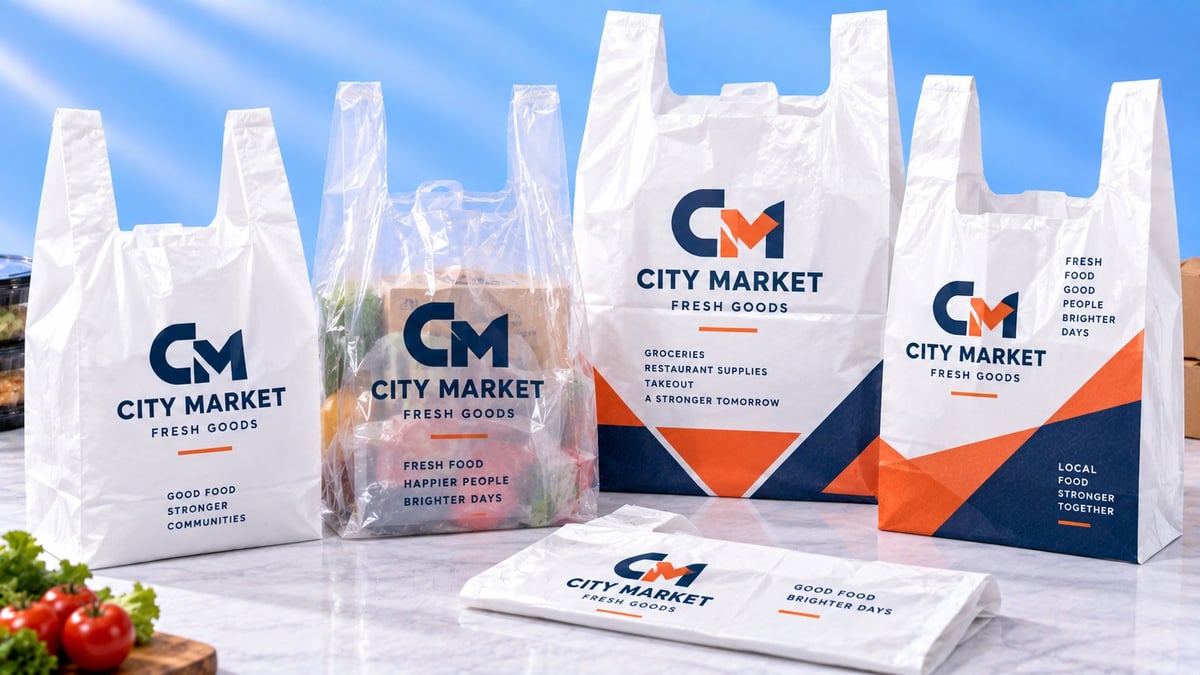
Custom Plastic T-Shirt Bags
Checkout bags for grocery and retail.
View & Configure →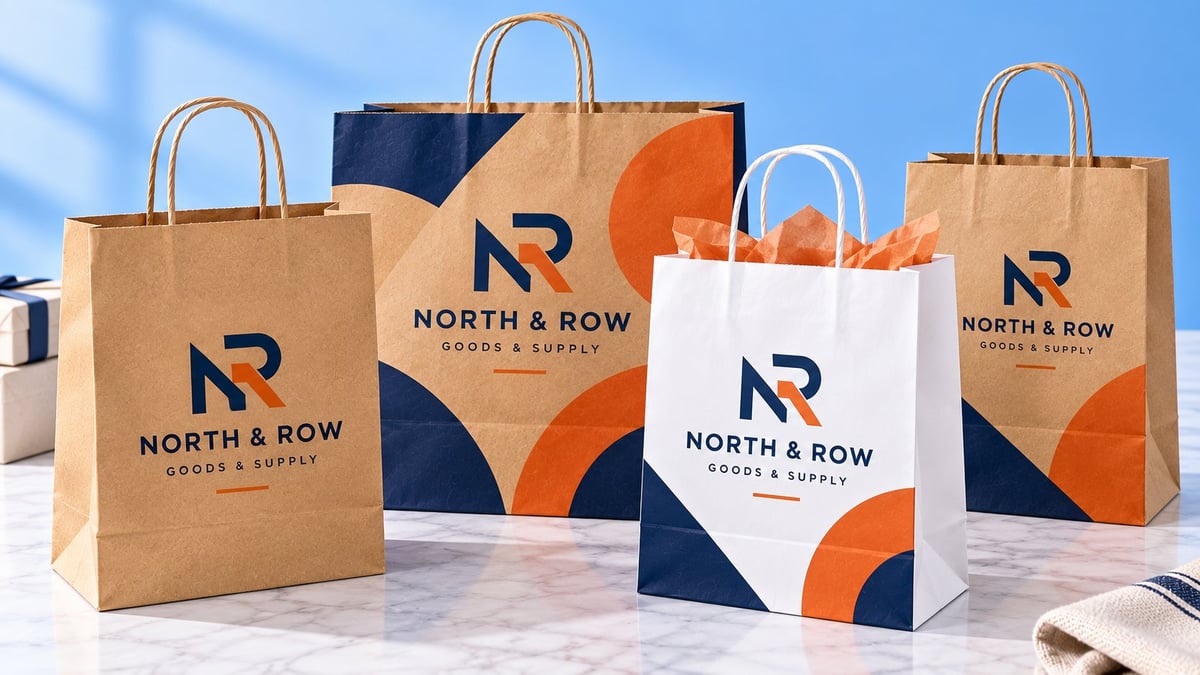
Custom Paper Shopping Bags
Handled paper bags for retail and boutiques.
View & Configure →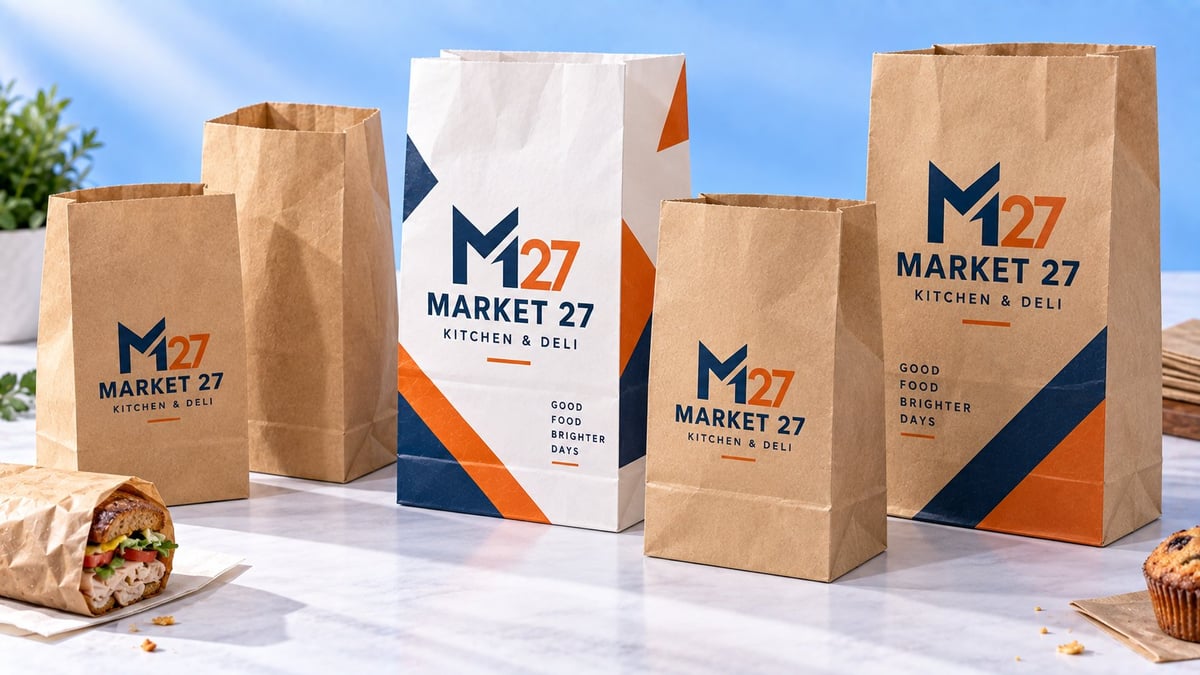
Custom SOS Paper Bags
Flat-bottom bags for food service and retail.
View & Configure →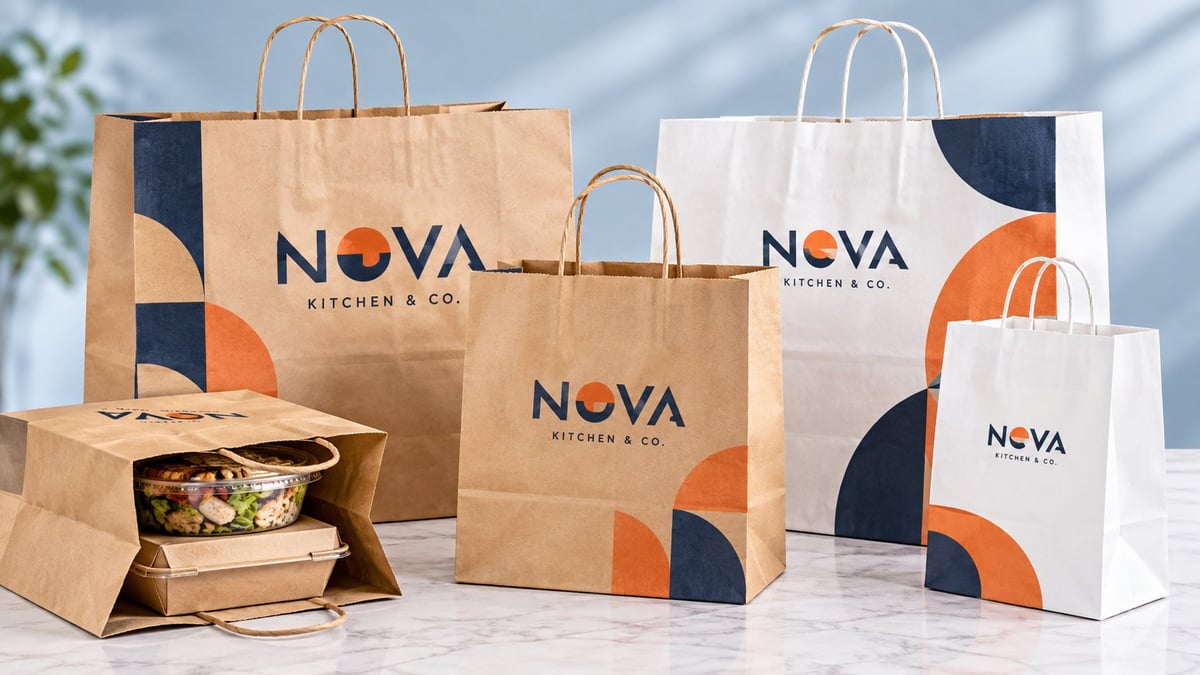
Custom Takeout Paper Bags
Printed bags for takeout and delivery.
View & Configure →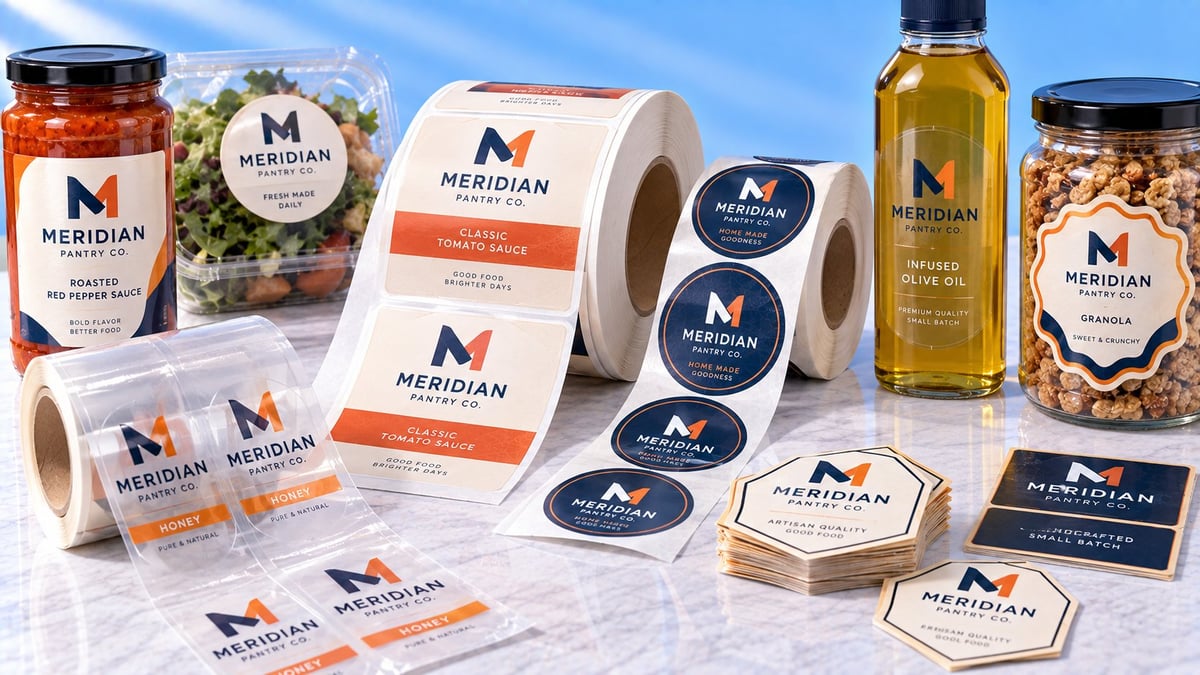
Custom Food Labels
Branded labels for packs, jars, and containers.
View & Configure →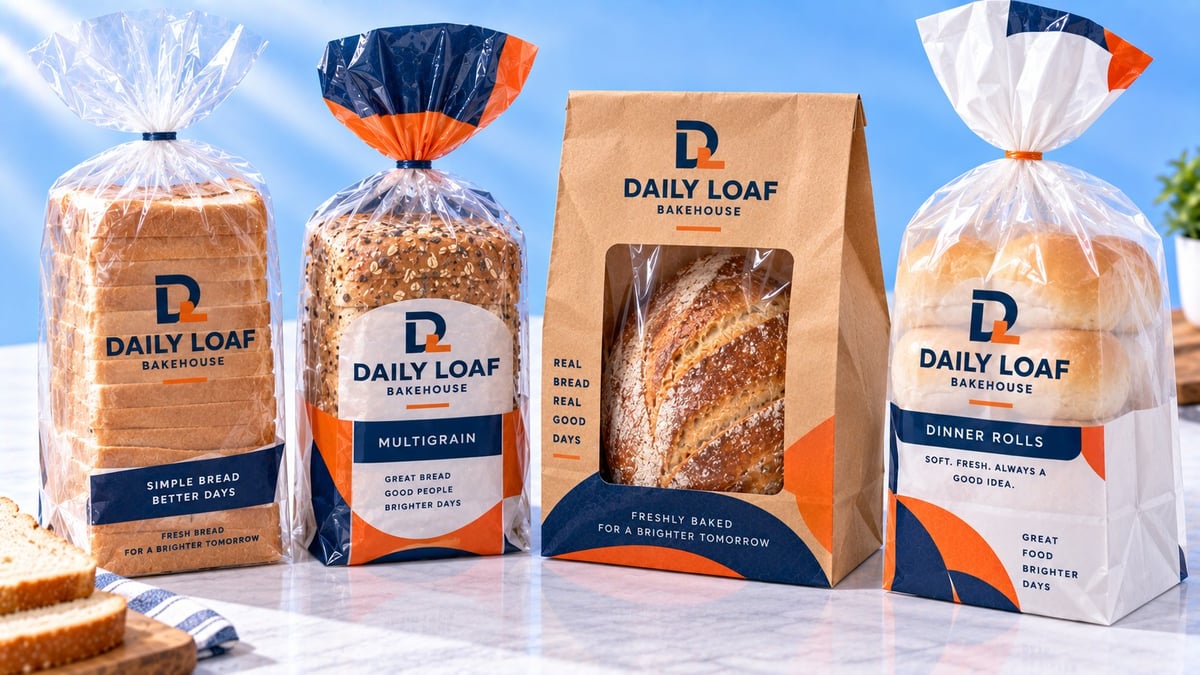
Custom Bread Bags
Printed bags sized for loaves.
View & Configure →
Ready to Put Your Brand on Custom Produce Bags?
Configure your packaging and we'll prepare a free digital mockup and custom pricing for your order.