Custom Plastic T-Shirt Bags
Checkout bags printed for grocery and retail
- Small through jumbo sizes, plus custom dimensions
- White, black, and custom colors
- Thickness specified to what you are bagging
- Volume pricing on the quantities a working store runs
- Free digital mockup before production
Build your custom plastic t-shirt bags
Print placement
Artwork
Optional — not required to order.No artwork needed today. Send your enquiry and our team will contact you to collect your design.
How Your Custom Order Works
Step 1: Choose Your Cups
Select your cup size, quantity, lids, and printing preferences.
Step 2: Review Your Order
Check your configuration and pricing or request a custom quote.
Step 3: Approve Your Artwork
Review your digital mockup before production begins.
Step 4: Production & Delivery
Production begins after the required approvals and payment arrangements are complete.
Your order
25,000 units
- Cups subtotal
- $2,750.00
- Matching lids
- Not included
- Standard shipping
- FREE
Product total before tax
$2,750.00
Per cup
$0.1100
FREE Standard ShippingIncluded for the contiguous United States. Express, Alaska, Hawaii and special freight are quoted separately. Sales tax is calculated on the checkout page.
Production & delivery
- Production
- Confirmed with your quote
- Shipping
- Confirmed with your quote
Free digital mockup first
Send your logo or finished artwork and we prepare a mockup before anything is manufactured.
Production timelines vary by product, order quantity and customization. Your schedule is confirmed with your quote.
Transit times vary by product, shipment size and destination, and are confirmed before your order is finalized.
Standard shipping is included in the price for eligible orders shipped within the contiguous United States. Express, Alaska, Hawaii and special freight are quoted separately.
Sales tax is calculated on the checkout page from your delivery address.
We review your files, send a free digital mockup, and begin production only after you approve the design and the quote.
How artwork approval works →- Matching lids confirmed for your selected cup specifications
- One team for cups, lids, artwork, and repeat orders
- Standard shipping included for eligible contiguous U.S. orders
At a glance
- Printing
- Custom logo printing
- Artwork
- Free digital mockup
- Minimum order
- Varies by configuration
- Production
- Confirmed with your final quote
- Shipping
- Multiple options available
- Delivery
- Nationwide
About Custom Plastic T-Shirt Bags
The T-shirt bag (so named for the shape of its handles) became the standard carryout bag because of a set of practical properties: it opens quickly, loads from the top without a support frame, carries by two wide handles that distribute weight across a hand, and nests flat in a dispenser so a cashier can pull one without looking. None of that is incidental. A bag that loads two seconds faster matters at a checkout running hundreds of transactions a day.
Size and thickness are the specifications that decide whether a bag actually works for your operation. Size follows what goes in it: a convenience store bagging a sandwich and a drink is not the same bag as a grocery running a full weekly shop. Thickness is what determines load rating and how the bag behaves in the hand: a very light bag that a customer is carrying a heavy load in will feel like it is about to fail, even if it holds. We confirm both against what you are actually bagging rather than publishing a single default.
Color is the third decision, and it is mostly a branding one. White reads clean and neutral and is the standard for grocery. Black reads more premium and hides handling marks, which suits specialty retail and apparel. Custom colors, where specified, let a store match its brand exactly: and since the bag is the last thing a customer sees on the way out, a brand-matched bag is a stronger impression than a generic one.
A T-Shirt Bag Is Three Measurements, Not One Word
This is the most useful thing to know before ordering checkout bags: the size band on a specification is not the measurement that decides whether the bag works. A T-shirt bag is described by three numbers, and two bags both called large from two different sources can differ on every one of them.
Read the full detailsHide details
The width runs across the bag face, from handle to handle. The side gusset, sometimes called the depth, is the fold that expands as the bag fills, and it is the measurement that decides whether the bag takes a boxed item laid flat or only a stack of soft goods. The length is the drop from the handle down to the base, and it sets how much of the product stays covered once the bag is carried.
The gusset is the one buyers most often leave out, and it is the one that surprises them. A bag with a shallow gusset and a generous width can look like the larger bag on a counter and take noticeably less, because a flat bag closes down onto its contents rather than expanding around them. If your checkout regularly handles boxed or rigid goods, the gusset depth is the figure worth settling before anything else.
Film thickness is the fourth variable, and it is a manufacturing specification rather than a size. It is what determines load rating and how the bag feels in the hand, and it is discussed below.
What to Tell Us Before You Order
What typically goes in
A convenience store bagging a sandwich and a bottle is not the same bag as a grocery running a weekly shop. This is the starting question.
Whether boxed goods are common
Boxed and rigid items need gusset depth. A bag sized only on width will close down onto a box rather than take it.
The heaviest regular load
This settles the film thickness. Tell us the heaviest thing a cashier routinely puts in, not the average.
The counter setup
Whether bags hang on a dispenser or stack in a well changes the handling, though not the bag itself.
Size, Film Thickness and Color
The size bands below cover the common carryout formats. Exact dimensions and thickness are confirmed with your quote against what you are bagging.
Read the full detailsHide details
Thickness is the specification that decides load rating and feel, and it is worth understanding as a cost decision rather than a quality one. Tell us what typically goes in the bag and we will confirm a gauge that carries it comfortably. For most operations the right answer is the thinnest bag that never feels like it might fail in the customer's hand, because thickness is a direct cost driver at the volumes a store runs, and a bag that is heavier than the load requires is money spent on nothing.
The counter-intuitive part is that a very light bag carrying a heavy load feels like it is about to fail even when it holds, and that feeling is what the customer remembers. The correct gauge is the one where the bag neither fails nor feels as though it might.
Color is specified up front because it changes the artwork rather than only the appearance. White takes full-color print cleanly and holds contrast well, which is why it is the standard for grocery. A black or colored ground requires artwork built for it, using light marks and knocked-out type, and it hides scuffs and handling marks better than white, which matters for apparel and specialty retail. Custom colors are matched to your brand where specified.
- White: clean and neutral, takes full-color print cleanly.
- Black: hides handling marks, suits specialty and apparel retail.
- Custom colors: matched to your brand where specified.
- Thickness confirmed against what you typically bag, not chosen from a default.
| Size Band | What It Typically Carries | Common Application |
|---|---|---|
| Small | Single item, pharmacy, convenience purchase | Counters, quick-serve, small retail |
| Medium | Everyday retail and takeout order | Convenience, specialty retail |
| Large | Full grocery order, general retail | Grocery, supermarkets |
| Extra large | Large or bulky loads | Grocery, warehouse retail |
| Jumbo | Oversized and multi-item loads | Warehouse clubs, bulk retail |
| Outside these bands | Smaller or larger than the common ladder | Tell us the load and we confirm dimensions |
Printing Directly onto the Film
Your artwork is printed directly onto the bag film rather than applied over it. There is no sticker and no label doing the work: the ink is on the surface the customer carries, and it is printed as part of manufacturing the bag.
The checkout bag occupies a specific and useful moment in the customer's experience. It is the last object they handle in the store, it travels to their car and into their home, and it often gets reused for liners, storage or the car. That is more exposure than most packaging gets, and it happens after the purchase is already made, which means it is working on the next visit rather than this one.
The design question is normally simple. A strong brand mark, legible at the distance a bag sits at on a counter, with enough contrast to read on whatever ground color you have chosen. Where a second print is specified, the reverse panel gives coverage from the other side and suits a secondary message. Print coverage is confirmed before production.
Because a store's bag is a standing cost, the print setup is a one-time investment: once artwork is approved it stays on file, and every subsequent reorder is a replenishment rather than a design project.
- One side: a strong brand mark on the front panel, seen while loading.
- Two sides: the reverse panel adds coverage and suits a secondary message.
- Brand color match: bags manufactured in your color, with or without a logo print.
- Multi-color print with Pantone matching available.
Which Checkout Bag Fits
Plastic T-Shirt Bag
- Nests flat in a dispenser
- Carries by two wide handles
- Lowest unit cost at volume
Paper Shopping Bag
- Twisted, flat or die-cut handles
- Stands unaided and holds a shape
- Largest uninterrupted print area
SOS Paper Bag
- Self-opening base
- Stands upright while packed
- Numbered and pound size ladders
There is no universal winner here. Tell us how the bag is used and how far it travels, and we will confirm which of these fits the transaction.
Paper or Plastic at the Checkout
This is a decision most stores face, and there is no universal answer. The two materials do different jobs and the right choice follows from how the bag is used rather than from which one costs less per unit.
Read the full detailsHide details
A plastic T-shirt bag loads fast, nests flat, carries by two wide handles and costs less at volume. It is the format built for a checkout running hundreds of transactions a day. A paper shopping bag holds a shape, stands on its own, carries more print area and reads as a presentation decision rather than a utility one. It costs more per unit and takes more storage space.
Many stores run both, and not as a compromise: paper for the retail or gift end of the business where the bag is part of the purchase, plastic for the grocery and utility transactions where speed and cost matter most. Both can carry the same artwork so the brand reads consistently whichever bag a customer receives.
On the environmental question, we do not compare the two. Both materials carry sustainability questions that depend on the specific product, the material it is made from and how it is disposed of, and we have not had those verified for the configurations on this site. If a material or compliance requirement matters to your business, state it as a requirement on your order and it is specified against that.
Why Stores Print Their Checkout Bags
A checkout bag is one of the highest-frequency branded items a retail business produces. A busy store runs through hundreds or thousands of them a week, every one of which leaves the building in a customer's hand. Measured per impression, few other packaging decisions cost less.
There is a local-marketing angle as well, and it is stronger than it sounds. A printed bag carried down a street, into an office, or onto transit is a moving advertisement for a business in its own neighborhood. That is why checkout bags are often the first packaging a growing store prints, and why they stay printed once the habit is established.
Free Digital Mockup and Optional Physical Sample
Before anything is manufactured, you receive a free digital mockup showing your artwork on the bag you have specified at the size, the film thickness, the color and the print coverage you chose. There is no charge for it and no production order is required to receive it. Where the artwork has to work on a black or colored ground, the mockup is the first place you see whether light marks and knocked-out type hold up, which is not something a design file shows on its own.
A checkout bag is a handling decision as much as a visual one, and handling is the part a screen cannot show. Whether a cashier can pull one from a dispenser without looking, whether it opens in the hand, and whether the chosen gauge feels right under your heaviest regular load are all things you find out by holding it. An optional custom physical sample can be produced after artwork approval, and the sample fee is credited back toward your production order if you proceed.
- The mockup is the artwork on the bag, at the size, color and print coverage you chose.
- The mockup is free and no production order is needed to receive it.
- If you proceed, the mockup is the artwork we run.
- A physical sample confirms the gauge and how the bag opens and loads at your counter.
- The sample cost is credited toward the production order if you go ahead.
How Pricing Works
Custom T-shirt bags are quoted per project rather than sold at a list price, because the cost moves with the size, the thickness, the color, how much print coverage your artwork uses, and the quantity you run. These are high-volume items with a low unit cost, which is why we quote across volume tiers rather than a single flat figure.
Submit your configuration in the configurator and a specialist returns pricing for your exact combination, including what the price covers: bags, printing, delivery, and artwork setup.
Minimum Order Quantity
Minimum order quantity depends on the size, thickness, color, and the print setup your artwork requires, and is confirmed with your quote. Custom colors and custom dimensions generally carry a higher minimum than a standard size in white, because they commit tooling that a stock specification does not.
Tell us your target quantity in the configurator and we will confirm the actual minimum for your build.
Artwork Requirements
Vector artwork gives the cleanest result, because the file scales to the bag without losing edge quality: which matters when the same artwork runs across several bag sizes.
- Preferred: AI, EPS, SVG, or PDF, vector formats.
- Acceptable: PNG or JPG at high resolution.
- If you only have your logo, we can prepare the bag layout for you.
- Artwork for a black or colored ground is built accordingly, light marks and knocked-out type.
- A color reference (hex code, Pantone number, or a physical sample) helps us match accurately.
Production & Delivery
T-shirt bags are custom manufactured after you approve the design and pricing. They are not pulled from stock. The sequence is: configure your specifications, receive a free digital mockup, approve the design and pricing, manufacturing begins, then the completed order is delivered nationwide.
Production timing and freight depend on the bag, quantity, and your delivery location, so they are confirmed as part of your quote rather than estimated here.
Reordering
Checkout bags are consumed continuously, so they reorder on a predictable cycle: which is exactly why keeping approved artwork on file matters here. Because your size, thickness, color, and approved artwork are recorded against your order, reordering is a matter of confirming your previous configuration and quantity. Tell a specialist you are reordering and reference your previous project.
Plastic or Paper: How to Choose
T-shirt bags are not the only checkout format, and the choice between plastic and paper is usually decided by how your counter works rather than by cost alone.
Read the full detailsHide details
- Plastic forms a handle from the bag itself, packs flat until needed, and suits a checkout moving quickly.
- Paper holds a rectangular shape and stands unaided, which suits a store where the bag is part of the presentation.
- Both can be printed with your branding, and many stores order both from one artwork set.
- The consideration-by-consideration comparison, including handle types, print coverage and colour options, sits on the paper shopping bag page linked below.
Who Orders Custom Plastic T-Shirt Bags?
These are the businesses that most often order this packaging. We have it produced to your specifications regardless of your size.
Frequently Asked Questions
The questions specific to Custom Plastic T-Shirt Bags, answered below. A handful of questions apply to every product we supply, and those live on the main FAQ page so they stay in one place.
Ordering, minimums, artwork and shippingWhat sizes and thicknesses are available?+
Can I print on both sides?+
Which color should I choose?+
Are these bags recyclable?+
How do I choose a thickness?+
Can you match my brand color?+
What is the minimum order for plastic t-shirt bags?+
How much do custom T-shirt bags cost?+
Do plastic t-shirt bags ship nationwide?+
What logo file works best on plastic t-shirt bags?+
Production Time and Shipping Time Are Different
Production time is the time required to manufacture your packaging. Transit time is the time required to transport it to you. These are separate: a production window is not a delivery date, and every project's timeline is confirmed with your final quote.
Production
Production timelines vary by product, order quantity, and customization requirements. Your estimated production schedule will be confirmed with your quote.
Standard shipping
Standard shipping transit times vary by product, shipment size, and destination. Estimated delivery timing will be confirmed before your order is finalized.
Express
Best when speed matters most. Faster transportation may be available depending on the product, quantity, manufacturing location, shipment size, destination and carrier availability. Express transportation can cost significantly more than standard, and an exact transit time is confirmed with your freight quote.
Standard
Included within the contiguous 48 states on eligible orders. Standard freight is generally the more economical option when your schedule allows additional flexibility. Actual transit time is confirmed with your quote, and standard shipping to Alaska, Hawaii, the U.S. territories and international destinations is charged separately.
Large-volume freight
Larger orders do not move as ordinary parcel shipments. They travel by freight instead, and the right method depends on the order size, the destination and what the shipment requires. YaSeen selects the method for your project and quotes it accordingly.
Not sure
If you are unsure, our team will recommend the option that best fits your deadline, quantity and destination once your project has been reviewed.
Free standard shipping is included within the contiguous 48 states on eligible orders. Express, Alaska, Hawaii, the U.S. territories and international freight are confirmed with your final quote. Shipping & delivery details
See Your Packaging Before Production
A free digital mockup is available after you submit your artwork, so you can review your branding on the selected packaging configuration before production. A custom physical sample is optional and separate, and is available after artwork approval.
Free Digital Mockup
Review your artwork on the packaging configuration you selected before anything is manufactured.
- Free, and available once your artwork is submitted
- Your artwork placed on the packaging configuration you selected
- No production order is needed first
- Reviewed with you before anything is manufactured
Optional Custom Physical Sample
Optional, and only after you have approved the artwork. A sample is then manufactured from your approved design so you can evaluate the actual packaging before the production order.
- Artwork is approved before the sample is made, so the sample matches what you would actually run
- Approximately 2 to 3 weeks after artwork approval
- Approximately $150 to $250 depending on the product and configuration
- Credited toward your production order if you go ahead
The mockup is digital and free, and is prepared from the artwork you submit. The physical sample is the paid, optional step described above. How samples fit into an order
What Happens After You Submit
Submitting a project starts a review, not a charge. Here is the whole process from your submission to your delivery.
- 1
Project received
We receive your specifications, quantity, artwork and delivery information.
- 2
Project review
Our team reviews the packaging requirements and verifies production and delivery details.
- 3
Final quote
You receive confirmed pricing, applicable freight, payment terms and an estimated timeline.
- 4
Secure payment
If you choose to proceed, you receive approved payment instructions or a secure invoice.
- 5
Digital proof
Your artwork is prepared and reviewed for the packaging you selected.
- 6
Your approval
You approve the final digital proof, or request corrections.
- 7
Production
Production begins only after payment requirements are satisfied and final artwork is approved.
- 8
Shipping
Your completed packaging ships using the delivery method agreed on your quote.
- 9
Delivery
Your packaging arrives according to the confirmed project arrangements.
- 10
Reorder
Your approved specifications and artwork can be referenced to make future orders easier.
Why Businesses Order From YaSeen Packaging
Free Digital Mockups
Submit your artwork and review how your branding looks on the selected packaging configuration before production begins.
Direct Manufacturer Relationships
We work directly with packaging manufacturers to provide custom packaging built around your brand and order requirements.
Packaging Built Around Your Brand
Choose the size, configuration and printing that fit your product instead of building your brand around one stock option.
Multiple Packaging Products, One Partner
Build a coordinated packaging program across cups, bags, pouches, foodservice packaging, bottles and jars.
Artwork-to-Production Support
Send finished artwork, a logo or the brand assets you have. We help prepare the packaging layout and move the approved project toward production.
Minneapolis-Based, Nationwide Service
Based in Minneapolis and serving businesses nationwide, with a physical showroom and office for customers who want to meet us locally.
Packaging Guides
Planning your order? These guides answer the questions that come up most often.
Related Products
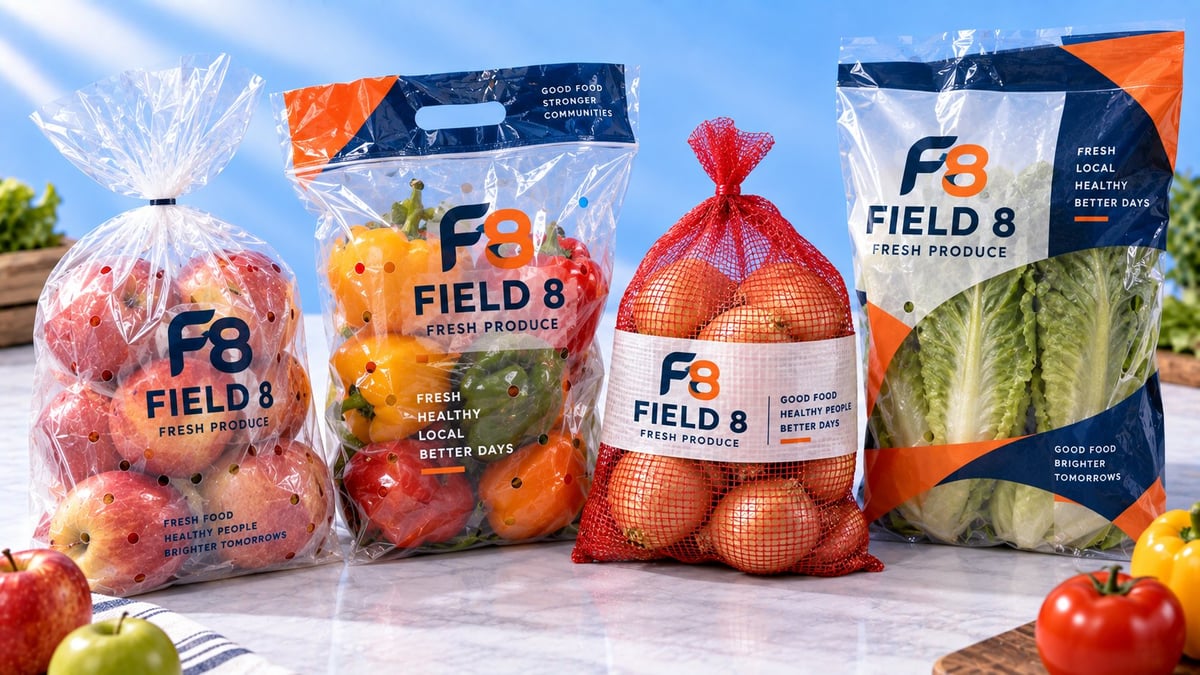
Custom Produce Bags
Printed bags for produce and bulk departments.
View & Configure →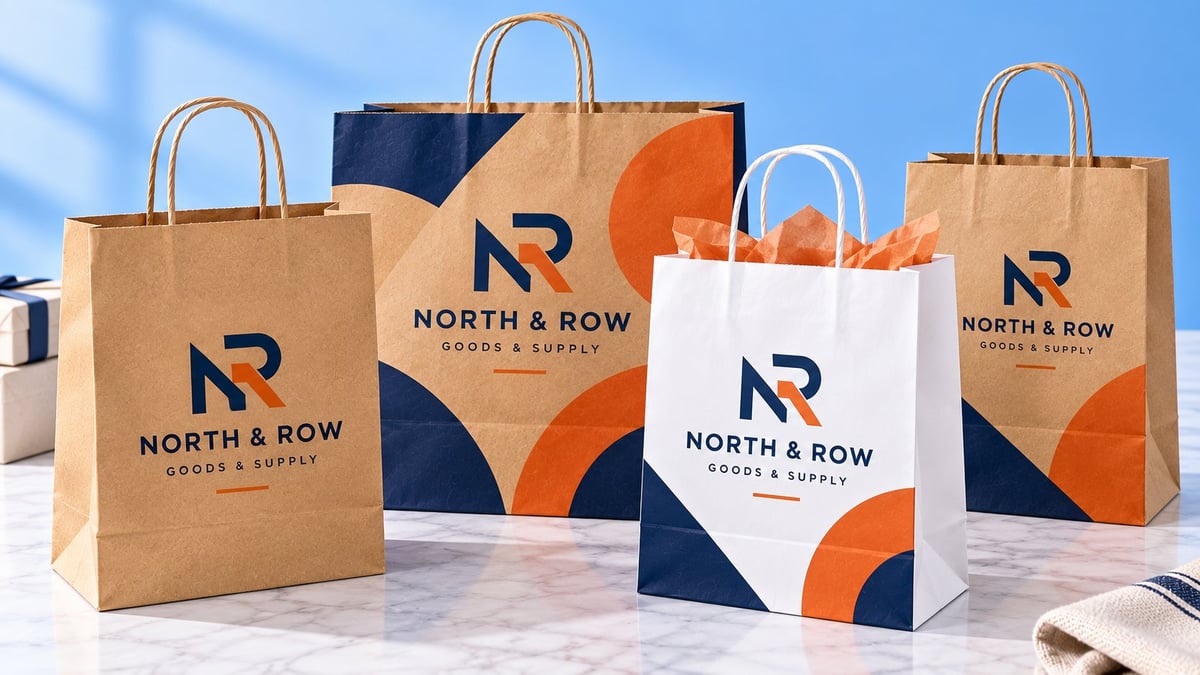
Custom Paper Shopping Bags
Handled paper bags for retail and boutiques.
View & Configure →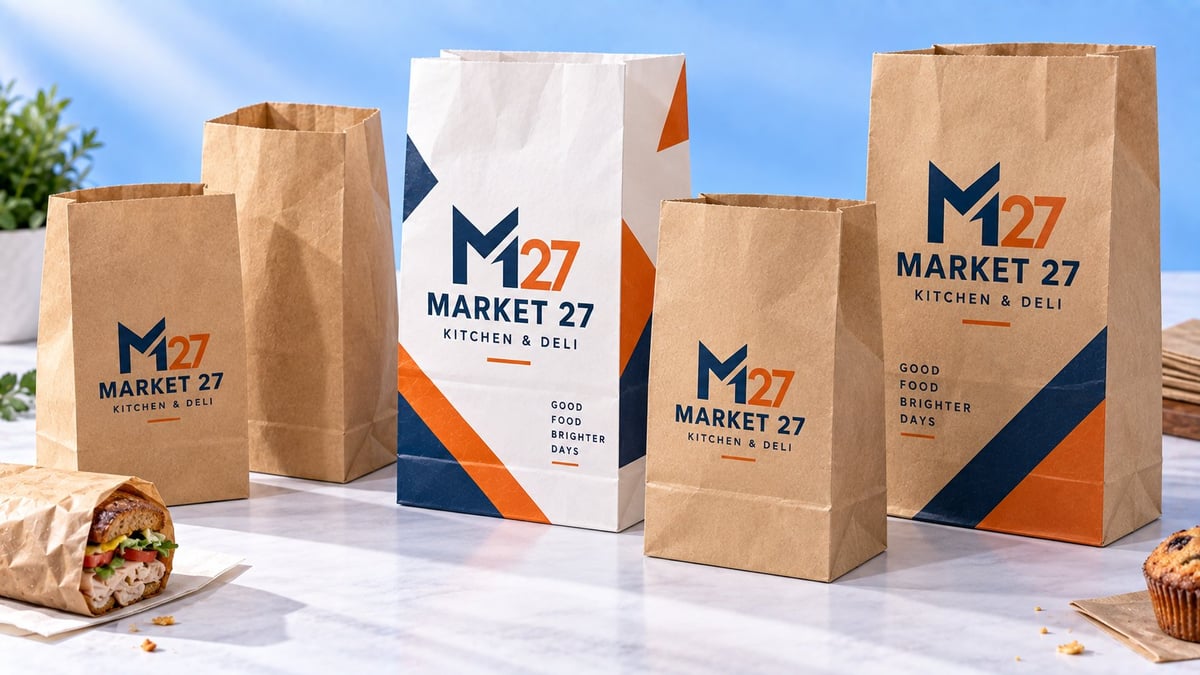
Custom SOS Paper Bags
Flat-bottom bags for food service and retail.
View & Configure →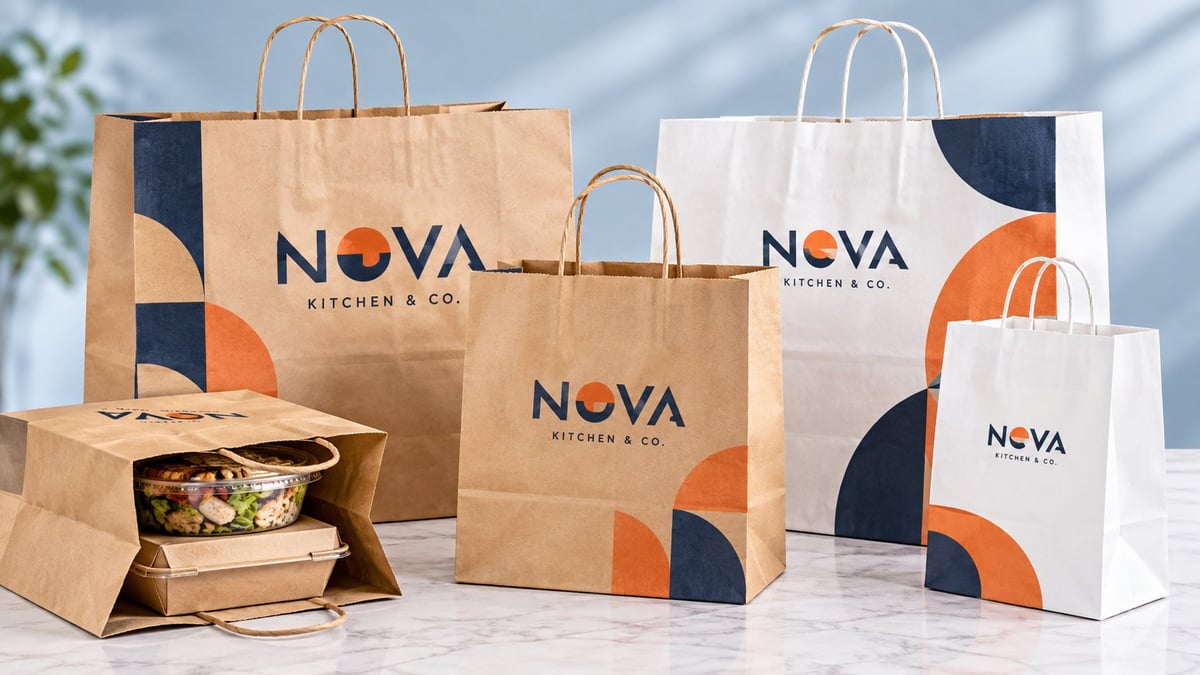
Custom Takeout Paper Bags
Printed bags for takeout and delivery.
View & Configure →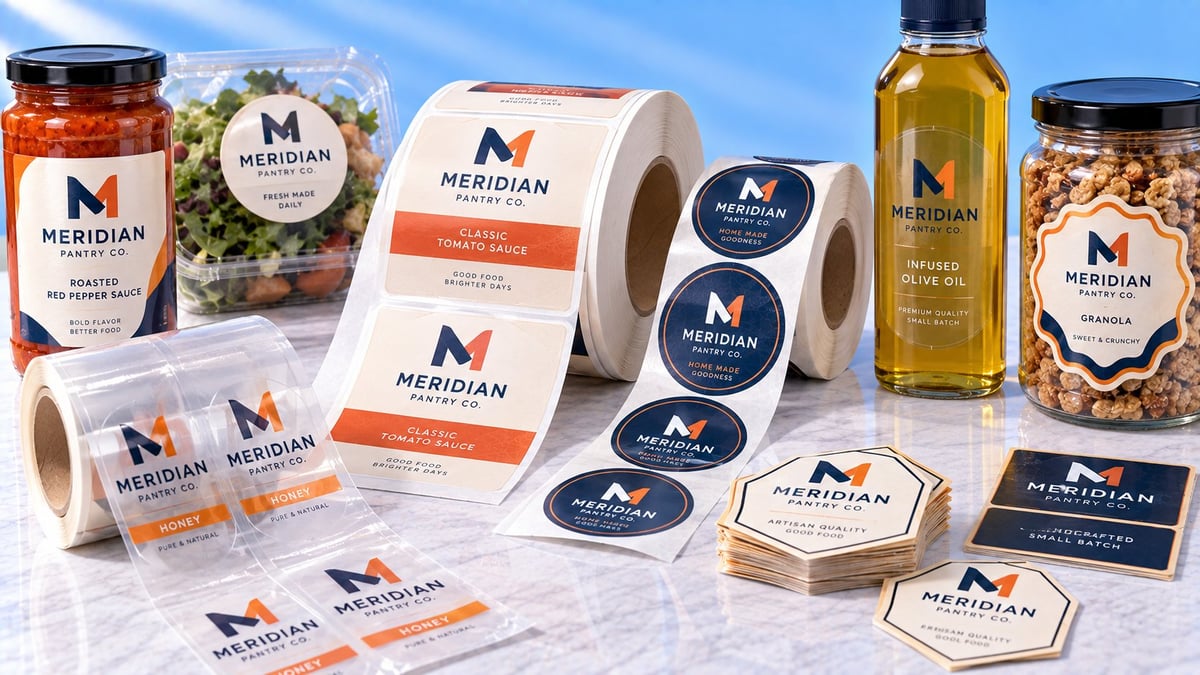
Custom Food Labels
Branded labels for packs, jars, and containers.
View & Configure →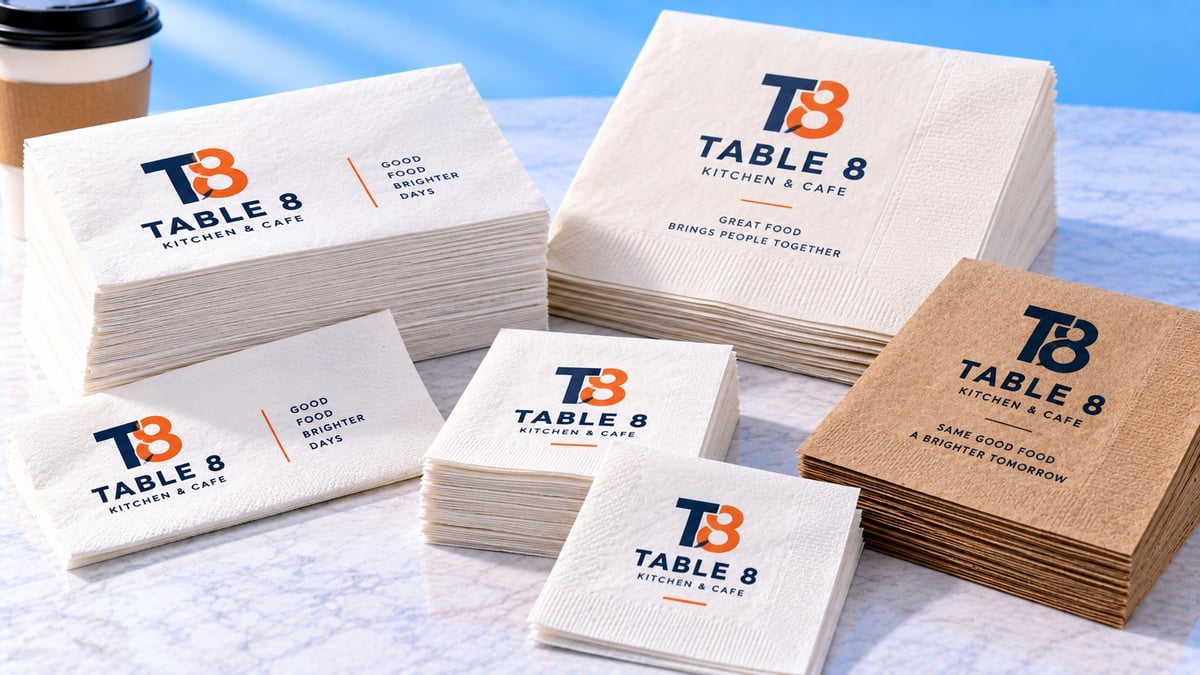
Custom Napkins
Printed napkins for counters and tables.
View & Configure →
Ready to Put Your Brand on Custom Plastic T-Shirt Bags?
Configure your packaging and we'll prepare a free digital mockup and custom pricing for your order.