Custom Coffee Bags
Retail coffee packaging built for roasters
- Degassing valve available where your roast and packing timing call for one
- Capacities from 4 oz to 5 lb, with bulk sizes by request
- Stand-up, flat-bottom, and side-gusset formats
- Barrier structure recommended for your roast and shelf life
- Free digital mockup before production
Build your custom coffee bags
Artwork
Optional — not required to order.No artwork needed today. Send your enquiry and our team will contact you to collect your design.
How Your Custom Order Works
Step 1: Choose Your Cups
Select your cup size, quantity, lids, and printing preferences.
Step 2: Review Your Order
Check your configuration and pricing or request a custom quote.
Step 3: Approve Your Artwork
Review your digital mockup before production begins.
Step 4: Production & Delivery
Production begins after the required approvals and payment arrangements are complete.
Your order
10,000
- Cups subtotal
- $3,900.00
- Matching lids
- Not included
- Standard shipping
- FREE
Product total before tax
$3,900.00
Per cup
$0.3900
FREE Standard ShippingIncluded for the contiguous United States. Express, Alaska, Hawaii and special freight are quoted separately. Sales tax is calculated on the checkout page.
Production & delivery
- Production
- Confirmed with your quote
- Shipping
- Confirmed with your quote
Free digital mockup first
Send your logo or finished artwork and we prepare a mockup before anything is manufactured.
Production timelines vary by product, order quantity and customization. Your schedule is confirmed with your quote.
Transit times vary by product, shipment size and destination, and are confirmed before your order is finalized.
Standard shipping is included in the price for eligible orders shipped within the contiguous United States. Express, Alaska, Hawaii and special freight are quoted separately.
Sales tax is calculated on the checkout page from your delivery address.
We review your files, send a free digital mockup, and begin production only after you approve the design and the quote.
How artwork approval works →- Matching lids confirmed for your selected cup specifications
- One team for cups, lids, artwork, and repeat orders
- Standard shipping included for eligible contiguous U.S. orders
At a glance
- Printing
- Custom logo printing
- Artwork
- Free digital mockup
- Minimum order
- Varies by configuration
- Production
- Confirmed with your final quote
- Shipping
- Multiple options available
- Delivery
- Nationwide
About Custom Coffee Bags
A coffee bag is doing two jobs at once. Freshly roasted beans release carbon dioxide for a period after roasting, and if that gas has nowhere to go it pressurises the sealed bag. At the same time, oxygen reaching the beans is what drives staling. A degassing valve is one way to give the gas a route out; the barrier structure is what keeps oxygen from getting in. Which combination your bag needs is a question about how you roast, pack and ship, not a fixed specification.
That is why coffee packaging is specified rather than picked off a shelf. The right combination of barrier film, valve, zipper and format depends on whether you sell whole bean or ground, how soon after roasting you pack, how the bag is stored and shipped, and whether your customer opens it once or repeatedly. None of those has a single correct answer for every roaster.
YaSeen manufactures your coffee bags after you approve the design and pricing. Your artwork, capacity, and feature set are recorded against your order, which makes repeat runs straightforward.
Matching the Bag to How the Coffee Is Sold
Format guidance by situation. Fill weights are confirmed against your product rather than recommended from a chart.
| Situation | Format that suits it | What confirms the dimensions |
|---|---|---|
| Whole bean, packed close to roast | Bag with a degassing valve | Net weight, roast level, and how soon after roasting you pack |
| Whole bean sold for repeated home use | Stand-up or flat-bottom with valve and zipper | Net weight and how often the customer reopens the bag |
| Ground coffee sold in one-opening packs | Valve-only or simple sealed bag | Net weight and grind, since ground coffee settles tighter than whole bean |
| Subscription or gift pack | Flat-bottom pouch | Net weight and the presentation the pack has to carry |
| Food-service or wholesale account | Large format, often side-gusset | Net weight and how the kitchen portions from it |
| Trial or single-brew sample | Small flat pouch or narrow stand-up | Net weight and whether one bag is one brew |
No weight column is published on purpose. Ground and whole bean coffee of the same weight are two different volumes, and roast level moves it again.
If you already have a bag you are happy with, send us its measurements or a physical sample and we match against it.
Coffee Sizes by Weight and by Volume
Coffee is the clearest example of why a pouch size and a fill weight are different things. Roasted whole bean is relatively light for its volume. Ground coffee settles and packs far tighter, so the same weight of ground coffee needs a smaller bag than the same weight of whole bean. A dark roast and a light roast of the same bean also differ in density because the roast changes how much the bean has expanded.
That matters when the bag is designed to hold its shape. A stand-up or flat-bottom coffee bag needs enough fill to open out, and a bag sized from the weight alone can end up underfilled once the coffee settles in transit. It is also the reason a roaster moving from whole bean to pre-ground for the same 12 oz pack sometimes finds the pack presents differently.
So we size from your product. The table below maps a selling situation to a format, and every figure is confirmed against your bean, your grind and your roast before anything is manufactured.
What to Tell Us for an Accurate Size
Coffee density changes with the bean, the grind and the roast, so the fill weight alone does not settle the bag dimensions. These are the characteristics that do.
- Whole bean or ground. Ground coffee settles far tighter, so the same weight needs less volume.
- Target fill weight. The net weight you intend to declare on the bag.
- Roast level. Roast changes how much the bean has expanded, which changes density for the same weight.
- How soon after roasting you pack. This is what decides whether a valve is needed rather than simply wanted.
- How the bag is stored and shipped. A bag that sits in a warehouse behaves differently from one shipped straight out.
- An existing bag or a coffee sample. The fastest route to a right answer, and it settles the density question at the same time.
We will confirm the valve fitting as part of this rather than assuming one. Send what you have and we will ask for anything missing.
What Decides the Dimensions
These are the variables that actually move the answer for coffee, and every one of them is something a roaster already knows.
Read the full detailsHide details
Capacity Options
Capacity is the first decision because it drives the panel dimensions, which in turn affect how much artwork you have to work with. These are the fill weights most often ordered.
| Capacity | Typical Use | Common Format |
|---|---|---|
| 4 oz | Samples, single-cup trial packs | Stand-up |
| 8 oz | Small retail bag, gift sets | Stand-up |
| 12 oz | Standard retail: the most common size | Stand-up, flat-bottom |
| 1 lb | Standard retail, subscription boxes | Flat-bottom, side-gusset |
| 2 lb | Family size, wholesale accounts | Side-gusset, flat-bottom |
| 5 lb | Bulk and food-service | Side-gusset |
| Custom | Tell us your fill weight and density | Confirmed with quote |
Bag Formats
The format determines how your bag sits on a shelf and how much uninterrupted print area it gives you. The right answer usually comes down to where the bag will be sold.
- Stand-up pouch: self-standing with a bottom gusset. The most economical format and the most common for retail coffee.
- Flat-bottom pouch: a box-style base with a wide front and back panel. The strongest shelf presence and the most room for artwork.
- Side-gusset bag: the classic coffee bag silhouette with folded sides. Familiar to wholesale and food-service buyers, and it packs efficiently into cases.
- Not sure: tell us where the bag will be sold and we will recommend a format with your quote.
Which Coffee Bag Format Fits
The construction decides shelf presence, artwork area and case packing. Selling channel usually settles which of the three matters most.
Stand-Up Pouch
- Self-standing on a bottom gusset
- The most economical of the three
- Packs flat before filling, which suits small storage
Flat-Bottom Pouch
- Box-style base, so it stands squarely and reads like boxed goods
- Widest front and back panels, the most artwork room
- Holds shape well once filled
Side-Gusset Bag
- Folded sides, the familiar coffee bag silhouette
- Packs efficiently into shipping cases
- Suits 2 lb and 5 lb bulk formats
Tell us where the bag is sold and how it ships and we will confirm which construction fits. Choosing by appearance alone is how a roaster ends up with a format that photographs well and packs badly.
Stand-Up, Flat-Bottom or Side-Gusset
All three hold coffee. They differ in how the bag presents on a shelf, how much of the front panel you can print, and how the bag behaves once it is boxed for shipping. That is usually what decides it.
Who Buys Custom Coffee Bags
The bag changes with how the coffee is sold, and that usually follows from the business rather than from the bean.
- Roasters selling retail: the bag is the product's packaging, so shelf presence and artwork carry the weight. Stand-up and flat-bottom formats with a valve and zipper are the usual starting point.
- Roasters selling wholesale: the bag has to survive case packing and travel to another business rather than sit on a shelf. Side-gusset formats in larger capacities are common here.
- Cafés selling beans off the counter: smaller capacities sold alongside drinks, often with a label carrying the roast information rather than a full printed panel.
- Coffee subscription and gift services: the pack is opened repeatedly and often posted, so a zipper and the presentation of opening it matter more than shelf presence.
- Food service and office accounts: bulk capacities portioned in a kitchen, where the bag is a working container rather than a retail object.
- Private label and co-packing: your customer's brand on the bag you fill, which puts the artwork and the specification in someone else's hands.
On the Shelf and on the Packing Bench
A coffee bag is handled in two very different places: once by you when it is filled and sealed, and once by a customer deciding whether to pick it up. Both are worth thinking about before the artwork is finalised.
Read the full detailsHide details
On the packing bench, the bag has to be filled, settled and sealed at the rate your production runs. A stand-up pouch arrives flat and opens out as it fills, which is quick on a small bench but needs enough fill to stand properly, so a bag filled short of its intended weight will not present the way the mockup showed it. A flat-bottom pouch holds its shape earlier in the fill, which suits filling in batches. A side-gusset bag is the easiest to stack and case once sealed.
On the shelf, the front panel does the selling. A flat-bottom pouch gives the widest flat face, so a design with a lot of information has somewhere to sit. A stand-up pouch gives a narrower face but takes less depth on the shelf, which matters when a retailer allocates a fixed facing to your range. Side-gusset bags are the least shelf-oriented of the three and are usually boxed or shelved face-out by the case.
One practical point about the front panel: the coffee's own information, the net weight, the roast level and anything your market requires, competes with the brand for the same face. Settling early which elements must appear on the front and which can move to the back is what keeps the artwork from being redrawn after the mockup.
Freshness Features, Valve, Zipper, and Barrier
These decisions determine how long your coffee tastes the way it did on roast day, and each one adds cost. The right combination depends on your product, not on a default.
- Degassing valve: fitted where the coffee is packed close enough to roasting that it is still releasing gas. It vents CO2 outward while blocking oxygen, and it is an option rather than a standard fitting on every coffee bag.
- Resealable zipper: for bags your customer opens repeatedly. Standard on most retail whole-bean packaging.
- Tear notch: a clean opening line, usually paired with a zipper.
- High-barrier film: for longer shelf life or slower sell-through. Recommended for your specific product with your quote.
- Plain pouch: for products that do not degas, or where cost is the priority.
Printing & Finish
Coffee bags are sold from a shelf or a screen alongside competitors, so the print and finish carry more weight here than in almost any other packaging category.
Read the full detailsHide details
- Matte: soft, premium hand-feel. The most common choice for specialty coffee.
- Gloss: higher contrast and more vivid color, which suits bold graphic brands.
- Soft-touch: a velvet-like matte that reads as distinctly premium.
- Natural / uncoated: a rustic, tactile surface that suits small-batch and craft positioning.
How Pricing Works
Coffee bag pricing depends on capacity, format, whether a valve or zipper is fitted, the barrier structure, the finish, how much print coverage your artwork uses, and the quantity you run. A 12 oz stand-up bag with a valve and zipper costs meaningfully more per unit than a plain 8 oz pouch, which is why we publish a range rather than one figure.
Larger runs lower the cost per unit. Submit your configuration and a specialist returns pricing for your exact combination, including what the price covers: pouch, printing, valve, zipper, freight, and artwork setup.
Artwork Requirements
For the cleanest print result, supply vector artwork. Vector files scale across your full range without losing edge quality, which matters when the same logo prints on a 4 oz sample bag and a 5 lb bulk bag.
- Preferred: AI, EPS, SVG, or PDF, vector formats.
- Acceptable: PNG or JPG at high resolution.
- If you only have your logo, we can prepare the packaging layout for you.
- A color reference (hex code, Pantone number, or a physical sample) helps us match accurately.
Minimum Order Quantity
Coffee bag minimums depend on the format, the barrier structure, and whether a valve or zipper is fitted: a plain pouch can start smaller than one with a valve and a printed wrap. Tell us your target quantity in the configurator and we will confirm the actual minimum for your build.
Production & Delivery
Pouches are produced for your order rather than picked from inventory. Production begins once you approve the design and pricing. The sequence is: configure your specifications, receive a free digital mockup, approve the design and pricing, manufacturing begins, then the completed order is delivered nationwide.
Production timing and freight depend on the bag, quantity, and your delivery location, so they are confirmed as part of your quote rather than estimated here.
Reordering
Because your specifications, barrier structure, and approved artwork are recorded against your order, reordering is a matter of confirming your previous configuration and quantity. You do not need to rebuild the specification from scratch. This matters most for roasters running the same bag across multiple roast cycles.
Who Orders Custom Coffee Bags?
These are the businesses that most often order this packaging. We have it produced to your specifications regardless of your size.
Frequently Asked Questions
The questions specific to Custom Coffee Bags, answered below. A handful of questions apply to every product we supply, and those live on the main FAQ page so they stay in one place.
Ordering, minimums, artwork and shippingDoes my coffee bag need a degassing valve?+
Should I choose stand-up, flat-bottom, or side-gusset?+
Do I need a zipper?+
What capacities can I order?+
Can I print my logo on the bags?+
How much do custom coffee bags cost?+
What is the minimum order for coffee bags?+
Do coffee bags ship nationwide?+
Can I see a coffee bag sample before ordering?+
What logo file works best on coffee bags?+
Can I order coffee bags together with other packaging?+
Production Time and Shipping Time Are Different
Production time is the time required to manufacture your packaging. Transit time is the time required to transport it to you. These are separate: a production window is not a delivery date, and every project's timeline is confirmed with your final quote.
Production
Production timelines vary by product, order quantity, and customization requirements. Your estimated production schedule will be confirmed with your quote.
Standard shipping
Standard shipping transit times vary by product, shipment size, and destination. Estimated delivery timing will be confirmed before your order is finalized.
Express
Best when speed matters most. Faster transportation may be available depending on the product, quantity, manufacturing location, shipment size, destination and carrier availability. Express transportation can cost significantly more than standard, and an exact transit time is confirmed with your freight quote.
Standard
Included within the contiguous 48 states on eligible orders. Standard freight is generally the more economical option when your schedule allows additional flexibility. Actual transit time is confirmed with your quote, and standard shipping to Alaska, Hawaii, the U.S. territories and international destinations is charged separately.
Large-volume freight
Larger orders do not move as ordinary parcel shipments. They travel by freight instead, and the right method depends on the order size, the destination and what the shipment requires. YaSeen selects the method for your project and quotes it accordingly.
Not sure
If you are unsure, our team will recommend the option that best fits your deadline, quantity and destination once your project has been reviewed.
Free standard shipping is included within the contiguous 48 states on eligible orders. Express, Alaska, Hawaii, the U.S. territories and international freight are confirmed with your final quote. Shipping & delivery details
See Your Packaging Before Production
A free digital mockup is available after you submit your artwork, so you can review your branding on the selected packaging configuration before production. A custom physical sample is optional and separate, and is available after artwork approval.
Free Digital Mockup
Review your artwork on the packaging configuration you selected before anything is manufactured.
- Free, and available once your artwork is submitted
- Your artwork placed on the packaging configuration you selected
- No production order is needed first
- Reviewed with you before anything is manufactured
Optional Custom Physical Sample
Optional, and only after you have approved the artwork. A sample is then manufactured from your approved design so you can evaluate the actual packaging before the production order.
- Artwork is approved before the sample is made, so the sample matches what you would actually run
- Approximately 2 to 3 weeks after artwork approval
- Approximately $150 to $250 depending on the product and configuration
- Credited toward your production order if you go ahead
The mockup is digital and free, and is prepared from the artwork you submit. The physical sample is the paid, optional step described above. How samples fit into an order
What Happens After You Submit
Submitting a project starts a review, not a charge. Here is the whole process from your submission to your delivery.
- 1
Project received
We receive your specifications, quantity, artwork and delivery information.
- 2
Project review
Our team reviews the packaging requirements and verifies production and delivery details.
- 3
Final quote
You receive confirmed pricing, applicable freight, payment terms and an estimated timeline.
- 4
Secure payment
If you choose to proceed, you receive approved payment instructions or a secure invoice.
- 5
Digital proof
Your artwork is prepared and reviewed for the packaging you selected.
- 6
Your approval
You approve the final digital proof, or request corrections.
- 7
Production
Production begins only after payment requirements are satisfied and final artwork is approved.
- 8
Shipping
Your completed packaging ships using the delivery method agreed on your quote.
- 9
Delivery
Your packaging arrives according to the confirmed project arrangements.
- 10
Reorder
Your approved specifications and artwork can be referenced to make future orders easier.
Why Businesses Order From YaSeen Packaging
Free Digital Mockups
Submit your artwork and review how your branding looks on the selected packaging configuration before production begins.
Direct Manufacturer Relationships
We work directly with packaging manufacturers to provide custom packaging built around your brand and order requirements.
Packaging Built Around Your Brand
Choose the size, configuration and printing that fit your product instead of building your brand around one stock option.
Multiple Packaging Products, One Partner
Build a coordinated packaging program across cups, bags, pouches, foodservice packaging, bottles and jars.
Artwork-to-Production Support
Send finished artwork, a logo or the brand assets you have. We help prepare the packaging layout and move the approved project toward production.
Minneapolis-Based, Nationwide Service
Based in Minneapolis and serving businesses nationwide, with a physical showroom and office for customers who want to meet us locally.
Packaging Guides
Planning your order? These guides answer the questions that come up most often.
Related Products
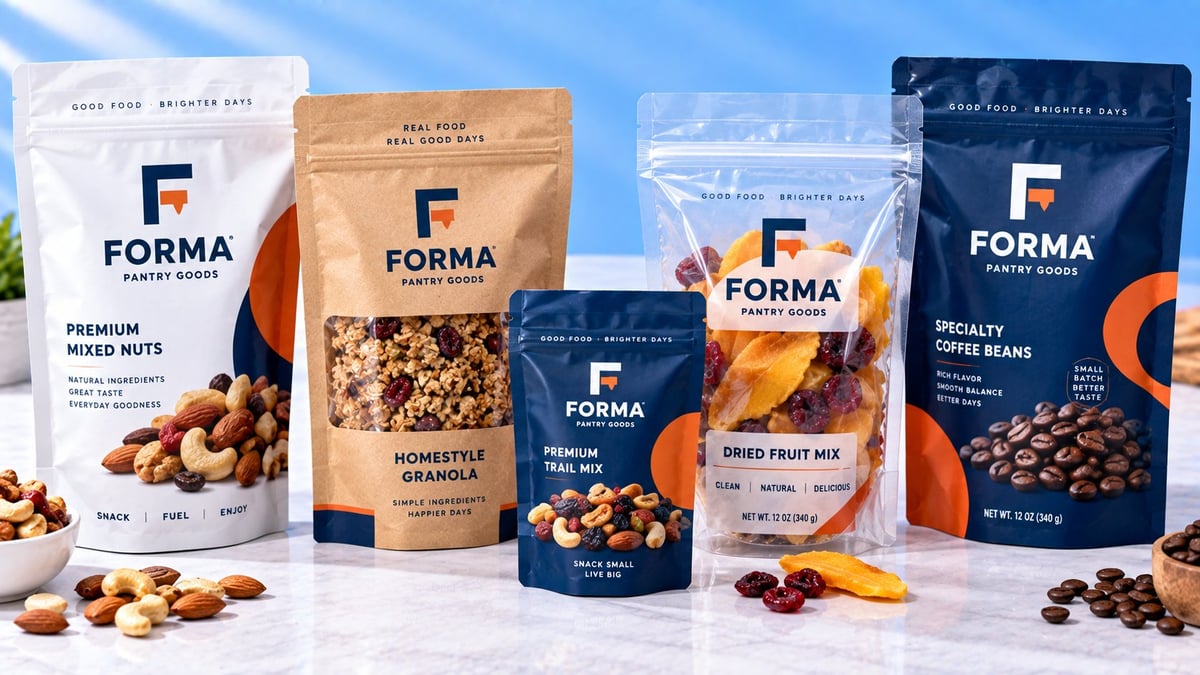
Custom Stand-Up Pouches
Self-standing flexible pouches for retail goods.
View & Configure →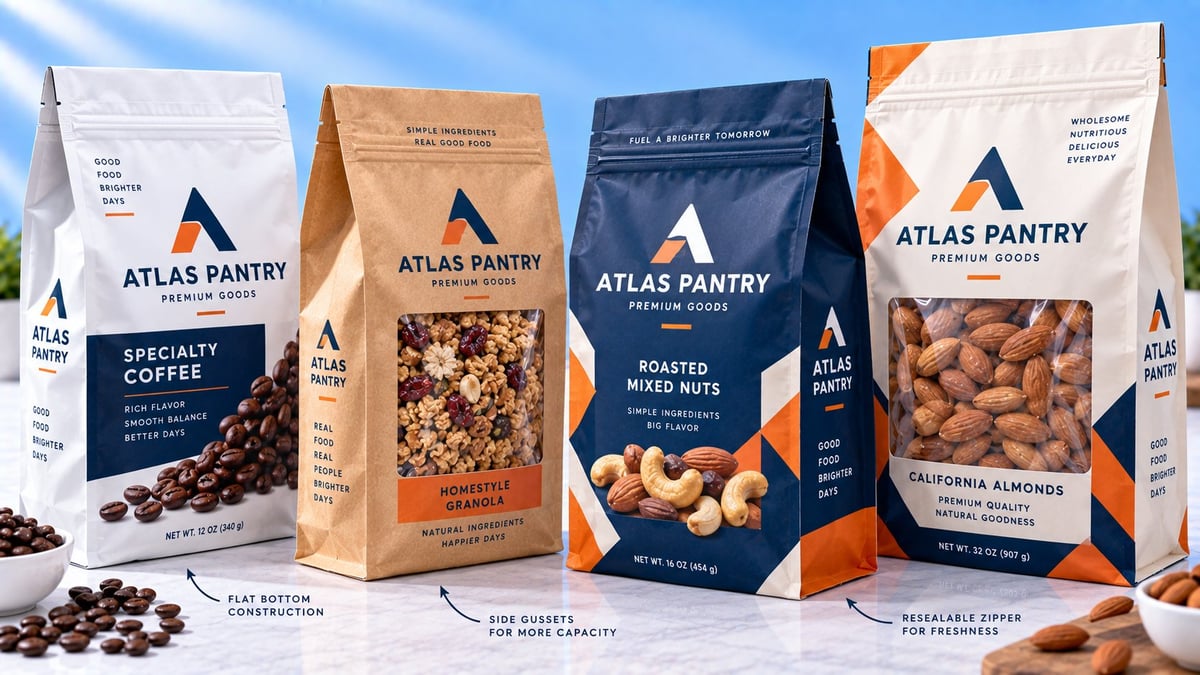
Custom Flat-Bottom Pouches
Premium box-style pouches with wide print panels.
View & Configure →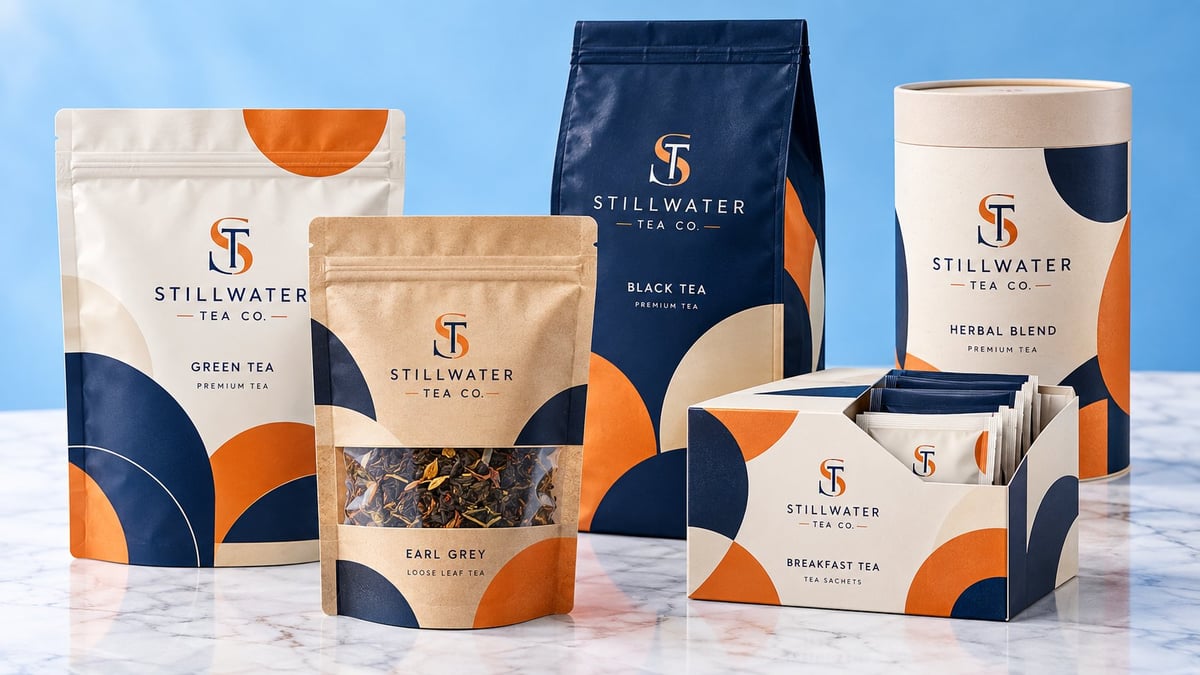
Custom Tea Packaging
Retail tea pouches and packaging for tea brands.
View & Configure →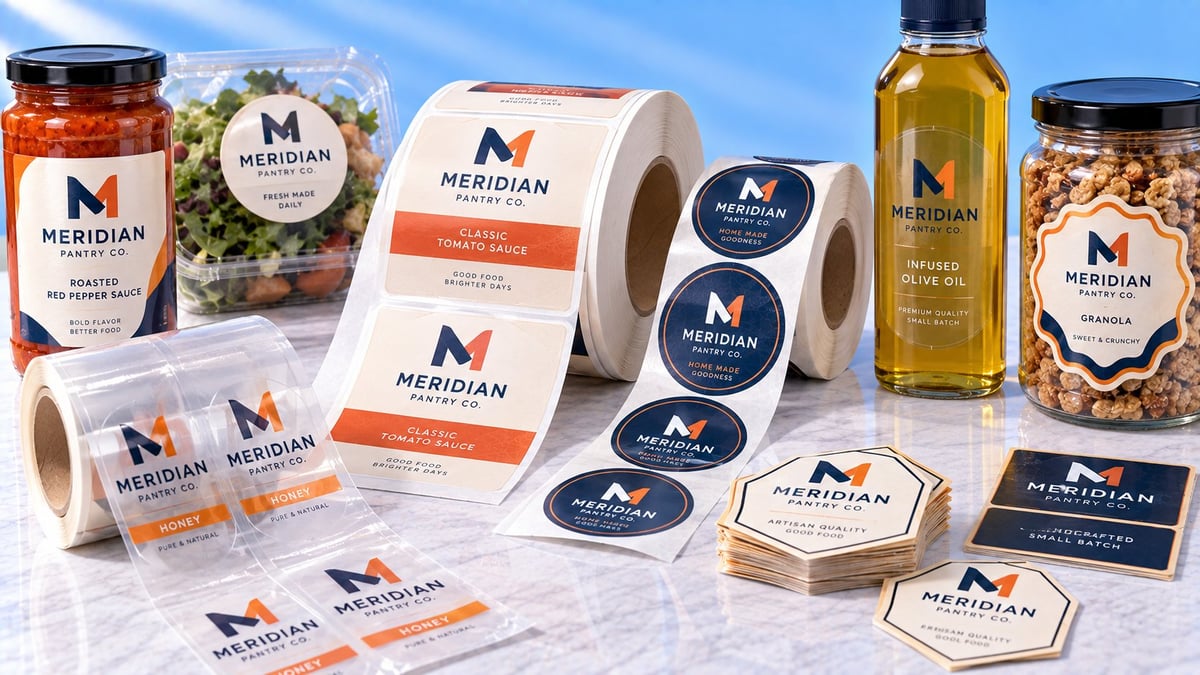
Custom Food Labels
Branded labels to complete your retail pack.
View & Configure →
Custom Hot Cups
Branded hot cups for your café or tasting bar.
View & Configure →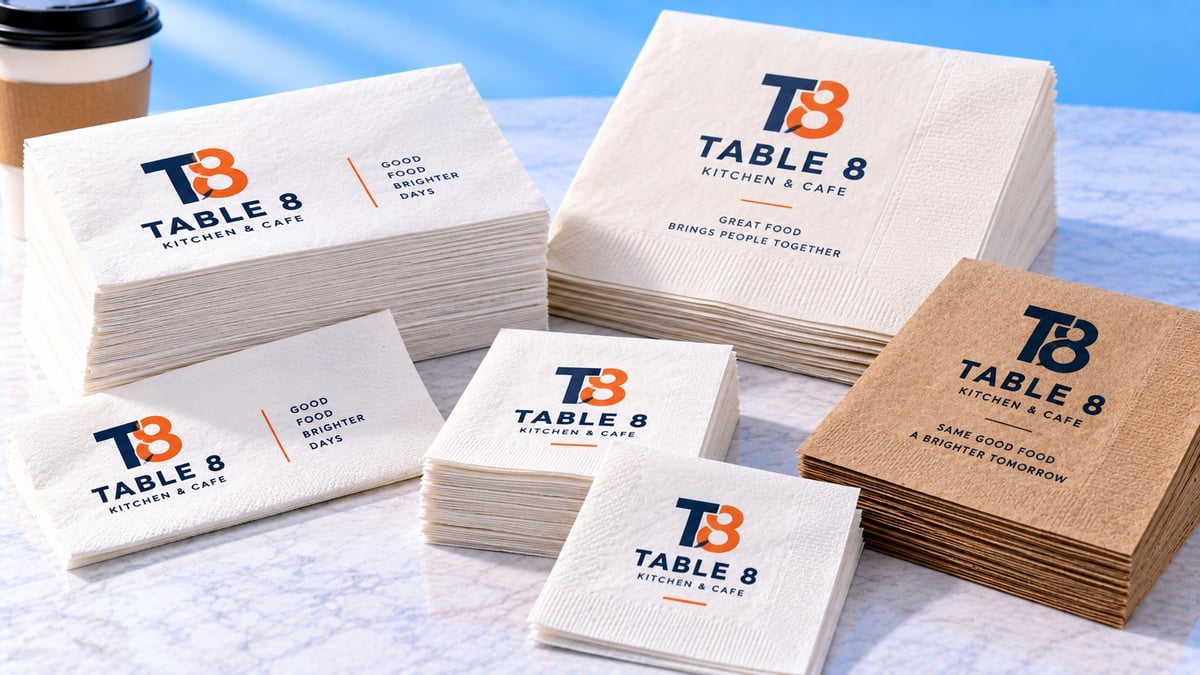
Custom Napkins
Printed napkins for counters and tables.
View & Configure →
Ready to Put Your Brand on Custom Coffee Bags?
Configure your packaging and we'll prepare a free digital mockup and custom pricing for your order.