Custom Bagel Bags
Gusseted bags for bagels and rolls
- Gusseted format that stands up while being filled
- Sized by count, half dozen through bulk, plus custom counts
- Gusset depth worked out against how you pack
- Artwork printed directly onto the bag
- Free digital mockup before production
Build your custom bagel bags
Print placement
Artwork
Optional — not required to order.No artwork needed today. Send your enquiry and our team will contact you to collect your design.
How Your Custom Order Works
Step 1: Choose Your Cups
Select your cup size, quantity, lids, and printing preferences.
Step 2: Review Your Order
Check your configuration and pricing or request a custom quote.
Step 3: Approve Your Artwork
Review your digital mockup before production begins.
Step 4: Production & Delivery
Production begins after the required approvals and payment arrangements are complete.
Your order
10,000 units
- Cups subtotal
- $2,500.00
- Matching lids
- Not included
- Standard shipping
- FREE
Product total before tax
$2,500.00
Per cup
$0.2500
FREE Standard ShippingIncluded for the contiguous United States. Express, Alaska, Hawaii and special freight are quoted separately. Sales tax is calculated on the checkout page.
Production & delivery
- Production
- Confirmed with your quote
- Shipping
- Confirmed with your quote
Free digital mockup first
Send your logo or finished artwork and we prepare a mockup before anything is manufactured.
Production timelines vary by product, order quantity and customization. Your schedule is confirmed with your quote.
Transit times vary by product, shipment size and destination, and are confirmed before your order is finalized.
Standard shipping is included in the price for eligible orders shipped within the contiguous United States. Express, Alaska, Hawaii and special freight are quoted separately.
Sales tax is calculated on the checkout page from your delivery address.
We review your files, send a free digital mockup, and begin production only after you approve the design and the quote.
How artwork approval works →- Matching lids confirmed for your selected cup specifications
- One team for cups, lids, artwork, and repeat orders
- Standard shipping included for eligible contiguous U.S. orders
At a glance
- Printing
- Custom logo printing
- Artwork
- Free digital mockup
- Minimum order
- Varies by configuration
- Production
- Confirmed with your final quote
- Shipping
- Multiple options available
- Delivery
- Nationwide
About Bagel Bags
A bagel bag is a gusseted paper bag with a side fold that expands as it fills. The gusset is what makes the format work here: a flat bag packed with a dozen bagels bulges awkwardly and tears at the seams, while a gusseted bag opens into volume and stands on the counter during loading.
The count you sell drives the size. A shop selling mostly singles needs a different bag from one whose business is dozens for offices and families, and most bagel shops end up stocking two sizes.
YaSeen manufactures your bags after you approve the design and pricing. Your size, paper, and artwork are recorded against your order, which makes repeat runs straightforward.
Sizing by Count, and the Three Measurements Behind It
Bagel bags are sized by count rather than weight, because a bagel order is a counted unit. That makes the count the right starting question, but it is not the whole answer: two shops both selling a dozen can need different bags depending on how the bagels are arranged inside.
A dozen bagels laid side by side needs a wide, shallow bag. The same dozen stacked needs a narrower bag with a deeper gusset, or the stack leans and the bag bulges. Neither arrangement is wrong, and the choice usually follows from how they are sold: side by side for a display counter where the customer picks, stacked for pre-packed orders and delivery runs.
Three measurements settle it. The bagel diameter, which is the number most buyers know and most suppliers forget to ask for. The gusset depth, which decides whether the bag expands to take a stack or presses the bagels together. And the bag height, which sets whether the top folds over the load or the bagels sit exposed.
The bands below are the counts most often ordered. If your shop sells a count that is not on the list, that is a normal specification rather than an exception, and it is quoted like any other.
Working Out Your Bagel Bag
How are they packed?
Side by side wants width and a shallow gusset. Stacked wants a deeper gusset and a narrower bag. This single answer changes the specification.
What is the bagel diameter?
The number most buyers know and most enquiries leave out. It sets the minimum bag width and it cannot be inferred from the count.
Does the top need to fold over?
A fold-over closure needs headroom above the load. If the bag is sized tight to the bagels, the top will not reach.
Is a window worth it?
For a display counter where the customer picks, a window does real work. For pre-packed orders it mostly adds cost.
| Count | What Drives the Size | Common Setting |
|---|---|---|
| Half dozen | Diameter and a shallow gusset for side-by-side packing | Counter sales, single customers |
| Dozen | The gusset does the work: side-by-side or stacked both fit | The most common bagel bag size |
| Two dozen / bulk | Gusset depth and base width take over from count alone | Offices, catering, family orders |
| Single or pair | Small-format bag for grab-and-go service | Delis, food trucks, walk-up counters |
Closure and How the Bagels Leave the Shop
Bagel shops usually choose between two closures, and the choice follows whether the bag leaves open or closed.
An open top is the counter standard: fast to pack and carried by the base or the top turn. A fold-over top folds and tucks to hold the bagels in, which is what pre-packed orders and delivery runs want, and it needs the headroom described above to work. A tin tie makes the bag reclosable at home, which suits a customer working through a dozen over several days. A window is not strictly a closure but it changes the presentation decision, and it earns its cost at a display counter where the customer picks their own.
One thing worth knowing about a closed bagel bag: bagels give off moisture, and a bag closed tight against warm bagels will soften the crust sooner than one left open. For bagels sold to be eaten the same day, an open top or a fold-over left untucked is often the better presentation. For bagels travelling home for the week, a recloseable bag is worth the trade.
- Open top: the standard. Fast to pack, carried by the base or top turn.
- Fold-over top: holds the bagels in, suiting delivery and pre-packed orders.
- Tin tie: reclosable at home, suiting a customer working through a dozen.
- Window: a clear panel that helps at a self-select display counter.
Which Bakery Bag Carries Your Product
Bagel Bag
- Sized by count: half dozen, dozen, bulk
- Gusset depth does the work
- Often stocked in two sizes
Bread Bag
- Sized on loaf length
- Narrow footprint
- Suits sandwich loaves and retail bread
Bakery Bag
- Broad size range
- Works across a changing range
- The general-purpose option
Tell us what you sell most and we will confirm which bag does the work. A shop selling dozens all day is a bagel-bag business, whatever else is on the counter.
Bagel Bags Against the Other Bakery Bags
Bagel bags are frequently compared with general bakery bags and with bread bags, and the difference is the shape of the load rather than the material.
A bagel order is several round items stacked or laid flat, which is why the gusset depth matters so much and why the sizing runs on count. A loaf is one long item, so a bread bag is sized on length and the gusset is almost an afterthought. A pastry bag carries one or two small irregular items, where the bag is closer to a presentation sleeve.
If your shop sells bagels plus a few pastries, it is worth checking whether one bag can cover both before committing to two. It usually cannot, because the count sizing and the loaf sizing do not overlap, but it is worth the question.
Paper, Grease and Food Contact
Bagel shops sit somewhere between a bakery and a deli, so the paper choice usually follows the shop's overall look rather than a packaging rule.
Read the full detailsHide details
Natural kraft is the traditional look: warm, unbleached, and it prints cleanly. White gives brighter presentation and truer color for detailed artwork. A grease-resistant grade is available for buttered, egg-washed or seeded bagels, and it is specified against what you actually sell rather than applied as a standard across the range.
PFAS is worth naming here, because it has historically appeared in some grease-resistant paper treatments, and it is relevant to certain grease-resistant and food-contact paper packaging requirements. If a customer, a contract or your own policy imposes a PFAS requirement, state it as a requirement on your order so it is designed in. Food-contact suitability, any PFAS position, and ink and coating documentation all depend on the exact material and configuration you are quoted, and the documentation for your build is available on request rather than asserted as a category-wide claim.
- Natural kraft: the traditional bagel shop look. Warm, unbleached, prints cleanly.
- White: brighter and more contemporary, with truer color for detailed artwork.
- Grease-resistant grade: for buttered, egg-washed or seeded bagels, specified against your product.
- Custom brand color: available by request.
Behind the Counter and at the Pick-Up Window
A bagel shop runs a different counter rhythm from a general bakery. The flow is usually one order behind another, ordering by count, with staff working at speed and the bag standing between them and the customer for only a few seconds. That shapes the bag as much as the bagel does.
Standing while packed is the first operational requirement. A gusseted bag with a squared base stands on the counter under its own weight, which means staff can load it with both hands or with tongs rather than holding the bag open with one hand and dropping bagels in with the other. That is the single biggest reason the gusseted format is the standard for counted bagels rather than a flat bag or a plain sleeve.
Pre-packing is the second pattern worth planning for. Many bagel shops bag a half dozen or a dozen ahead of the morning rush so the counter moves faster. A bag that stands on a tray or a shelf, holds its shape once packed, and stacks cleanly beside others is doing work a flat bag cannot. If pre-packing is part of your morning, the bag's footprint matters as much as its capacity.
At the pick-up window or a delivery run, the bag becomes a carried object. Bagels are dense for their size, and a dozen is a real weight in one hand. That puts the load on the base and the top turn rather than on the sides, and it is the argument for a paper grade specified against your actual count rather than the lightest grade that takes the size.
One practical note on the display side. Bagels look similar to each other from the outside, so a window is doing the job of telling a customer what is in a bag already packed, rather than advertising an unbought item. That is a different job from the one a window does on a pastry counter, and it is worth deciding accordingly.
Printing Directly onto the Bag
Your artwork is printed directly onto the paper rather than applied over it, so the bag carries your brand on its own surface instead of on a label.
Read the full detailsHide details
Because a bagel bag is usually carried with the printed face out, a strong single-face design often does all the work you need. That is the most economical configuration and it is what most bagel shops run.
A second face is worth considering if you have something practical to say. A catering prompt, a menu, opening hours or a social handle turn the back of the bag into customer communication at no extra cost once the print setup is running. Coverage across the gussets makes the bag read as branded from any angle, which matters most on the small-format bags where the front face is not much surface area.
The print method follows the order: flexographic for larger runs of a settled design, digital for smaller runs or finer artwork, offset where it suits. The mockup shows you the result before anything is produced.
- One side: logo and name on the front face. The most common and most economical choice.
- Two sides: artwork on both faces, plus space for a menu, hours or a catering prompt.
- Full coverage: artwork continuing across the gussets.
- Brand color match: a bag manufactured in your color, with or without a logo.
- Multi-color print with Pantone matching available.
Free Digital Mockup and Optional Physical Sample
Before anything is manufactured, you receive a free digital mockup showing your artwork on the bag you have specified at the count, dimensions, paper grade, closure and window you chose. There is no charge for it and no production order is required to receive it. The mockup is the first place the size, the gusset depth and the print placement are seen together, and it is what you approve before the order moves forward.
A bagel bag is one of the rare cases where the count and the bag are not the same question, so it is worth holding the real thing. A dozen bagels laid out on a counter and a dozen stacked in a bag look like the same order on paper and behave completely differently once packed. An optional custom physical sample can be produced after artwork approval, and the sample fee is credited back toward your production order if you proceed.
- The mockup is the artwork on the bag, the count and dimensions, and the closure you chose.
- The mockup is free and no production order is needed to receive it.
- If you proceed, the mockup is the artwork we run.
- A physical sample confirms how your actual bagels load, not just how the bag looks empty.
- The sample cost is credited toward the production order if you go ahead.
How Pricing Works
Bagel bag pricing depends on the size, the paper grade, the closure, whether a window is fitted, how much print coverage your artwork uses, and the quantity you run. A half-dozen bag and a dozen bag are different sizes at different unit prices.
Larger runs lower the cost per unit. Submit your configuration and a specialist returns pricing for your exact combination, including what the price covers: bag, window, printing, freight, and artwork setup.
Artwork Requirements
Supply vector artwork for the cleanest print result. Bagel bags are usually seen flat and stacked, so a bold, high-contrast design reads better than fine detail.
- Preferred: AI, EPS, SVG, or PDF, vector formats.
- Acceptable: PNG or JPG at high resolution.
- If you only have your logo, we can prepare the bag layout for you.
- A color reference (hex code, Pantone number, or a physical sample) helps us match accurately.
Minimum Order Quantity
Minimums depend on the size, the paper, and the print setup your artwork requires. Tell us your target quantity in the configurator and we will confirm the actual minimum for your build.
Production & Delivery
These bags are made to order, not taken from stock. Manufacturing starts only after you approve the design and pricing. The sequence is: configure your specifications, receive a free digital mockup, approve the design and pricing, manufacturing begins, then the completed order is delivered nationwide.
Reordering
Because your size, paper, closure, and approved artwork are recorded against your order, reordering is a matter of confirming your previous configuration and quantity. Most bagel shops reorder on a predictable weekly or monthly cycle.
Who Orders Custom Bagel Bags?
These are the businesses that most often order this packaging. We have it produced to your specifications regardless of your size.
Frequently Asked Questions
The questions specific to Custom Bagel Bags, answered below. A handful of questions apply to every product we supply, and those live on the main FAQ page so they stay in one place.
Ordering, minimums, artwork and shippingWhat size bag should I use for a dozen bagels?+
Why do bagel bags have a gusset?+
Which closure suits a bagel bag best?+
Where does the logo go on a bagel bag?+
How much do custom bagel bags cost?+
What is the minimum order for bagel bags?+
Do bagel bags ship nationwide?+
Can I order bagel bags together with other packaging?+
What logo file works best on bagel bags?+
Production Time and Shipping Time Are Different
Production time is the time required to manufacture your packaging. Transit time is the time required to transport it to you. These are separate: a production window is not a delivery date, and every project's timeline is confirmed with your final quote.
Production
Production timelines vary by product, order quantity, and customization requirements. Your estimated production schedule will be confirmed with your quote.
Standard shipping
Standard shipping transit times vary by product, shipment size, and destination. Estimated delivery timing will be confirmed before your order is finalized.
Express
Best when speed matters most. Faster transportation may be available depending on the product, quantity, manufacturing location, shipment size, destination and carrier availability. Express transportation can cost significantly more than standard, and an exact transit time is confirmed with your freight quote.
Standard
Included within the contiguous 48 states on eligible orders. Standard freight is generally the more economical option when your schedule allows additional flexibility. Actual transit time is confirmed with your quote, and standard shipping to Alaska, Hawaii, the U.S. territories and international destinations is charged separately.
Large-volume freight
Larger orders do not move as ordinary parcel shipments. They travel by freight instead, and the right method depends on the order size, the destination and what the shipment requires. YaSeen selects the method for your project and quotes it accordingly.
Not sure
If you are unsure, our team will recommend the option that best fits your deadline, quantity and destination once your project has been reviewed.
Free standard shipping is included within the contiguous 48 states on eligible orders. Express, Alaska, Hawaii, the U.S. territories and international freight are confirmed with your final quote. Shipping & delivery details
See Your Packaging Before Production
A free digital mockup is available after you submit your artwork, so you can review your branding on the selected packaging configuration before production. A custom physical sample is optional and separate, and is available after artwork approval.
Free Digital Mockup
Review your artwork on the packaging configuration you selected before anything is manufactured.
- Free, and available once your artwork is submitted
- Your artwork placed on the packaging configuration you selected
- No production order is needed first
- Reviewed with you before anything is manufactured
Optional Custom Physical Sample
Optional, and only after you have approved the artwork. A sample is then manufactured from your approved design so you can evaluate the actual packaging before the production order.
- Artwork is approved before the sample is made, so the sample matches what you would actually run
- Approximately 2 to 3 weeks after artwork approval
- Approximately $150 to $250 depending on the product and configuration
- Credited toward your production order if you go ahead
The mockup is digital and free, and is prepared from the artwork you submit. The physical sample is the paid, optional step described above. How samples fit into an order
What Happens After You Submit
Submitting a project starts a review, not a charge. Here is the whole process from your submission to your delivery.
- 1
Project received
We receive your specifications, quantity, artwork and delivery information.
- 2
Project review
Our team reviews the packaging requirements and verifies production and delivery details.
- 3
Final quote
You receive confirmed pricing, applicable freight, payment terms and an estimated timeline.
- 4
Secure payment
If you choose to proceed, you receive approved payment instructions or a secure invoice.
- 5
Digital proof
Your artwork is prepared and reviewed for the packaging you selected.
- 6
Your approval
You approve the final digital proof, or request corrections.
- 7
Production
Production begins only after payment requirements are satisfied and final artwork is approved.
- 8
Shipping
Your completed packaging ships using the delivery method agreed on your quote.
- 9
Delivery
Your packaging arrives according to the confirmed project arrangements.
- 10
Reorder
Your approved specifications and artwork can be referenced to make future orders easier.
Why Businesses Order From YaSeen Packaging
Free Digital Mockups
Submit your artwork and review how your branding looks on the selected packaging configuration before production begins.
Direct Manufacturer Relationships
We work directly with packaging manufacturers to provide custom packaging built around your brand and order requirements.
Packaging Built Around Your Brand
Choose the size, configuration and printing that fit your product instead of building your brand around one stock option.
Multiple Packaging Products, One Partner
Build a coordinated packaging program across cups, bags, pouches, foodservice packaging, bottles and jars.
Artwork-to-Production Support
Send finished artwork, a logo or the brand assets you have. We help prepare the packaging layout and move the approved project toward production.
Minneapolis-Based, Nationwide Service
Based in Minneapolis and serving businesses nationwide, with a physical showroom and office for customers who want to meet us locally.
Packaging Guides
Planning your order? These guides answer the questions that come up most often.
Related Products
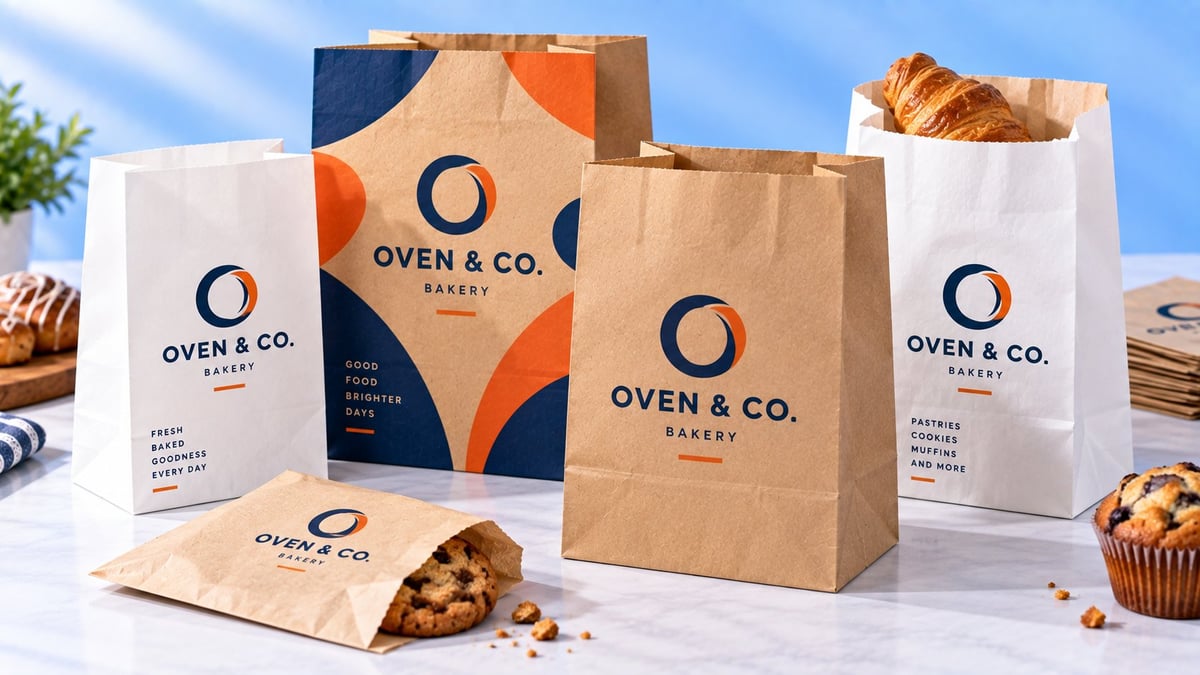
Custom Bakery Bags
Paper bags for pastries, bread, and cookies.
View & Configure →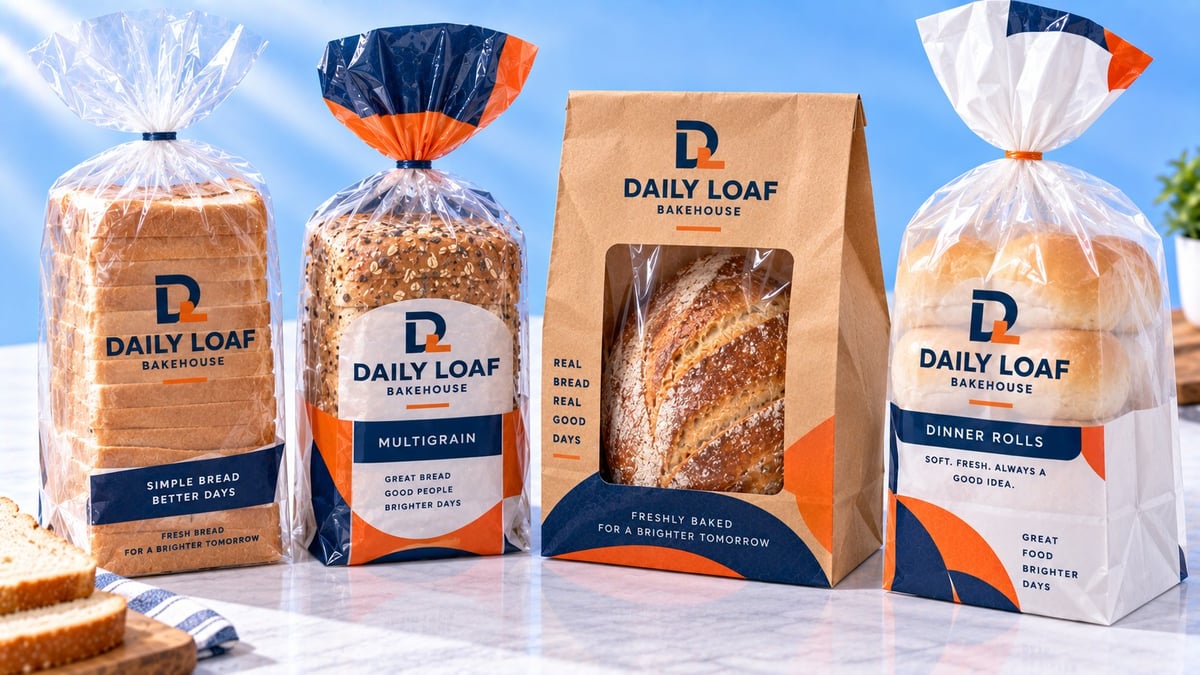
Custom Bread Bags
Standard loaf bags for bakeries.
View & Configure →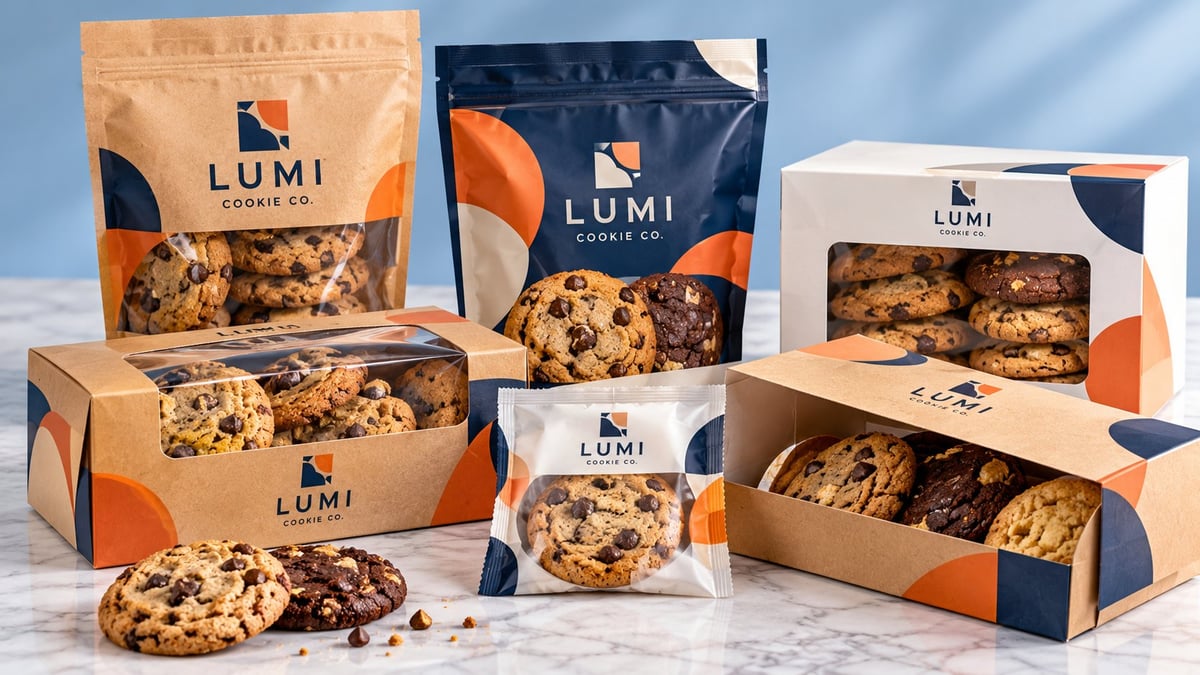
Custom Cookie Bags
Kraft and white bags for cookies and small bakes.
View & Configure →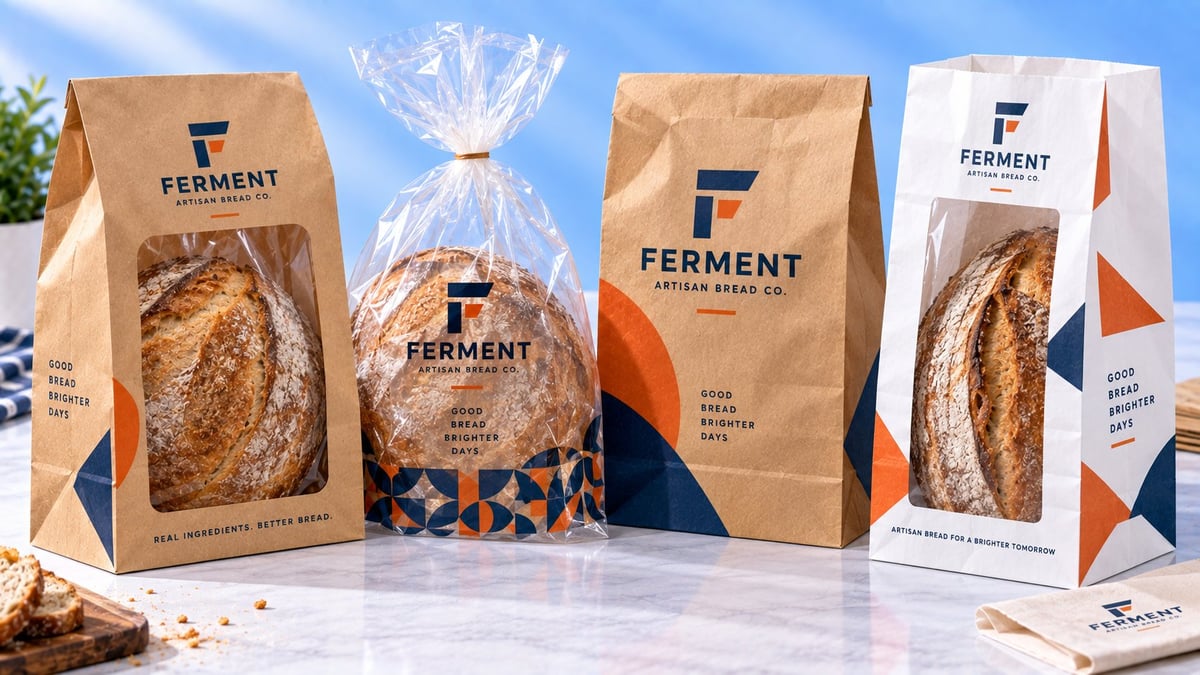
Custom Sourdough Bread Bags
Long-format bags for artisan loaves.
View & Configure →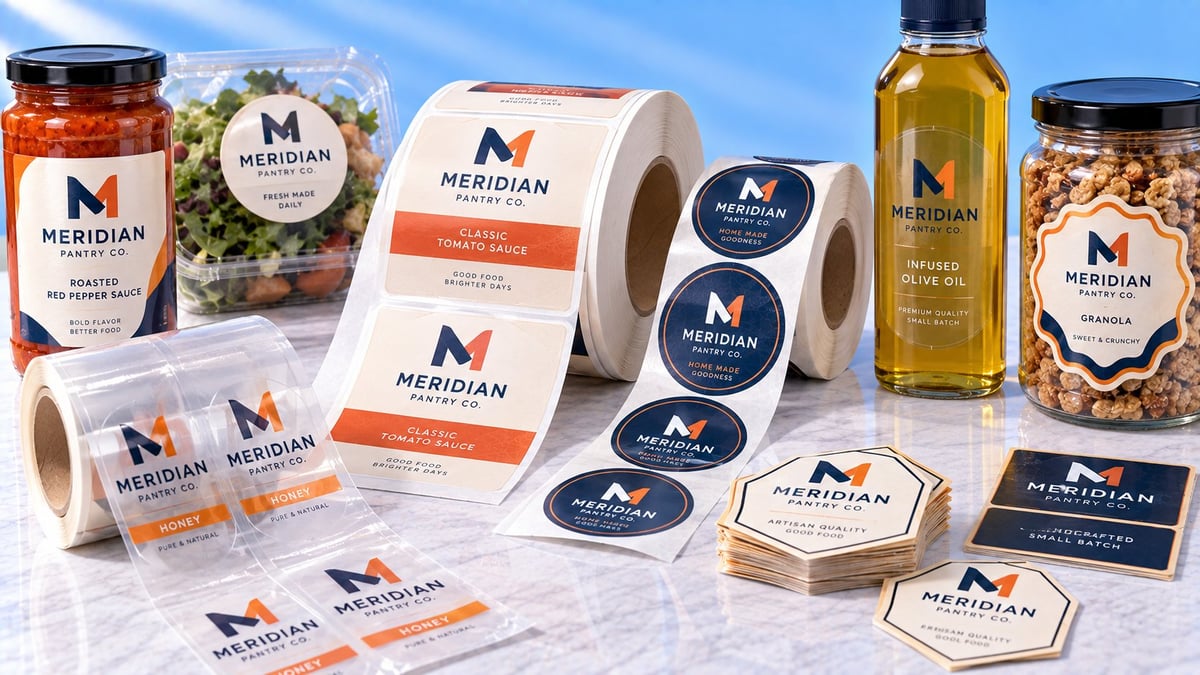
Custom Food Labels
Branded labels to complete your pack.
View & Configure →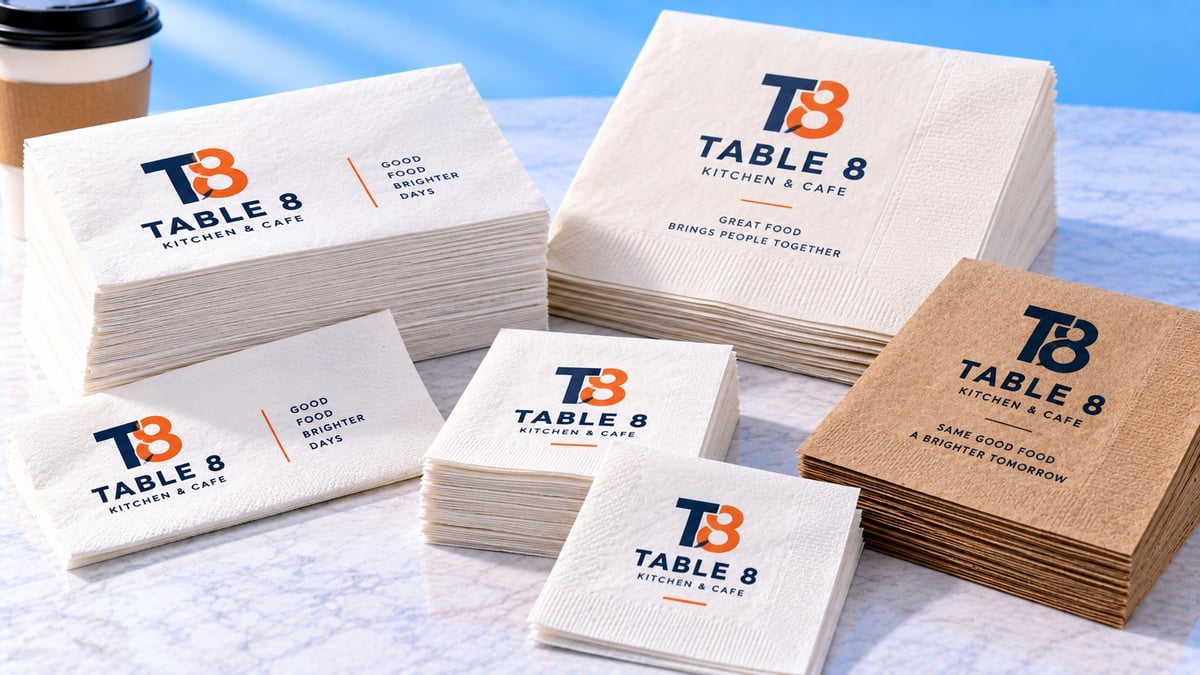
Custom Napkins
Printed napkins for counters and tables.
View & Configure →
Ready to Put Your Brand on Custom Bagel Bags?
Configure your packaging and we'll prepare a free digital mockup and custom pricing for your order.