
Packaging for Food Manufacturers
Production-volume packaging, one supplier
A manufacturer buys packaging as a line item on a production plan, not as a marketing decision made once. That changes what matters: the specification has to be repeatable, the run has to arrive when the line needs it, and the unit cost has to hold up across a year of production rather than a single order.
Specification first, then everything else
Material, format, closure and print are confirmed against your product before anything is manufactured. We do not assume a barrier or a material: the specification is verified for what you are actually packing, because a barrier that is wrong for the product fails long after the packaging has been accepted.
Unit economics at production volume
Packaging is a recurring cost, and at production volume a small per-unit difference compounds across every run in a year. Pricing is quoted at the tier your quantities actually fall into, which is why we ask for the real number rather than a sample quantity that does not reflect your economics.
Repeat runs that come back the same
The hardest part of production packaging is not the first run, it is the fourth. Approved artwork and specification stay on file, so a repeat order reproduces the previous one rather than restarting from a brief and hoping the result matches.
When the line is waiting
Manufacturing schedules do not move for late packaging, so the delivery date is part of the specification rather than an afterthought. Tell us when the run has to be on site and the schedule is built around that constraint rather than around a standard lead time.
How These Work Together
Flexible packaging for the product itself
Pouches are what most manufacturers run for dry, frozen and shelf-stable lines, because the format follows the fill process and the barrier follows the product. Stand-up, flat-bottom and flat formats each suit a different filling setup and a different shelf or case presentation.
The label that carries the regulated detail
Ingredient, weight, batch and compliance information sits on the label rather than the pack, which is what lets a manufacturer keep one pouch specification across a changing product range. Labelling also means a formulation or artwork change does not require a new packaging run.
Secondary packaging and cases
What the product ships in is specified separately from what the consumer opens. Case quantity, pallet configuration and how the pack survives a distribution chain are their own set of decisions and are quoted alongside the primary pack.
The co-manufacturing and private-label side
A manufacturer packing for another brand is running artwork that is not its own, against a specification that brand has to approve. Keeping artwork on file per brand, and keeping approved specifications separate, is what makes private-label runs repeatable.
Packaging for Your Business
Every product below is one this trade genuinely orders. Open any card to configure size, printing and quantity on the product page.
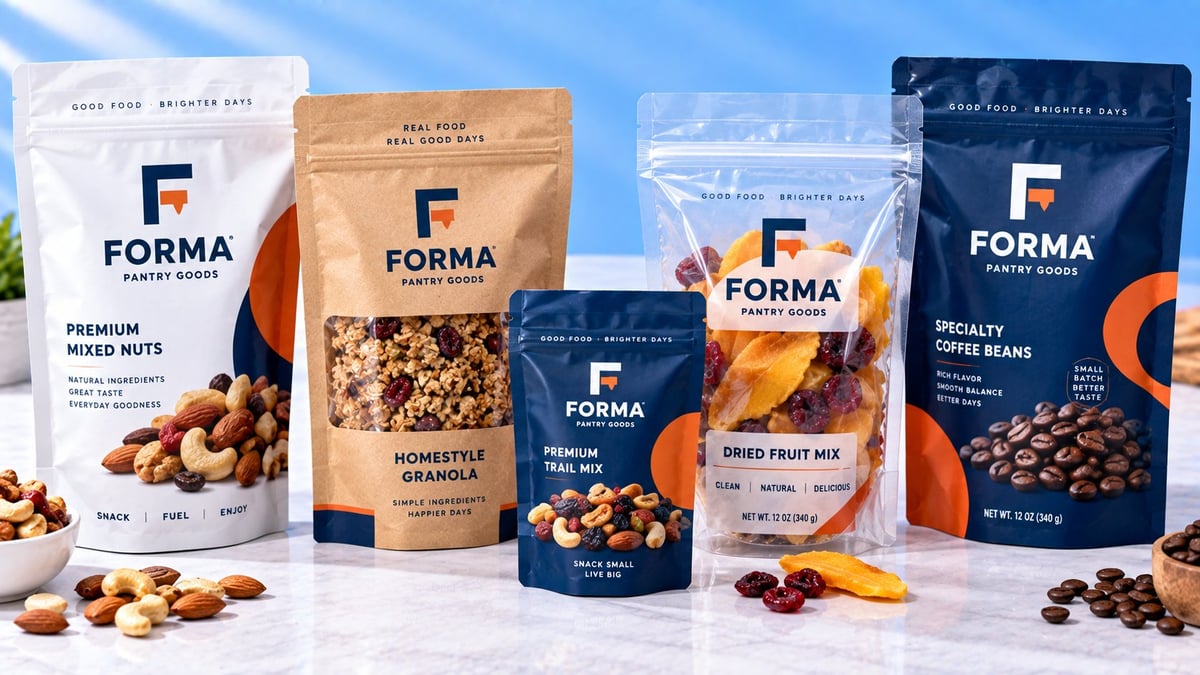
Custom Stand-Up Pouches
Flexible packaging at production volume.
View & Configure →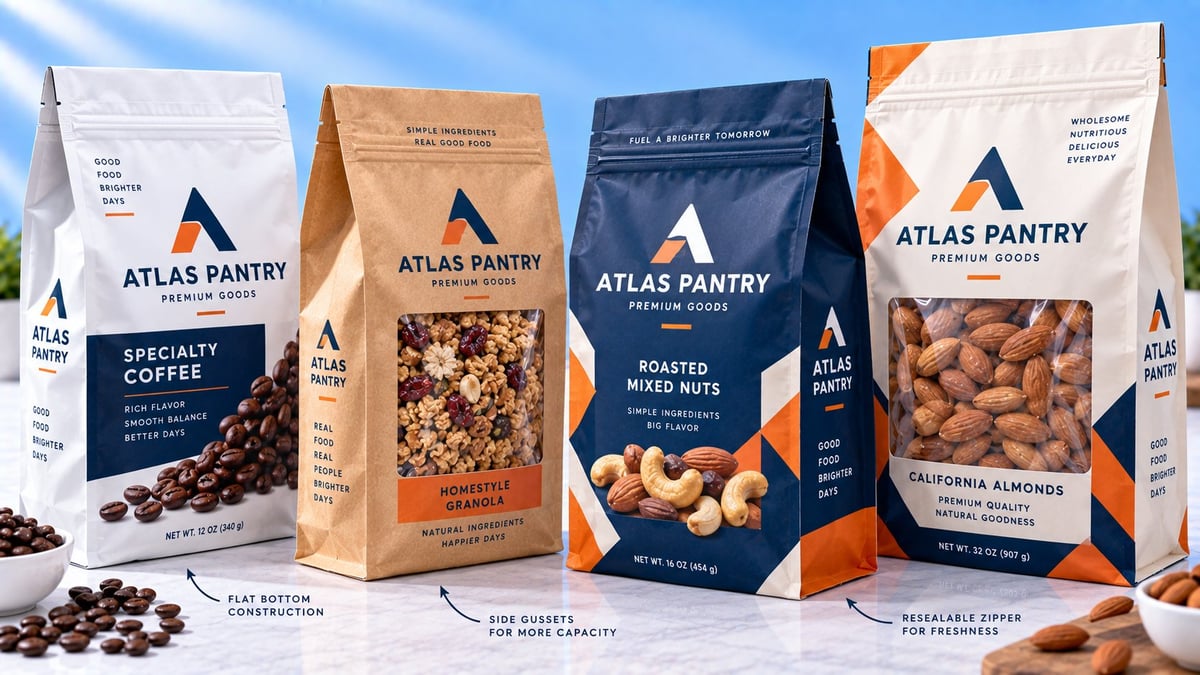
Custom Flat-Bottom Pouches
Premium pouches for retail products.
View & Configure →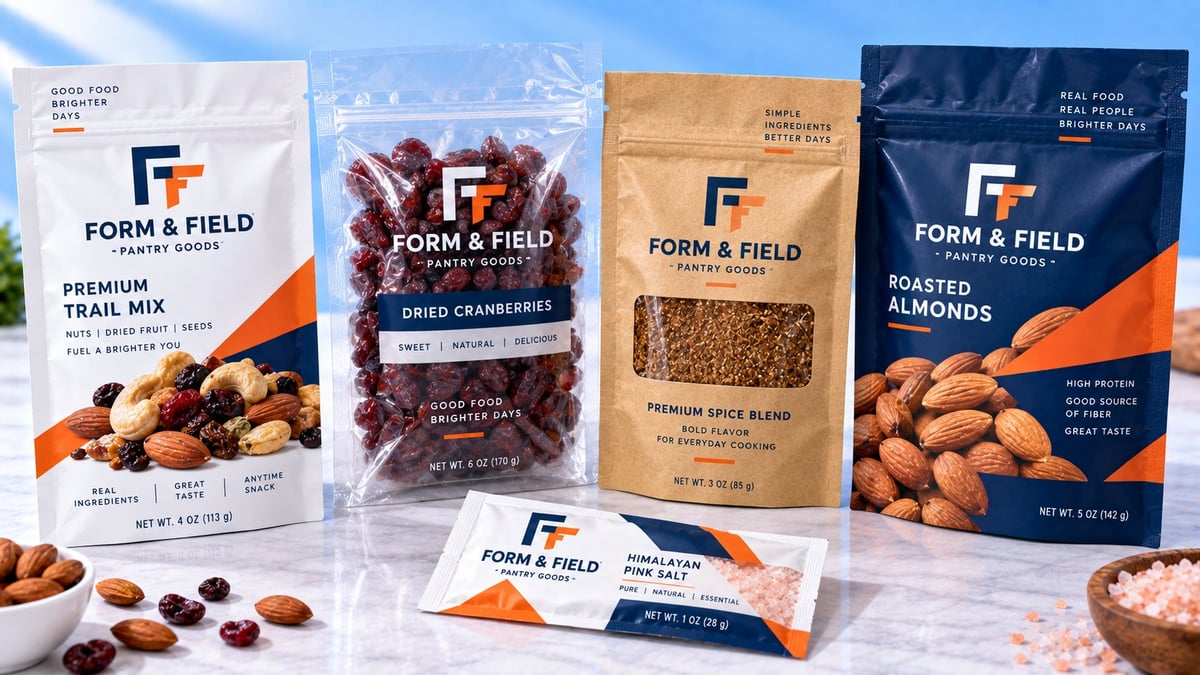
Custom Flat Pouches
Compact formats for single-serve and sample lines.
View & Configure →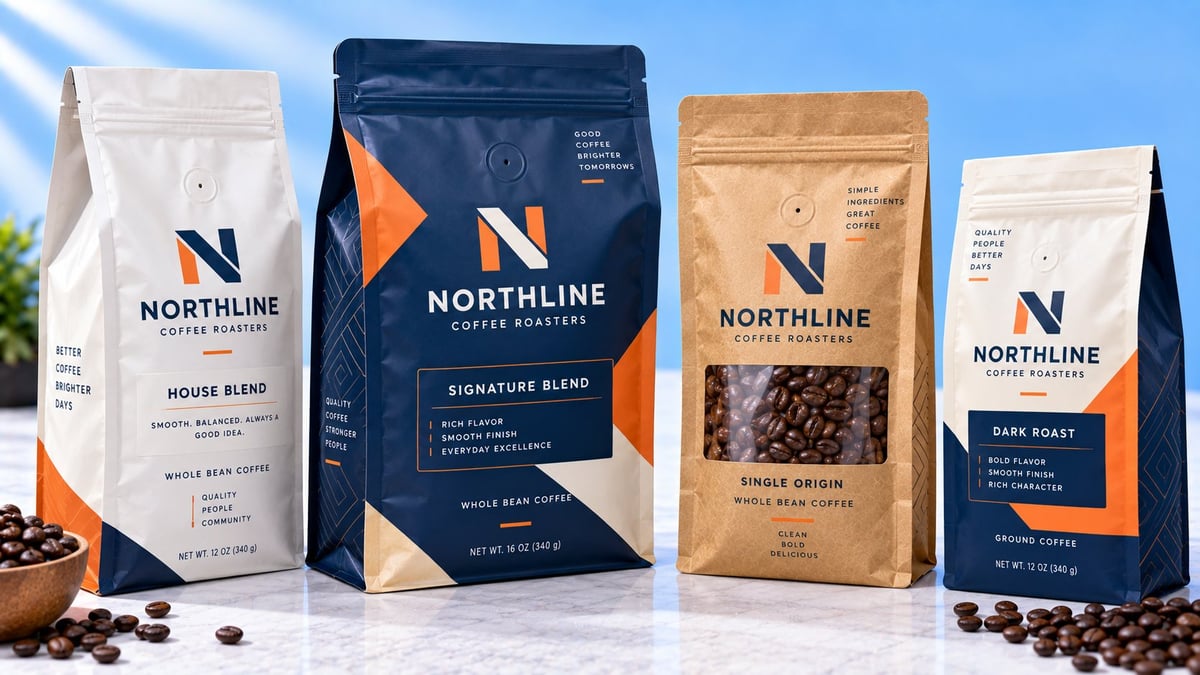
Custom Coffee Bags
Valve and closure options for roasted and ground product.
View & Configure →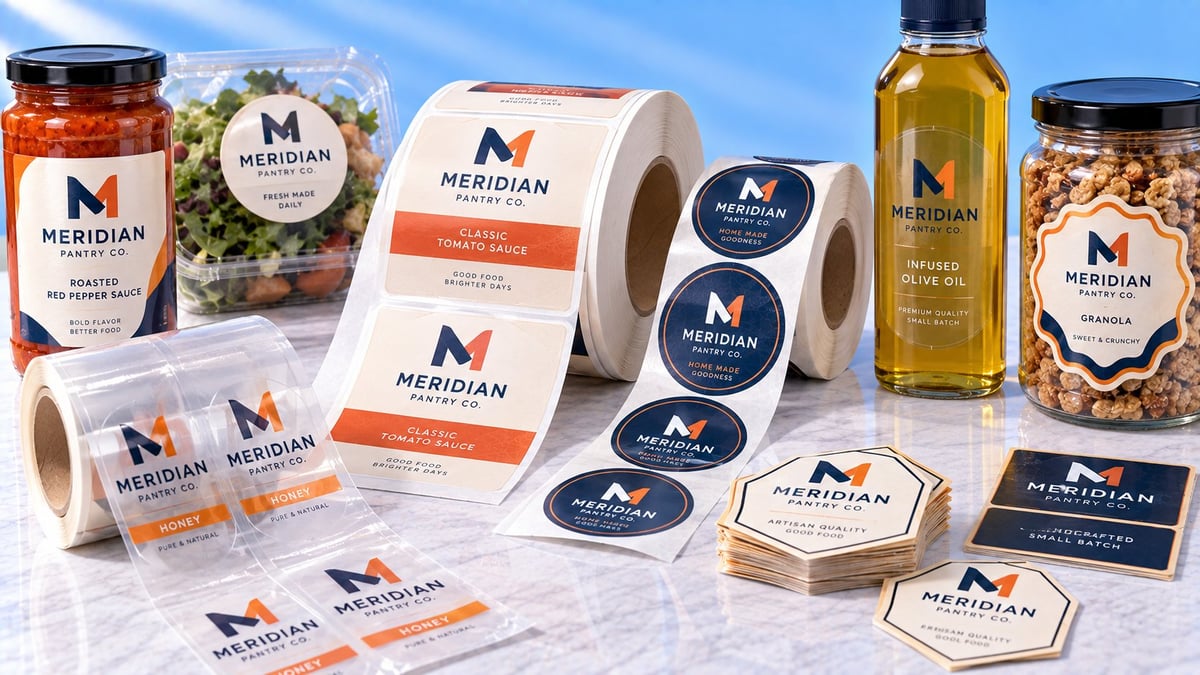
Custom Food Labels
Ingredient, weight and batch information on packaged goods.
View & Configure →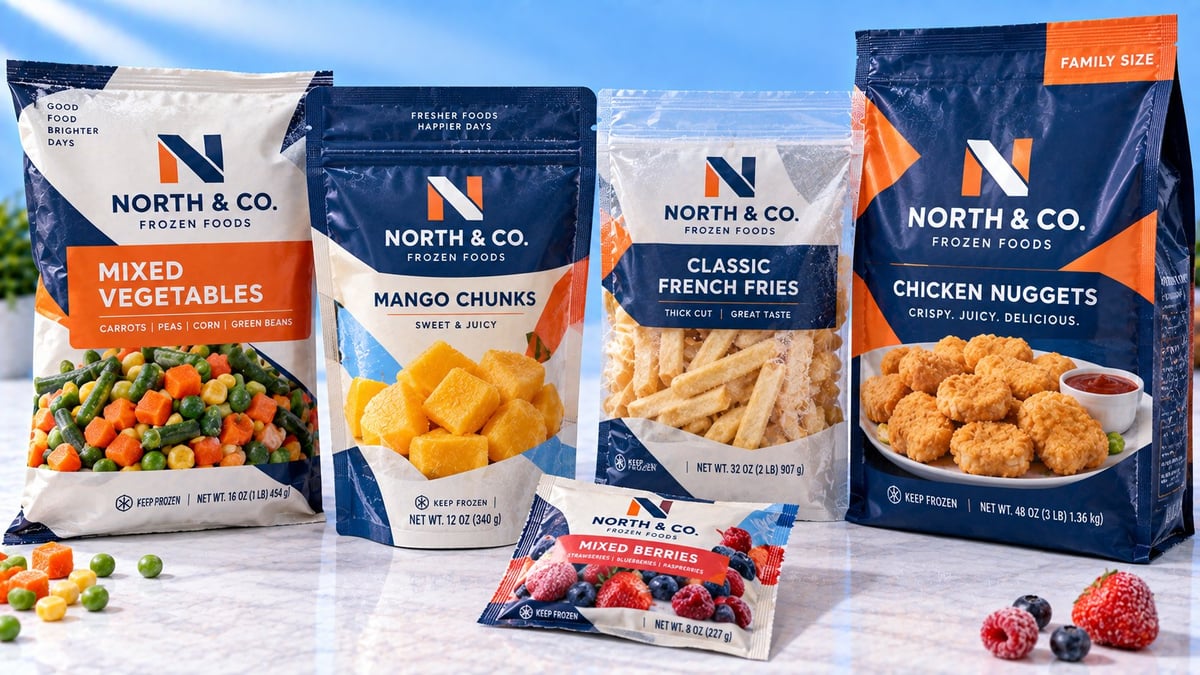
Custom Frozen Food Pouches
Packaging for frozen and cold-chain products.
View & Configure →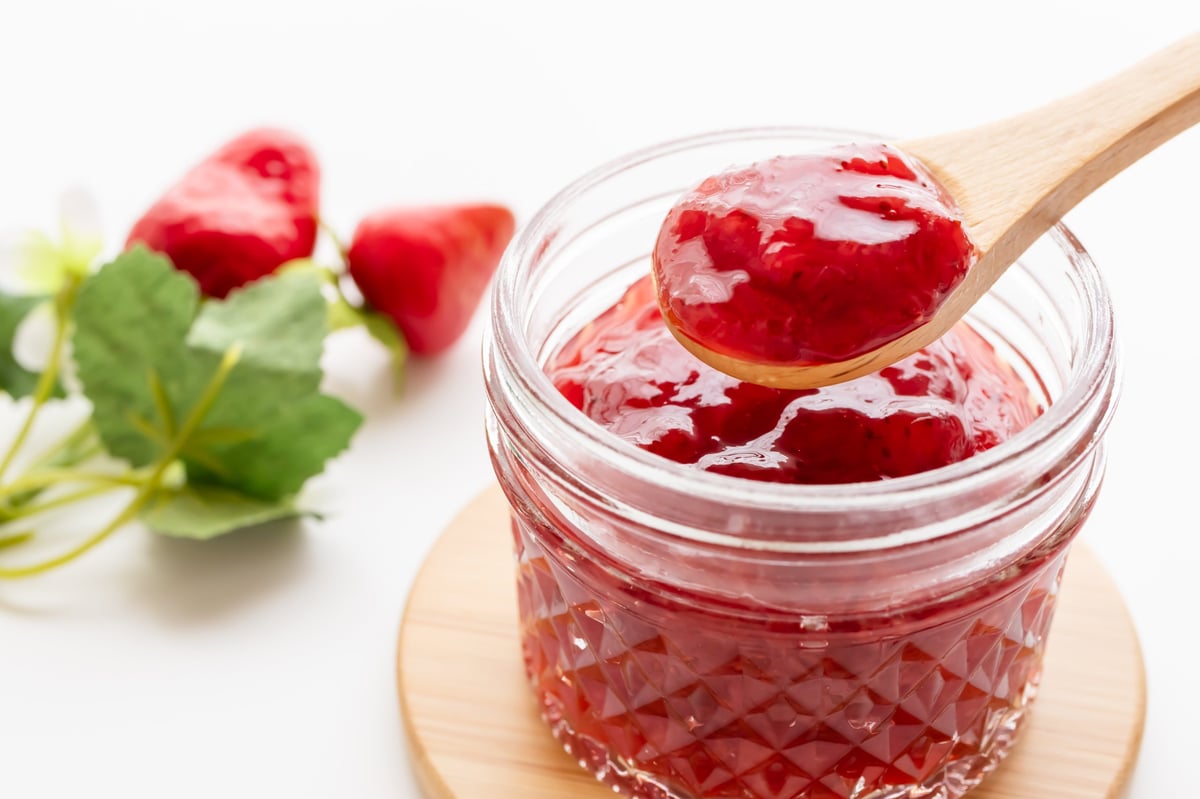
Custom Glass Jars
Sauces, preserves and pantry lines sold at retail.
View & Configure →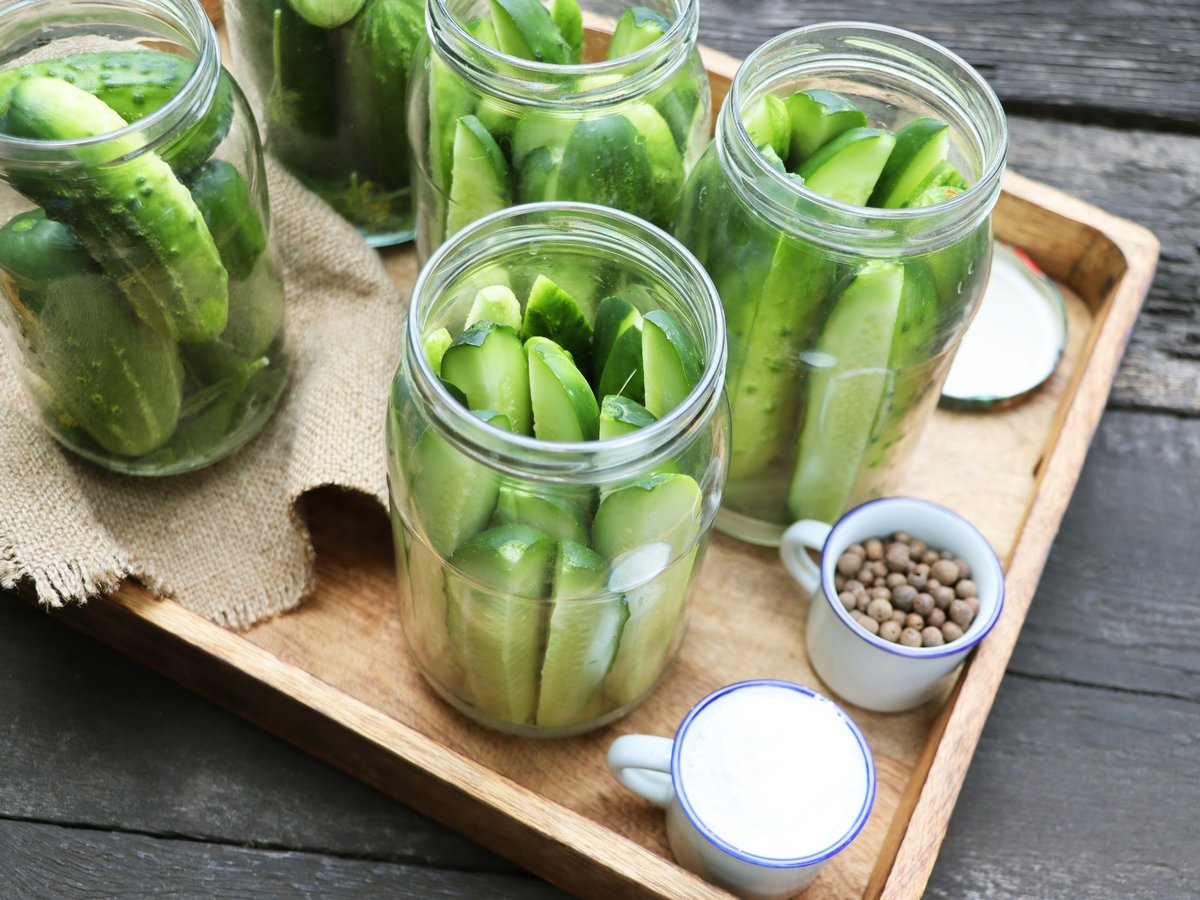
Custom Glass Bottles
Liquid lines in glass with closure options.
View & Configure →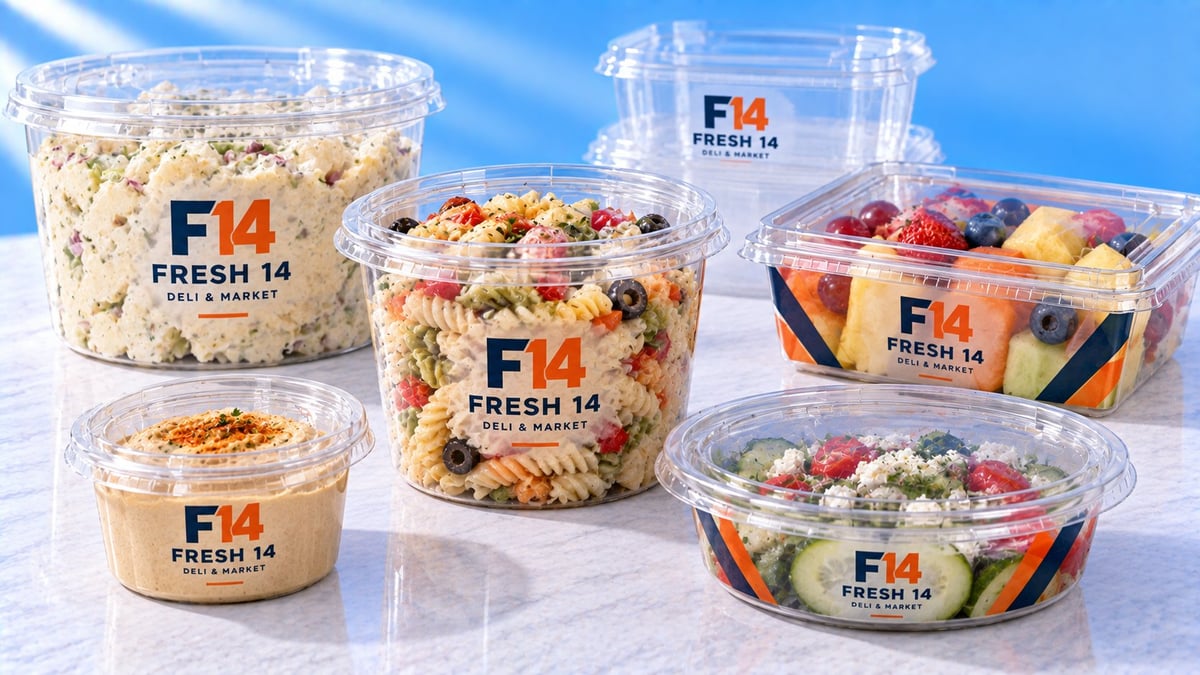
Custom Deli Containers
Prepared and fresh product at distribution volume.
View & Configure →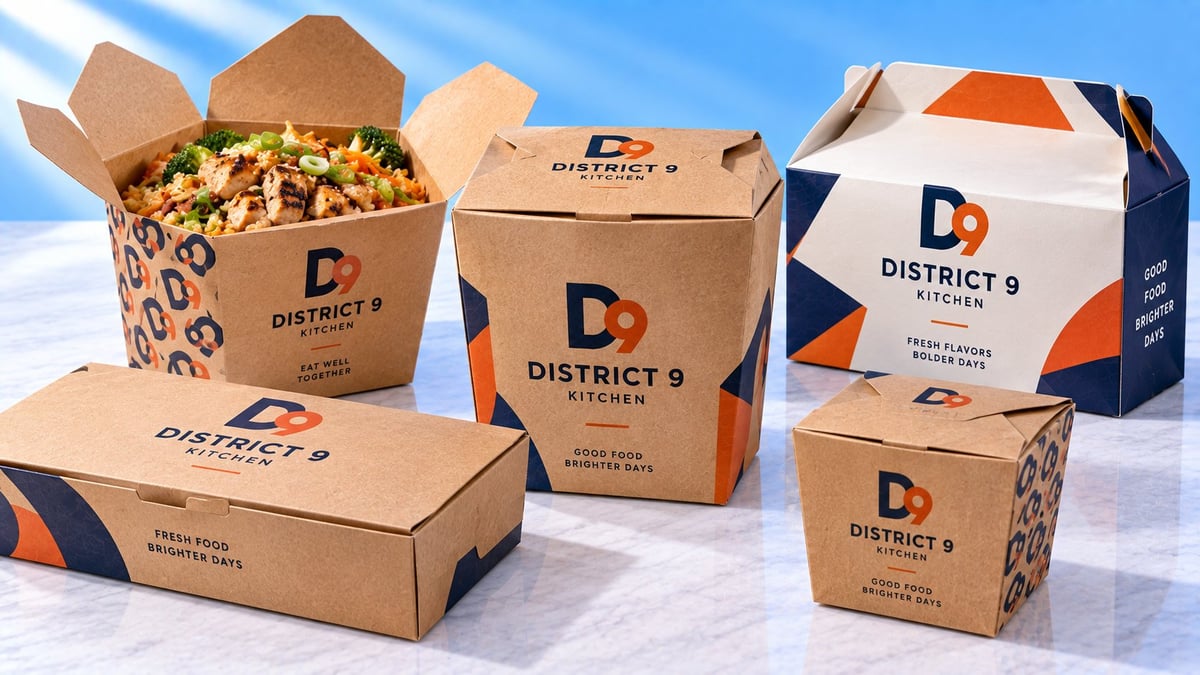
Custom Kraft Takeout Boxes
Secondary packing and prepared food formats.
View & Configure →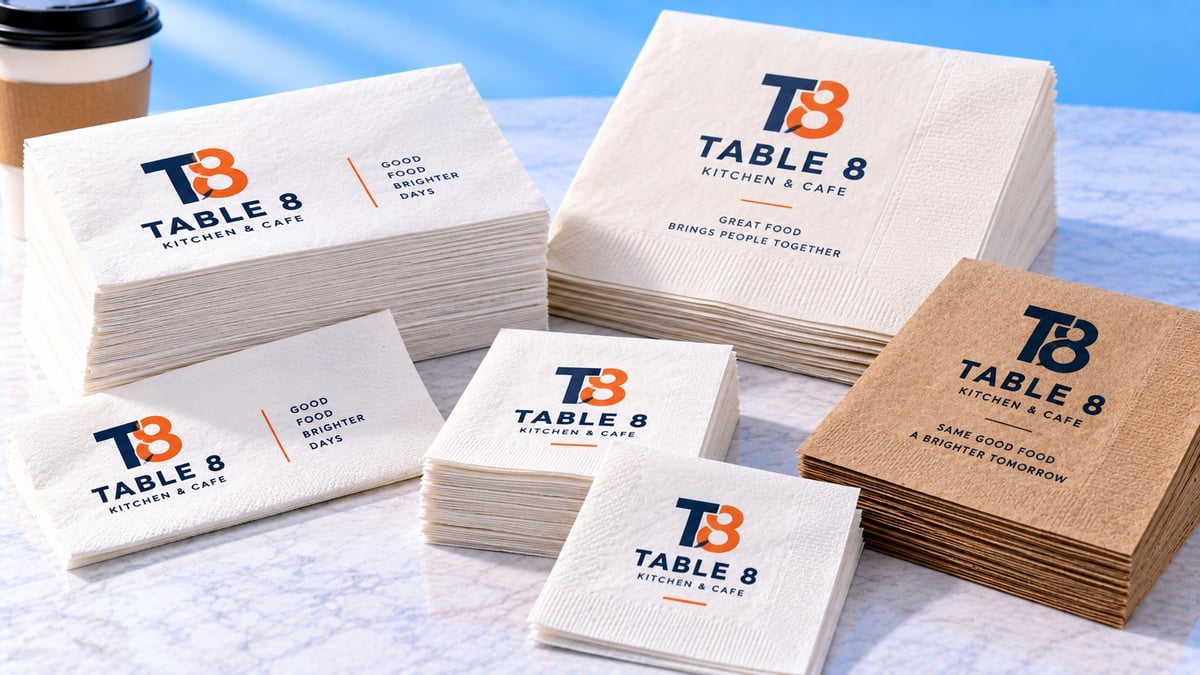
Custom Napkins
For manufacturers also supplying foodservice.
View & Configure →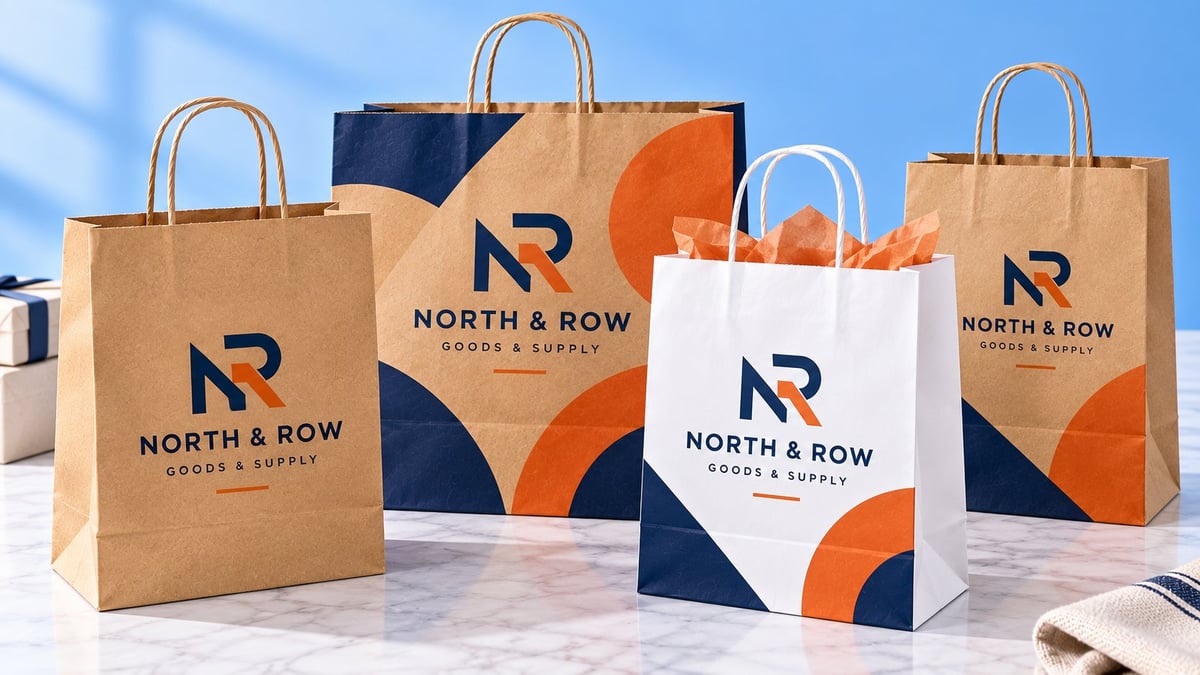
Custom Paper Shopping Bags
Retail presentation for direct-to-consumer lines.
View & Configure →Related Packaging
Frequently Asked Questions
Can you produce at high volume?+
How are material and barrier specifications handled?+
Will repeat runs match the first?+
Can you work to a production schedule?+
Do you handle private-label and co-packed artwork?+
Can I order primary and secondary packaging together?+
Ready to Brand Your Packaging?
Tell us what your business needs, and we'll help you build a consistent branded packaging system, with a free digital mockup before production.