Custom Frozen Food Bags
Printed flexible packaging built for the freezer aisle
- Specified around your storage and distribution conditions first
- Material and seal suitability confirmed for the actual cold chain
- Retail packs through bulk food-service formats
- Full-panel print readable behind a glass freezer door
- Free digital mockup before production
Build your custom frozen food bags
Artwork
Optional — not required to order.No artwork needed today. Send your enquiry and our team will contact you to collect your design.
How Your Custom Order Works
Step 1: Choose Your Cups
Select your cup size, quantity, lids, and printing preferences.
Step 2: Review Your Order
Check your configuration and pricing or request a custom quote.
Step 3: Approve Your Artwork
Review your digital mockup before production begins.
Step 4: Production & Delivery
Production begins after the required approvals and payment arrangements are complete.
Your order
5,000 units
- Cups subtotal
- $2,300.00
- Matching lids
- Not included
- Standard shipping
- FREE
Product total before tax
$2,300.00
Per cup
$0.4600
FREE Standard ShippingIncluded for the contiguous United States. Express, Alaska, Hawaii and special freight are quoted separately. Sales tax is calculated on the checkout page.
Production & delivery
- Production
- Confirmed with your quote
- Shipping
- Confirmed with your quote
Free digital mockup first
Send your logo or finished artwork and we prepare a mockup before anything is manufactured.
Production timelines vary by product, order quantity and customization. Your schedule is confirmed with your quote.
Transit times vary by product, shipment size and destination, and are confirmed before your order is finalized.
Standard shipping is included in the price for eligible orders shipped within the contiguous United States. Express, Alaska, Hawaii and special freight are quoted separately.
Sales tax is calculated on the checkout page from your delivery address.
We review your files, send a free digital mockup, and begin production only after you approve the design and the quote.
How artwork approval works →- Matching lids confirmed for your selected cup specifications
- One team for cups, lids, artwork, and repeat orders
- Standard shipping included for eligible contiguous U.S. orders
At a glance
- Printing
- Custom logo printing
- Artwork
- Free digital mockup
- Minimum order
- Varies by configuration
- Production
- Confirmed with your final quote
- Shipping
- Multiple options available
- Delivery
- Nationwide
About Custom Frozen Food Bags
Frozen packaging has to survive conditions that no other food packaging deals with. The pack is filled at one temperature, frozen, stored indefinitely in a case that cycles through defrost, shipped in a cold chain, and then handled by a customer with cold hands in an aisle they are moving through quickly. A structure that would be perfectly adequate on a dry-goods shelf can fail here: through brittleness at low temperature, through seal failure after freeze-thaw cycling, or through print that loses contrast under case lighting.
That is why material suitability is the first thing confirmed on a frozen project. What a packaging structure is rated for depends on the specific material, the fill temperature, the storage temperature, and how the product is handled: and those vary enough between frozen categories that a general claim would be misleading. We confirm the construction against your actual storage and handling conditions rather than publishing a blanket statement.
Format follows the product. Flat and stand-up pouches suit frozen produce, seafood, and portioned items, where the pack is a simple sealed volume. Frozen meals and entrées usually want a format that presents a front panel in a case and stacks or stands predictably. Where the product is portioned into cases for food service, the outer carton is quoted alongside the pouch so the two are specified together.
The Cold Chain Comes First
Most food packaging is specified around what the product is. Frozen packaging has to be specified around what happens to it on the way to the customer: a fill temperature, a freezing step, an indefinite stay in a case that cycles through defrost, a cold-chain shipment, and then a domestic freezer that gets opened and shut.
Each of those puts a demand on the pack that a dry-goods shelf never would. Film that is perfectly flexible at room temperature can become brittle enough to crack at a low enough temperature. A seal that held at fill temperature can fail after repeated freeze-thaw cycling. Condensation forms when a cold pack meets warm air, and it changes how a printed surface looks and how a pack handles in the hand.
That is why the configurator asks about storage and handling before it asks about anything else. Fill temperature, storage temperature, whether the product travels frozen or thaws and refreezes, and whether the pack goes into a domestic freezer together decide what material and seal the specification actually has to meet.
None of this is a general fact about frozen food, because frozen categories differ enough that a blanket answer would mislead. Leafy vegetables, portioned seafood, prepared meals and frozen desserts each present a different combination of demands, and the pack is confirmed against yours rather than against the category.
Cooking and Reheating Is a Separate Construction
It is common to assume that a frozen food bag can go from the freezer into a microwave, a saucepan or an oven. That is not a property of frozen packaging. It is a property of the specific material and construction, and it is a different specification from a bag built to survive frozen storage and handling.
Where a buyer needs a pack the product is cooked or reheated in, that is a special configuration. It has to be confirmed against the exact material and the exact process, because what the specification supports depends on the combination rather than on the category. Some flexible constructions are made for that job and some are not, and we will tell you which is which for your product rather than treating it as standard.
If your frozen product only needs to be stored and handled frozen, that is the simpler and usually cheaper specification, and it is what most frozen food bags are. Say what you need the pack to do and we will confirm what can be supported for your construction.
Matching the Pack to the Frozen Product
Format guidance by situation. Fill weights are confirmed against your product and freezing process rather than recommended from a chart.
| Situation | Format that suits it | What confirms the dimensions |
|---|---|---|
| Loose IQF pieces such as peas, berries or diced items | Flat pouch or stand-up pouch | Net weight and how tightly the pieces settle once frozen |
| Large or irregular pieces such as florets | Stand-up pouch with a deep gusset | Net weight and the volume the pieces hold when frozen as a mass |
| Prepared meals and entrées | Format that presents a front panel in a case | Net weight, tray or portion count, and how the pack stacks |
| Portioned seafood or meat | Flat pouch, often over-wrapped or case-packed | Net weight, portion count, and how the pack is boxed |
| Multi-serving pack returned to the freezer | Stand-up pouch with a resealable zipper | Net weight and how often the customer reopens it |
| Bulk or food-service format | Large side-gusset bag with an outer carton | Net weight and how the kitchen portions from it |
| Frozen desserts | Stand-up or flat-bottom pouch | Net weight and how the product holds shape at frozen temperature |
No weight column is published on purpose. Frozen products differ widely in density, and water expands as it freezes, so a bag sized from weight alone can end up strained at the seal.
If you already use a frozen bag you are happy with, send us its measurements or a physical sample and we match against it.
Frozen Products Differ in Density as Well as Weight
Frozen products vary more in density than almost any other food category. A bag of frozen peas or berries settles and packs tightly. A bag of frozen broccoli florets or a prepared meal occupies a large volume for a modest weight. Individual frozen pieces, IQF or block-frozen, behave differently again.
The freezing step itself adds a variable that dry goods do not have. Water expands as it freezes, so the fill settles into a different shape than it went in, and the headspace a bag had at fill time is not the headspace it has in the case. A pouch sized from the fill weight alone can end up strained at the seal or loose in the pack once the product is frozen.
So we size from the product and the process together. The table maps a selling situation to a format, and every row is confirmed against your product and how it is frozen before anything is manufactured.
What to Tell Us for an Accurate Size
Density and the freezing step both move the answer for frozen products. These are the variables that decide the pack.
- What the product is. Loose pieces, large florets, portioned items and prepared meals all fill a pack differently.
- Target fill weight. The net weight you intend to declare on the pack.
- How it is frozen. Individually quick frozen pieces settle differently from a block-frozen mass.
- Fill and storage temperatures. These decide what the material and seal actually have to withstand.
- How it travels. Whether the pack is held frozen throughout or thaws and refreezes changes the demands on it.
- An existing pack or a product sample. The fastest route to a right answer, and it settles the density question at the same time.
If your product needs a cooking or reheating function, say so and we will confirm what that construction supports separately.
What Decides the Dimensions
Frozen packaging has to be sized for what the product does once it is frozen, not only for what it weighs at fill time. These are the characteristics that settle it.
Read the full detailsHide details
Custom and Other Configurations
The formats shown are common starting points rather than the limit of what can be made. Dimensions, material, seal construction, closures and print are manufactured to a specification.
Read the full detailsHide details
Choose Custom / Other in any step where your requirement is not represented and describe it. It travels into your quote request with the rest of your configuration, and a custom build is priced by a specialist rather than estimated from the nearest preset.
Which Frozen Pack Format Fits
The format decides how the pack presents in a case, how it is opened and how it is boxed. The product and the channel usually settle which of the three matters most.
Flat Pouch
- A simple sealed volume, packed flat
- Suits portioned seafood, meat and individual items
- Often over-wrapped or case-packed
Stand-Up Pouch
- Self-standing on a bottom gusset
- Presents a full front panel through case glass
- Suits a zipper for multi-serving packs
Case-Packed with Outer Carton
- The pouch is the unit, the carton is the shipping format
- The carton is quoted alongside so the two match
- Suits portioning operations and case-based retail
Tell us how the product is packed and how the pack is merchandised and we will confirm which format fits. Whether a construction suits your storage and handling conditions is a separate question, and we confirm that against your product rather than assuming it.
Flat Pouch, Stand-Up or Case-Packed
A frozen pack is merchandised and handled in one of three ways, and which one you choose usually follows from how the product presents in a case and how it is used at the other end, not from the product itself.
Who Buys Custom Frozen Food Bags
What changes between buyers is what the product is and how it is packed and shipped, and that decides the format and the outer carton before the artwork does.
- Frozen meal producers: the pack is the retail presentation, so the front panel has to present through case glass and the back panel carries cooking and storage guidance. Prepared meals usually want a format that presents and stacks predictably.
- Vegetable and fruit processors: loose pieces that settle and pack tightly, often sold as a simple sealed volume where the product shows through. A window or a clear face earns its place when visible quality sells.
- Seafood and meat packers: portioned items usually packed flat and often case-packed, where the pack is a working unit and the outer carton does the merchandising.
- Frozen dessert brands: product that has to hold its shape through the frozen chain, where the pack presents a front panel and the format is chosen against how the product sits once frozen.
- Food manufacturers and co-packers selling into food service: bulk formats portioned in a kitchen, where the pack is a working container and the case is quoted alongside.
- Private label: a customer's brand on the pack you fill, so the artwork, the storage guidance and the specification are agreed with someone else before the order is placed.
In the Case and on the Packing Line
A frozen pack is handled in two places that ask different things of it: on your line when it is filled, frozen and sealed, and in a case when a customer finds it through glass.
On the line, the freezing step adds a variable no dry-goods pack has. Water expands as it freezes, so the fill settles into a different shape than it went in and the headspace the bag had at fill time is not the headspace it has once frozen. Loose pieces such as peas or berries settle and pack tightly; large items such as florets hold far more volume for the same weight; block-frozen product behaves differently again. That is why the pack is sized from the product and the process together rather than from the fill weight alone, and it is why a pouch sized from weight can end up strained at the seal or loose in the case.
In the case, the pack is found rather than browsed. Customers move more quickly through frozen than they do through dry grocery, and they are looking through glass at an angle in lighting that is colder and often dimmer than the rest of the store. A front panel designed for a brightly lit shelf can read as washed out behind glass, which is why bold marks, strong contrast and larger type hold up better here than fine detail. That is a print decision, not a performance claim about the packaging.
One point worth settling before the artwork is finalised: frozen packs carry a heavier information load than most grocery packaging of the same size. Cooking and reheating instructions, storage guidance, nutrition, allergens and net weight are all expected, and for many frozen products the cooking panel is the most-consulted part of the packaging in the customer's kitchen. Deciding early what goes on the front and what goes on the back is what keeps the layout from being redrawn after the mockup.
Material, Features & Format
Material and barrier are specified together and confirmed against your storage conditions. Because the suitability of a given structure depends on the exact material, the fill temperature, and how the product is stored and handled, we confirm the construction for your product rather than making a general claim about freezer performance. Where you need a specific characteristic: a particular storage temperature, a cooking or reheating step, or a barrier level for a long frozen shelf life: tell us what you need and we will confirm what the specification actually supports.
Features follow from how the pack is used. A resealable zipper suits a multi-serving frozen pack that a customer opens and returns to the freezer. A hang hole suits pegboard or clip-strip placement where cases use it. A clear window shows the product, which helps for frozen fruit and vegetables where visible quality sells, and matters less for a uniform prepared meal.
Format is the third decision: flat pouches for simple sealed volumes, stand-up pouches for shelf presence, and formats that present a front panel in a case for meals and entrées. Where the product ships in an outer case, the carton is quoted alongside so the inner pack and the case match.
- Material confirmed against your fill and storage temperatures.
- Barrier structure matched to your frozen shelf life.
- Reheating or cooking suitability confirmed only where verified.
- Resealable zipper: for multi-serving packs returned to the freezer.
- Hang hole: for pegboard and clip-strip placement.
- Outer cartons quoted alongside pouches where you case-pack.
Printing & Brand Coverage
Freezer aisle conditions make print requirements different from the rest of the store. Case lighting is cold and often dimmer, products are viewed through a glass door at an angle, and customers move more quickly than they do in dry grocery. Bold marks, strong contrast, and large type reproduce and read more reliably under those conditions, and a front panel designed for a brightly lit shelf can look washed out behind glass.
Read the full detailsHide details
The information load is also heavier in frozen. Cooking and reheating instructions, storage guidance, and nutrition all belong on the pack, and for many frozen products the cooking instructions are the single most-consulted panel in the customer's kitchen. Full-panel print covers front and back in one run, and we lay out instruction panels during artwork review so they are legible rather than cramped.
Why Frozen Brands Print Their Packaging
Frozen is a category with high repeat purchase and low in-store assistance. A customer who liked a frozen meal will buy it again, and they will find it again by recognizing the package through a glass door from several feet away. That makes the printed pack the primary mechanism by which a satisfied customer becomes a repeat customer.
The channel structure is another reason. Frozen producers commonly sell retail packs and food-service packs from the same production, and running both through one printed packaging system (one artwork set, several configurations, outer cases specified alongside) keeps the brand consistent and the ordering simple. It also means a brand moving into a new frozen category can add a pack configuration rather than source a new supplier.
How Pricing Works
Custom frozen food bags are quoted per project rather than sold at a list price, because the cost moves with the capacity, the material and barrier structure, the features, how much print coverage your artwork uses, and the quantity you run.
Submit your configuration in the configurator and a specialist returns pricing for your exact combination, including what the price covers: pouch, printing, delivery, and artwork setup.
Minimum Order Quantity
Minimum order quantity depends on the capacity, material structure, features, and the print setup your artwork requires, and is confirmed with your quote. Print setup is the largest fixed cost in a pouch run, which is why MOQ falls as the format gets more standard.
Tell us your target quantity in the configurator and we will confirm the actual minimum for your build.
Artwork Requirements
Vector artwork gives the cleanest result, because the file scales to the pouch without losing edge quality: which matters when the same artwork runs across several pack sizes and an outer case.
- Preferred: AI, EPS, SVG, or PDF, vector formats.
- Acceptable: PNG or JPG at high resolution.
- If you only have your logo, we can prepare the pouch layout for you.
- Cooking, storage, nutrition, and allergen panels are set during artwork review.
- A color reference (hex code, Pantone number, or a physical sample) helps us match accurately.
Production & Delivery
Frozen food bags are custom manufactured after you approve the design and pricing. They are not pulled from stock. The sequence is: configure your specifications, receive a free digital mockup, approve the design and pricing, manufacturing begins, then the completed order is delivered nationwide.
Production timing and freight depend on the pouch, quantity, and your delivery location, so they are confirmed as part of your quote rather than estimated here.
Reordering
Frozen producers reorder on a seasonal and production-cycle rhythm rather than a retail one. Because your capacity, material, features, and approved artwork are recorded against your order, reordering is a matter of confirming your previous configuration and quantity. Tell a specialist you are reordering and reference your previous project.
Who Orders Custom Frozen Food Bags?
These are the businesses that most often order this packaging. We have it produced to your specifications regardless of your size.
Frequently Asked Questions
The questions specific to Custom Frozen Food Bags, answered below. A handful of questions apply to every product we supply, and those live on the main FAQ page so they stay in one place.
Ordering, minimums, artwork and shippingIs the packaging suitable for freezing?+
Do you offer microwave or oven-safe materials?+
Can the bags be printed on both sides?+
Will the print read through a freezer case door?+
Can I print cooking instructions on the pack?+
Can you supply an outer case to match?+
What is the minimum order for frozen food bags?+
How much do custom frozen food bags cost?+
Do frozen food bags ship nationwide?+
What logo file works best on frozen food bags?+
Can I see a frozen food bag sample before ordering?+
Production Time and Shipping Time Are Different
Production time is the time required to manufacture your packaging. Transit time is the time required to transport it to you. These are separate: a production window is not a delivery date, and every project's timeline is confirmed with your final quote.
Production
Production timelines vary by product, order quantity, and customization requirements. Your estimated production schedule will be confirmed with your quote.
Standard shipping
Standard shipping transit times vary by product, shipment size, and destination. Estimated delivery timing will be confirmed before your order is finalized.
Express
Best when speed matters most. Faster transportation may be available depending on the product, quantity, manufacturing location, shipment size, destination and carrier availability. Express transportation can cost significantly more than standard, and an exact transit time is confirmed with your freight quote.
Standard
Included within the contiguous 48 states on eligible orders. Standard freight is generally the more economical option when your schedule allows additional flexibility. Actual transit time is confirmed with your quote, and standard shipping to Alaska, Hawaii, the U.S. territories and international destinations is charged separately.
Large-volume freight
Larger orders do not move as ordinary parcel shipments. They travel by freight instead, and the right method depends on the order size, the destination and what the shipment requires. YaSeen selects the method for your project and quotes it accordingly.
Not sure
If you are unsure, our team will recommend the option that best fits your deadline, quantity and destination once your project has been reviewed.
Free standard shipping is included within the contiguous 48 states on eligible orders. Express, Alaska, Hawaii, the U.S. territories and international freight are confirmed with your final quote. Shipping & delivery details
See Your Packaging Before Production
A free digital mockup is available after you submit your artwork, so you can review your branding on the selected packaging configuration before production. A custom physical sample is optional and separate, and is available after artwork approval.
Free Digital Mockup
Review your artwork on the packaging configuration you selected before anything is manufactured.
- Free, and available once your artwork is submitted
- Your artwork placed on the packaging configuration you selected
- No production order is needed first
- Reviewed with you before anything is manufactured
Optional Custom Physical Sample
Optional, and only after you have approved the artwork. A sample is then manufactured from your approved design so you can evaluate the actual packaging before the production order.
- Artwork is approved before the sample is made, so the sample matches what you would actually run
- Approximately 2 to 3 weeks after artwork approval
- Approximately $150 to $250 depending on the product and configuration
- Credited toward your production order if you go ahead
The mockup is digital and free, and is prepared from the artwork you submit. The physical sample is the paid, optional step described above. How samples fit into an order
What Happens After You Submit
Submitting a project starts a review, not a charge. Here is the whole process from your submission to your delivery.
- 1
Project received
We receive your specifications, quantity, artwork and delivery information.
- 2
Project review
Our team reviews the packaging requirements and verifies production and delivery details.
- 3
Final quote
You receive confirmed pricing, applicable freight, payment terms and an estimated timeline.
- 4
Secure payment
If you choose to proceed, you receive approved payment instructions or a secure invoice.
- 5
Digital proof
Your artwork is prepared and reviewed for the packaging you selected.
- 6
Your approval
You approve the final digital proof, or request corrections.
- 7
Production
Production begins only after payment requirements are satisfied and final artwork is approved.
- 8
Shipping
Your completed packaging ships using the delivery method agreed on your quote.
- 9
Delivery
Your packaging arrives according to the confirmed project arrangements.
- 10
Reorder
Your approved specifications and artwork can be referenced to make future orders easier.
Why Businesses Order From YaSeen Packaging
Free Digital Mockups
Submit your artwork and review how your branding looks on the selected packaging configuration before production begins.
Direct Manufacturer Relationships
We work directly with packaging manufacturers to provide custom packaging built around your brand and order requirements.
Packaging Built Around Your Brand
Choose the size, configuration and printing that fit your product instead of building your brand around one stock option.
Multiple Packaging Products, One Partner
Build a coordinated packaging program across cups, bags, pouches, foodservice packaging, bottles and jars.
Artwork-to-Production Support
Send finished artwork, a logo or the brand assets you have. We help prepare the packaging layout and move the approved project toward production.
Minneapolis-Based, Nationwide Service
Based in Minneapolis and serving businesses nationwide, with a physical showroom and office for customers who want to meet us locally.
Packaging Guides
Planning your order? These guides answer the questions that come up most often.
Related Products
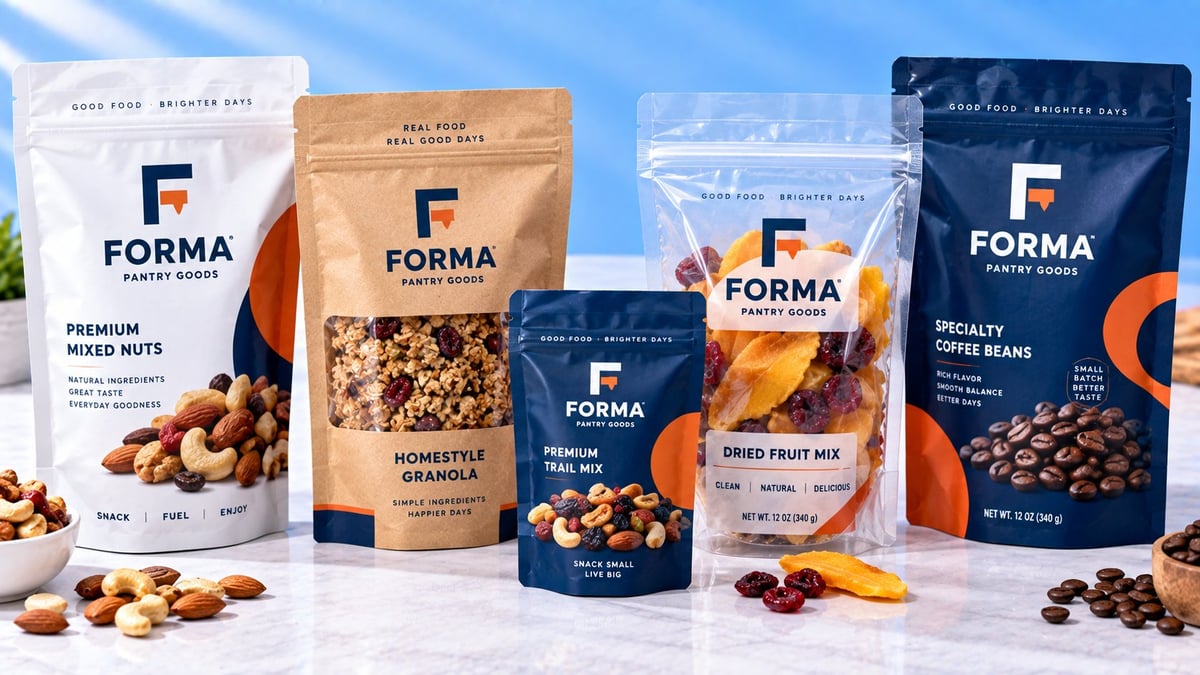
Custom Stand-Up Pouches
Pouches that stand and present on the shelf.
View & Configure →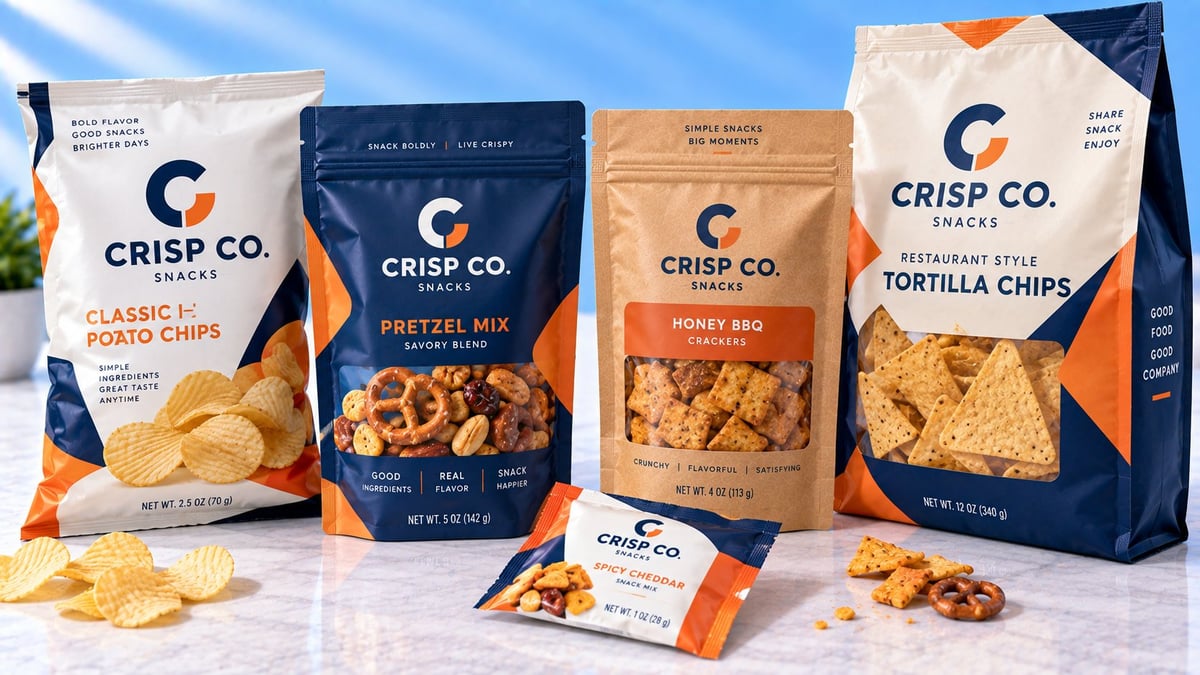
Custom Snack Pouches
Flexible packaging for retail food.
View & Configure →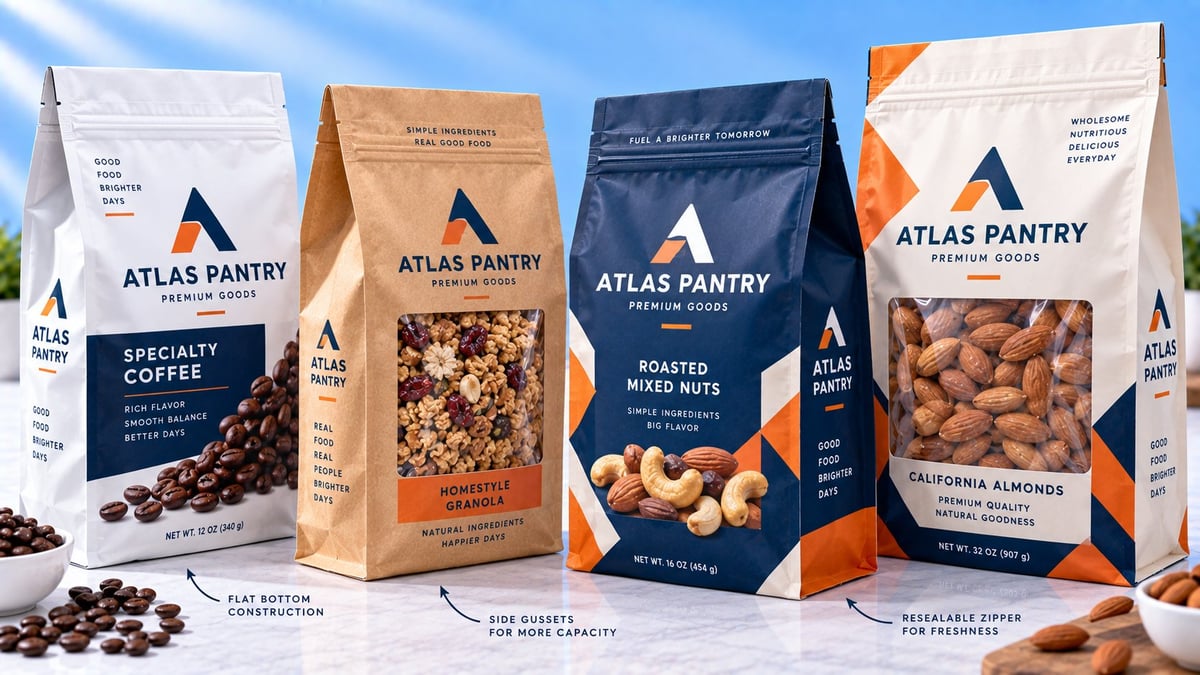
Custom Flat-Bottom Pouches
Box-style base for a premium shelf presence.
View & Configure →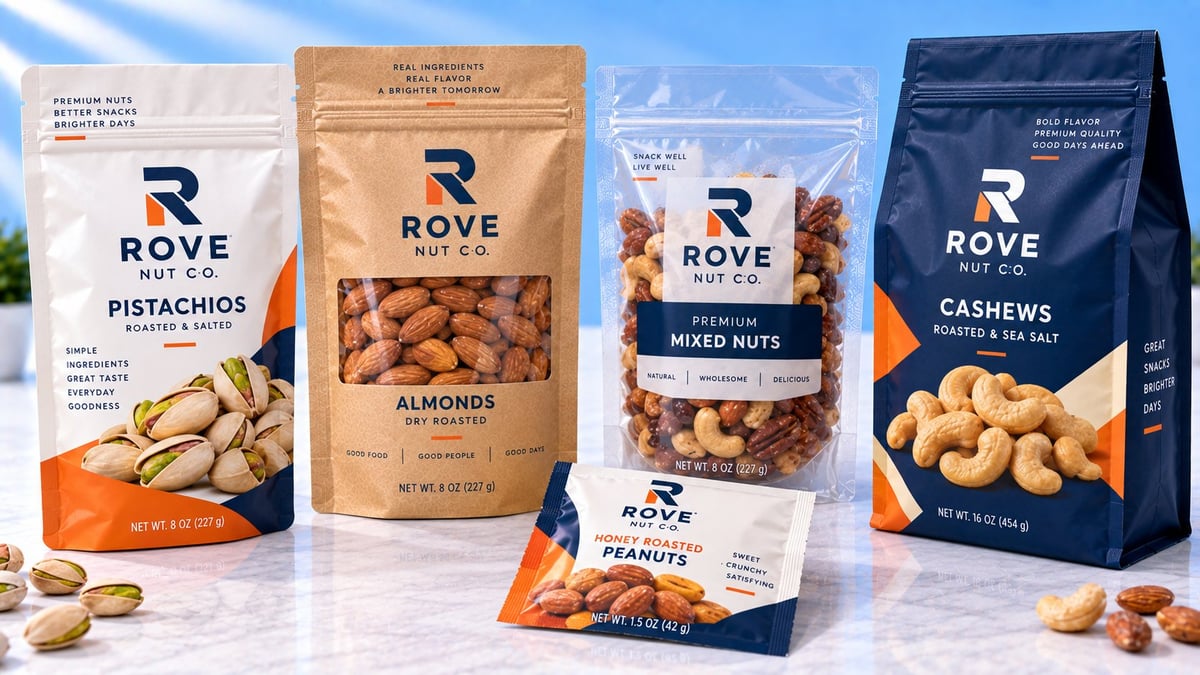
Custom Nut Pouches
Barrier pouches for nuts and trail mix.
View & Configure →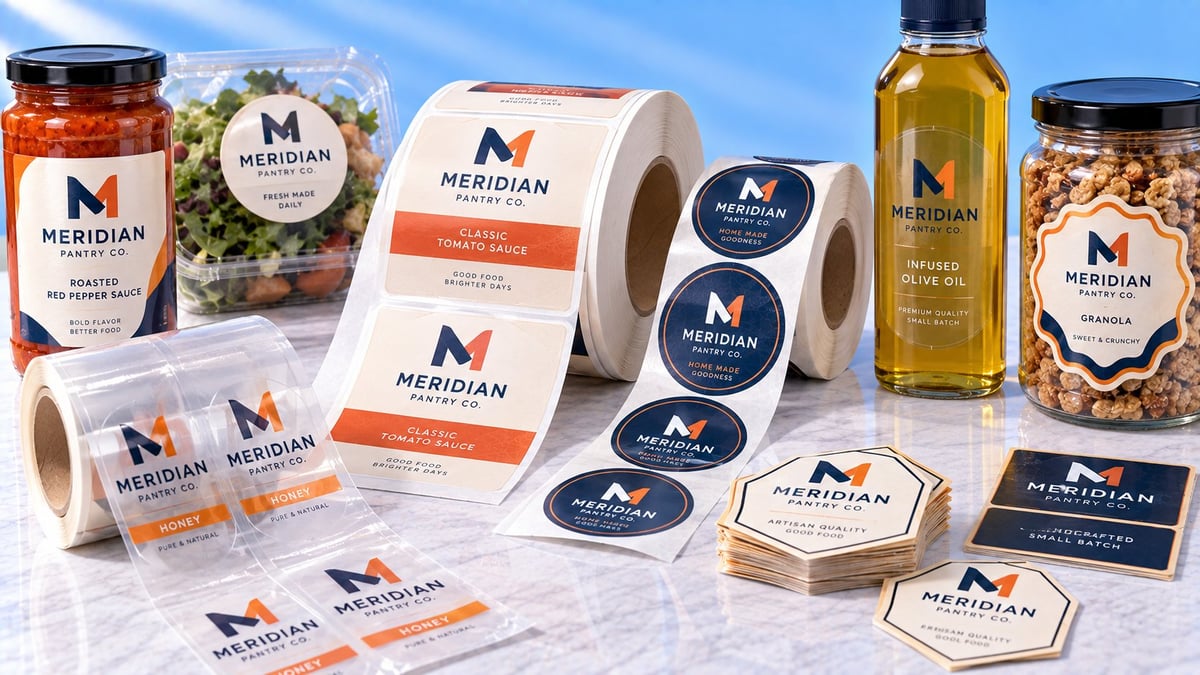
Custom Food Labels
Branded labels for packs, jars, and containers.
View & Configure →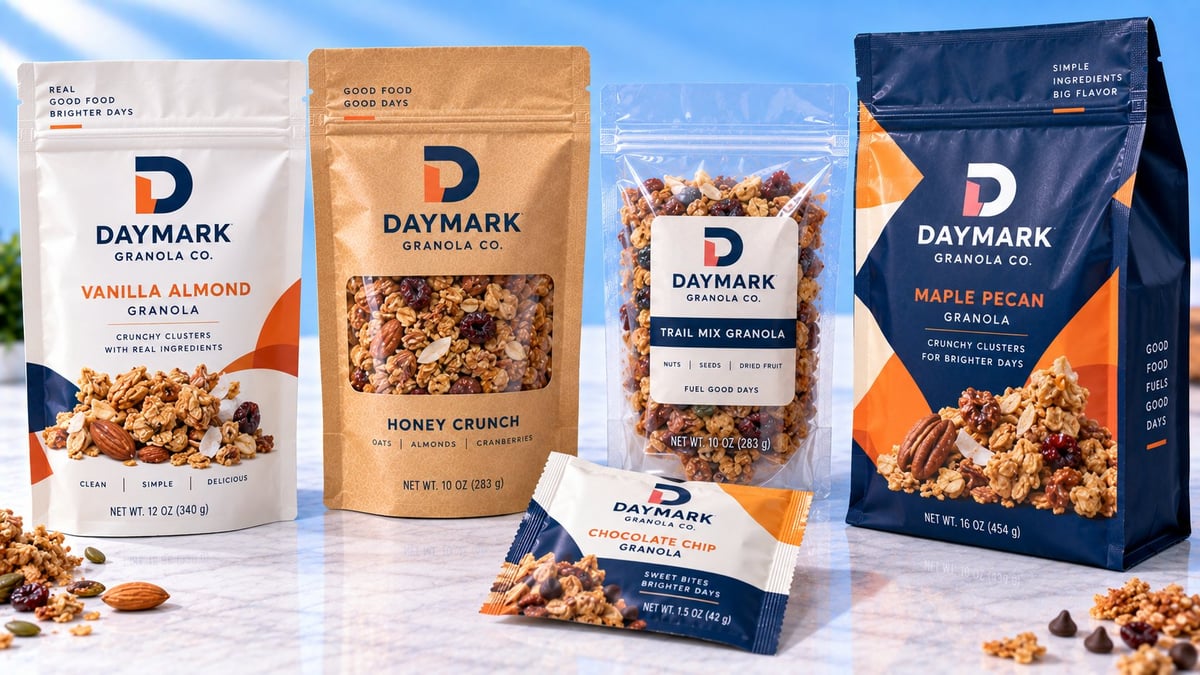
Custom Granola Pouches
Printed pouches for granola and clusters.
View & Configure →
Ready to Put Your Brand on Custom Frozen Food Bags?
Configure your packaging and we'll prepare a free digital mockup and custom pricing for your order.