
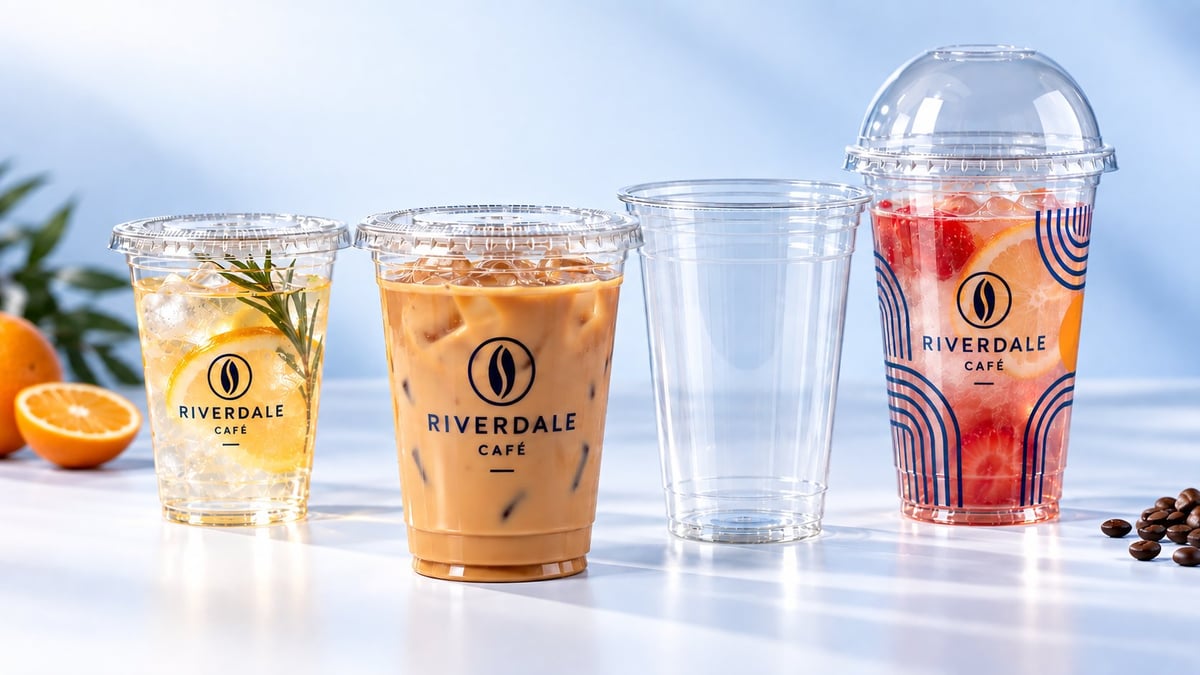
Custom PET Cold Cups
The core cold drink cup, clear so the drink is the presentation.
View & Configure →Packaging for drinks-led businesses: cups and lids matched as a set, plus bottles and carriers, for juice bars, smoothie shops, bubble tea and beverage brands.
A beverage business is different from a café in one specific way: the drink is the whole product rather than one item on a menu. That changes the packaging decision because the cup is not supporting a food order, it is the entire presentation, and the drink inside it is visible the whole time.
It also makes the cup-and-lid pairing the central decision rather than a detail. A juice bar running four drink sizes and three toppings is choosing four cup sizes and the lids that suit each one, and getting that wrong is the most common and most expensive mistake in this category.
This collection is for businesses where drinks are the product: juice and smoothie bars, bubble tea shops, beverage brands, and cafés whose cold menu is a business in itself. It covers the cups and lids first, then the closures and carriers that a drinks operation depends on.
A drinks menu is a grid: several sizes against several lid options. A lid that suits one size may not seat on another, and toppings change which lid is right. Confirming the whole grid as one matched specification is what keeps a drinks operation running, and it is the reason cups and lids are quoted together here.
Clear PET is the standard for cold drinks precisely because the drink sells itself: a layered smoothie, a fruit tea or an iced coffee is the product, and a cup that hides it is working against you. That is also why the printed area is designed around the drink rather than over it.
Bubble tea, whipped drinks and anything piled needs a dome lid rather than a flat one, and the dome has to suit the cup size. Topping menus drive lid decisions more often than drink volume does.
Beverage businesses change menus more than almost anyone else, which means packaging decisions get revisited. Building the cup and lid set so a new drink fits an existing size is what stops every seasonal launch becoming a packaging project.
A beverage business that also sells bottled or jarred product is running two packaging problems: a cup in someone's hand, and a bottle on a shelf. They are specified differently and both belong in the same program.
Multi-drink orders are normal in a beverage business, and a carrier is what makes them portable and turns the order into a branded object moving through the street.
Cold cups and lids first, then hot drinks, accessories and retail beverage packaging. Each card opens the product page to configure size and print.
The core cold drink cup, clear so the drink is the presentation.
View & Configure →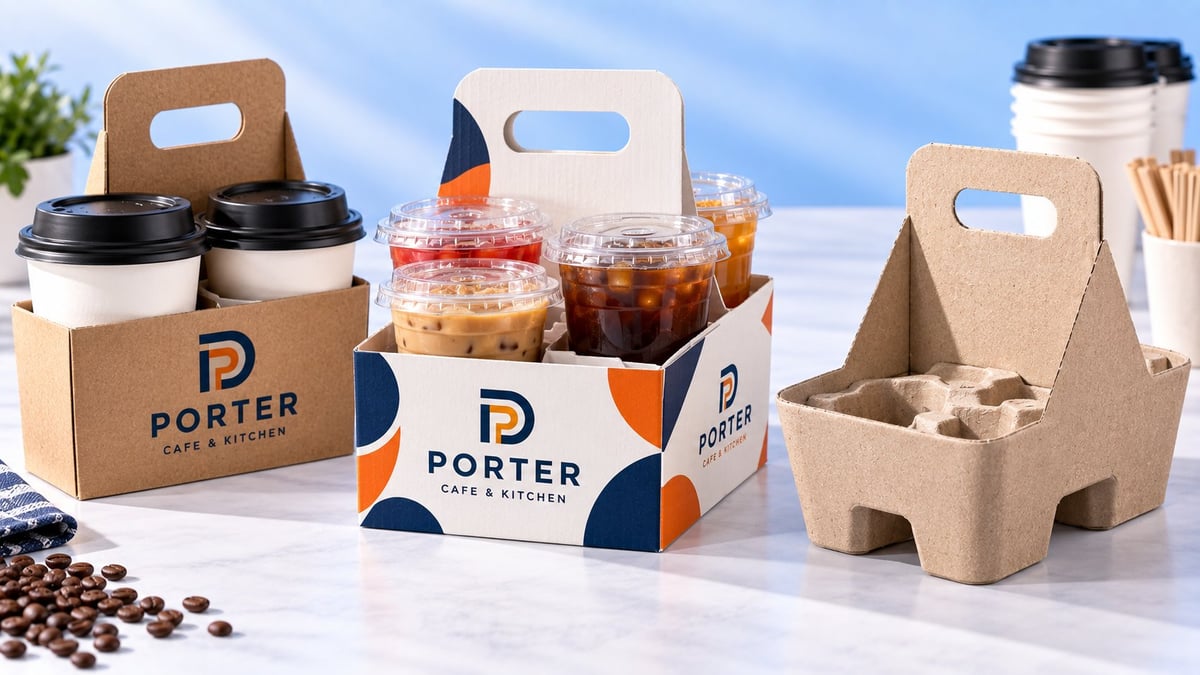
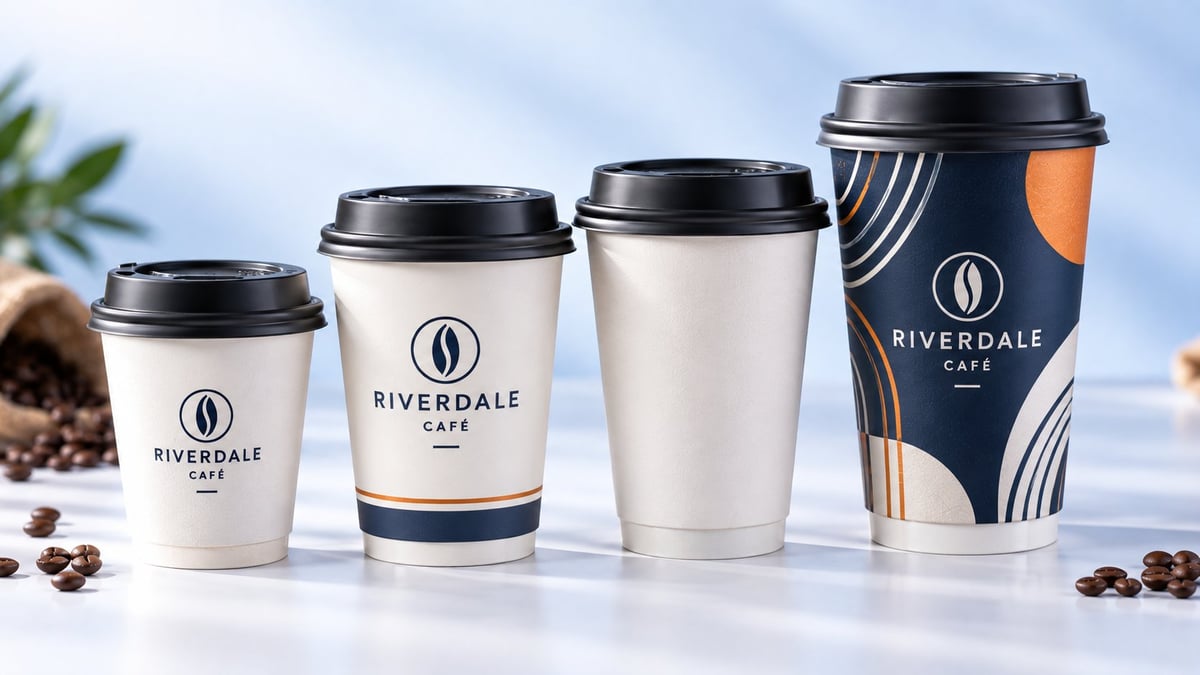
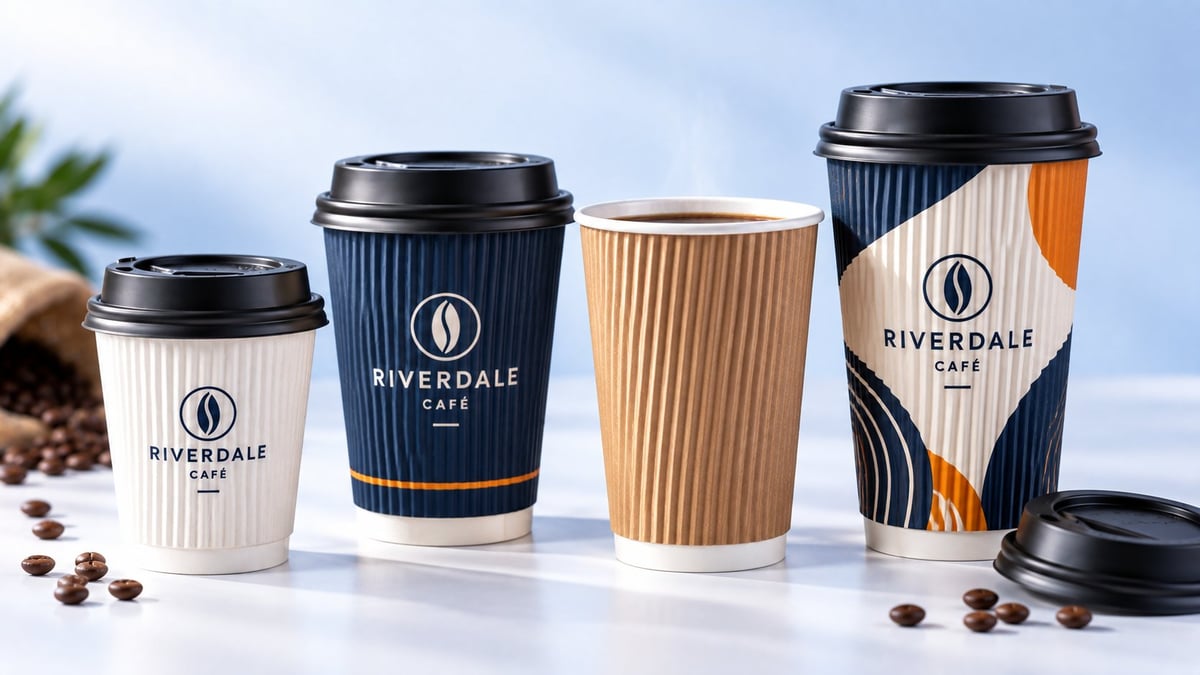
Hot drinks where the cup itself is part of the presentation.
View & Configure →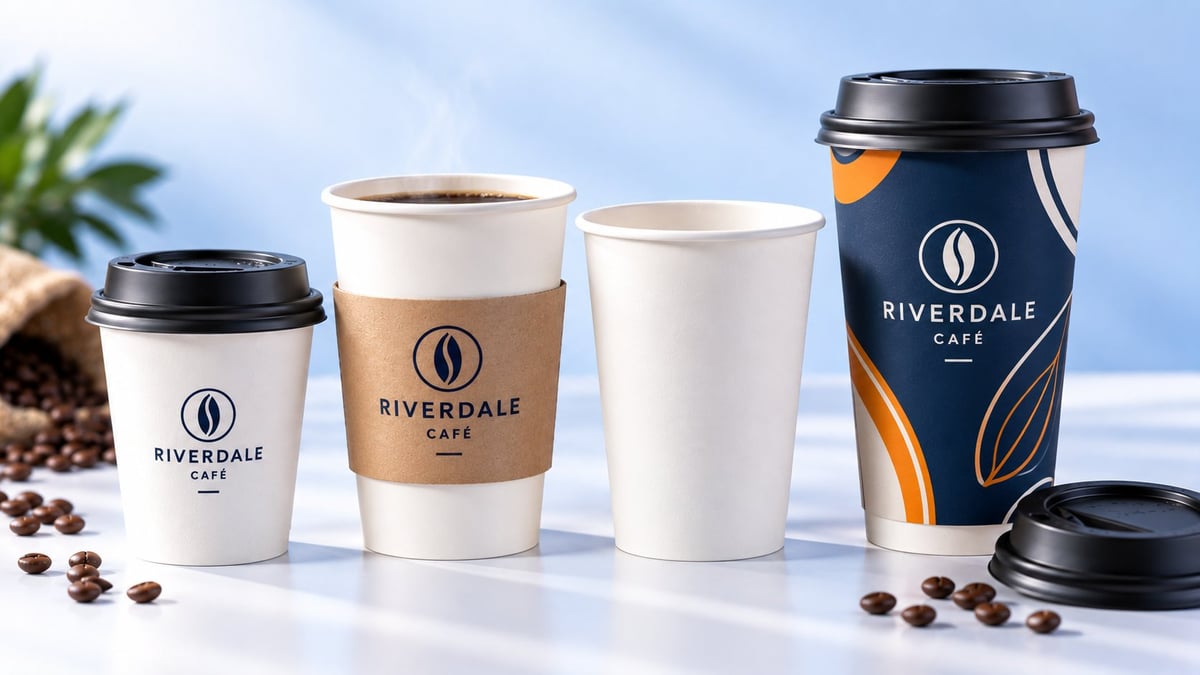
This is the core of a beverage program and the part worth getting exactly right. Cold drinks take clear PET; the lid follows from what sits on top of the drink. Flat keeps the profile clean and stacks well, dome gives headroom for toppings and whipped drinks, and sip suits a drink drunk through the lid. Specify the grid rather than the individual pair.
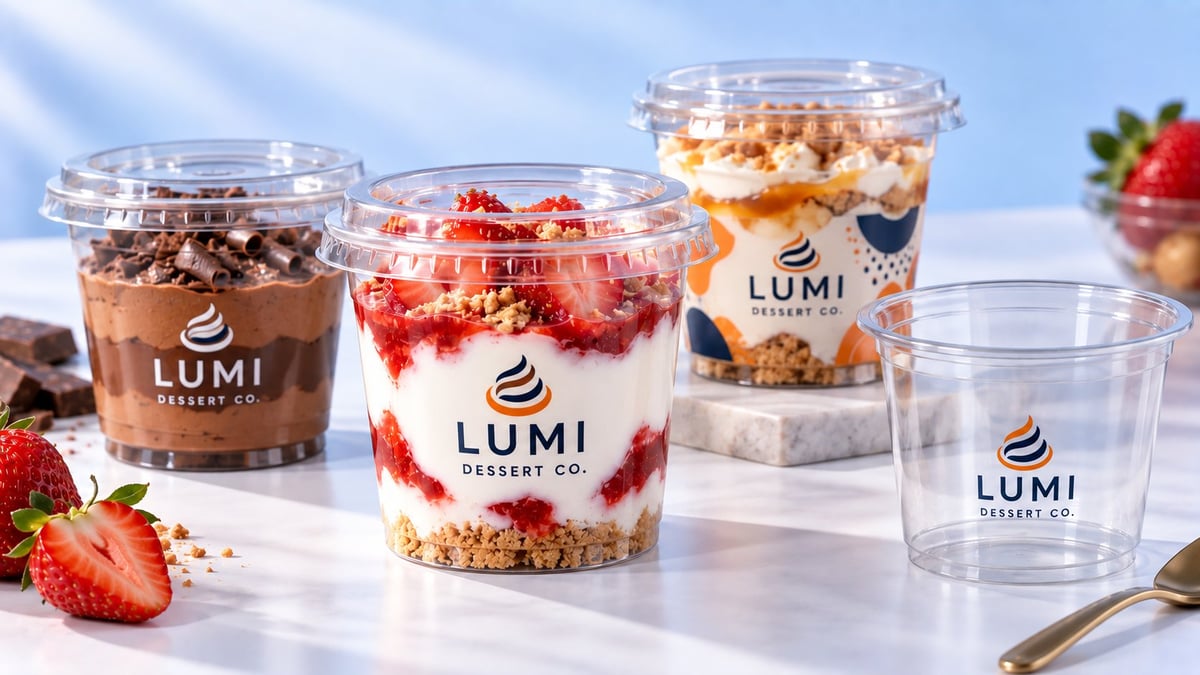
A beverage menu often runs wider than drinks: smoothie bowls, frozen desserts and larger sharing formats all use cups that are not standard drink sizes. These are usually specified alongside the drink menu rather than separately, because the same customer buys both.
A beverage business serving hot drinks is running a second construction entirely, because hot drinks need an insulated paper wall rather than clear PET. Double-wall and ripple-wall cups give the full outer wall to artwork and need no sleeve.
In a drinks business, multi-drink orders are the norm rather than the exception. A carrier is what makes them portable, and it is the cheapest way to get your brand moving through the street once the drinks have left.
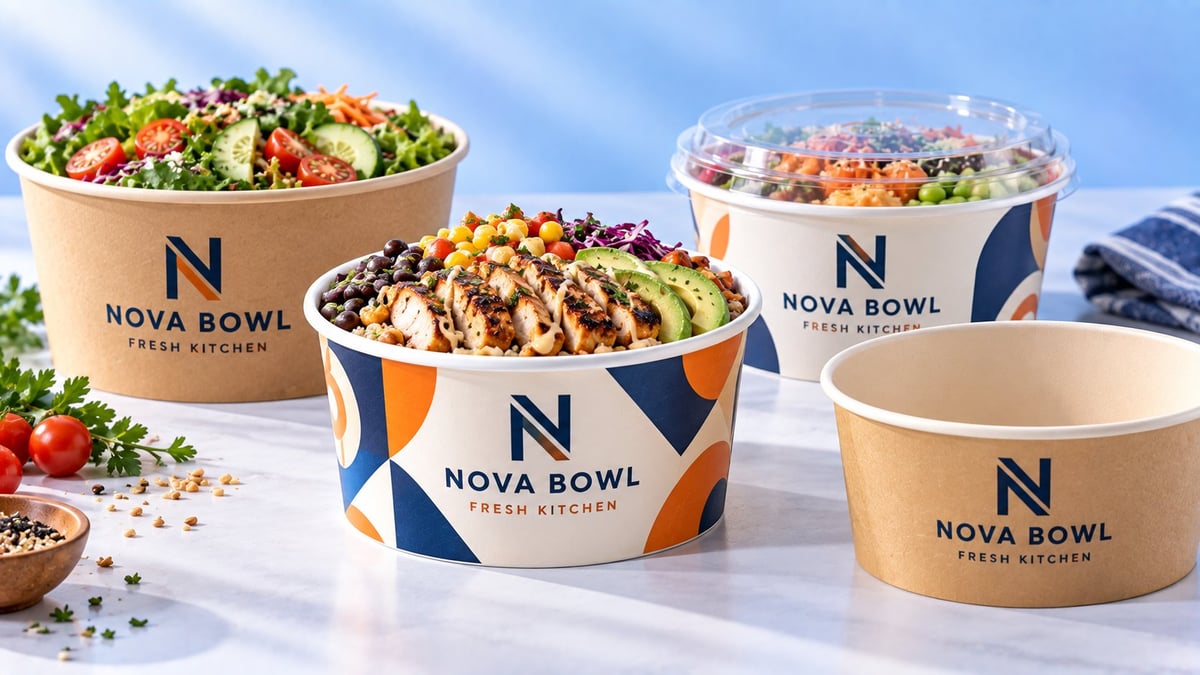
If you bottle or jar anything for retail, that is a different packaging problem from the counter: it has to stand on a shelf, carry a closure that seals, and hold product information. It is specified on its own terms rather than as a cup accessory.
Come with your menu rather than with a single product in mind, because the useful specification is the grid: which sizes you sell and which lids each one takes. That is what we quote against, and it is what stops a seasonal launch becoming a packaging project.
Cups and lids are confirmed as a matched set before quoting. If you already buy lids elsewhere, send us the cup you use and we confirm the fit. If you are replacing both, they are specified together as one order.
Beverage businesses reorder more often than most, because volume is high and menus change. Tell us which items you reorder predictably so the repeat can be priced as a repeat rather than a first run.
Yes, and that is the right way to buy them. Send us the sizes on your menu and the lid styles you need and we confirm the whole grid as one matched specification rather than pair by pair.
When something needs headroom: whipped drinks, boba and piled toppings. If your topping menu drives the decision rather than the drink volume, tell us and we will specify the lids around it.
They are different products for different jobs. Cold drinks are served in clear PET so the drink is visible; hot drinks take an insulated paper wall. A drinks business serving both is running two cup programs, and both are specified here.
Yes, and it is a separate specification from the counter packaging. A bottle needs a closure that seals and a label that carries product information, so it is quoted on its own terms alongside the cup program.
Artwork can change between runs, which matters for a seasonal menu. Tell us at the quote stage which items change and how often, so the pricing reflects your real pattern rather than a single static design.
Tell us the sizes you sell and what sits on top of each drink. We will confirm the cups and lids as one matched set and prepare a digital mockup and pricing for the whole program.
Free digital mockup. Nationwide delivery from YaSeen WholeSale.