
Custom Dessert Cups
Small-format cups for puddings, parfaits, and layered desserts
- FREE Standard Shipping Within the Contiguous U.S.
- Capacities from 2 oz tasters to 16 oz take-home formats
- Clear and paper formats for layered or scooped desserts
- Full-wrap artwork plus printed lids
- Suited to cold cases and grab-and-go display
- Free digital mockup before production
Build your custom dessert cups
Additional Customization
Artwork
Optional — not required to order.No artwork needed today. Send your enquiry and our team will contact you to collect your design.
How Your Custom Order Works
Step 1: Choose Your Cups
Select your cup size, quantity, lids, and printing preferences.
Step 2: Review Your Order
Check your configuration and pricing or request a custom quote.
Step 3: Approve Your Artwork
Review your digital mockup before production begins.
Step 4: Production & Delivery
Production begins after the required approvals and payment arrangements are complete.
Your order
10,000 units · 2 oz
- Would you like matching lids?
- No lids — product only
Request a custom quote
10,000 units cups at 2 oz is priced by our team rather than published online. Send the configuration and we will confirm the total.
Production & delivery
- Production
- 10–15 business days
- Shipping
- 3–4 weeks after dispatch
Estimates after final artwork approval, not guaranteed dates.
Free digital mockup first
Send your logo or finished artwork and we prepare a mockup before anything is manufactured.
Estimated production: 10–15 business days after final artwork and order approval.
Estimated standard shipping: typically 3–4 weeks after dispatch.
Standard shipping is included in the price for eligible orders shipped within the contiguous United States. Express, Alaska, Hawaii and special freight are quoted separately.
Sales tax is calculated on the checkout page from your delivery address.
We review your files, send a free digital mockup, and begin production only after you approve the design and the quote.
How artwork approval works →- Matching lids confirmed for your selected cup specifications
- One team for cups, lids, artwork, and repeat orders
- Standard shipping included for eligible contiguous U.S. orders
At a glance
- Capacities
- 2 oz to 16 oz, other capacities by request
- Material
- Clear or paper, sized for cold display
- Lid
- Matching lid, printed where the cup wall stays clear
- Min order
- Confirmed with your quote
About Custom Dessert Cups
A dessert cup holds a dessert that has been assembled rather than served. Pudding, mousse, parfait, trifle, panna cotta, and layered fruit desserts are all built in the container (piped or spooned in stages) and that construction is the reason the container is usually transparent. The layering is the product; hiding it behind opaque paper throws away the thing the customer is being sold.
That makes these cups a different proposition from an ice cream cup. An ice cream cup holds a scoop and is mostly a print surface. A dessert cup is often a display vessel, where a printed lid, a printed sleeve band, or a printed label does the branding work while the cup itself stays clear.
Many businesses do both: a clear cup to show the layers, and a printed lid or label to carry the brand. It gives you the visual appeal and the branding without choosing between them.
A dessert cup also tends to be more photographed than an ice cream cup, and for a different reason. The ice cream cup is in the photo as a wrapper for the scoop; the dessert cup is in the photo as the frame for the layers. The handle of the spoon, the rim of the lid, and the visible fruit or crumble at the top of the cup are all part of the image. A brand that prints the cup well is therefore photographed well, and a brand that doesn't is hidden behind a lid only the holder sees.
Matching Capacity to Dessert
Start from the dessert you sell, not from the cup size.
| Capacity | What It Typically Holds | Order This One When |
|---|---|---|
| 2 oz | Tasters, samples, shooter-style desserts | You do a tasting flight, a sample, or a small individual serve |
| 3 oz | Small individual serve, pot de creme | Your dessert is rich enough that a small serve is the whole portion |
| 4 oz | Standard single dessert, mousse, panna cotta | You want one everyday size for a straightforward dessert menu |
| 6 oz | Layered parfait, trifle | Your desserts are built in visible layers and need height |
| 8 oz | Generous single serve, cheesecake | Your portions are large, or the dessert is a meal replacement |
| 12 oz | Large or sharing dessert | You sell a two-person dessert or a family format |
| 16 oz | Take-home pack, family format | The dessert goes home rather than being eaten at the counter |
| Other | Any capacity your menu requires | Your serve falls between these: tell us the fill and the layers |
Common market capacities are listed. Other sizes are made to order rather than held in a fixed catalogue, so any capacity outside this range can be requested.
Cost per unit falls as the run grows, so we quote across volume tiers rather than one flat figure. Pricing for your capacity, material, and print is confirmed with your quote.
Dessert Cup Capacity Guide
Dessert cup capacity is set by the serve, and the serve is set by the dessert. A two-ounce panna cotta and an eight-ounce layered parfait are not the same container problem even though both are dessert cups: one is a mould that holds a set shape, the other is a display vessel that has to show structure through its side.
The capacities below are the ones most often ordered. They are not a limit. Smaller taster formats and larger take-home packs are both commercially available, and the configurator takes any capacity you enter so we can confirm what your dessert actually needs rather than steering you into a size that does not fit the menu.
One note on measuring: fill weight and capacity are not the same figure for a layered dessert. Cream, fruit, and crumb layers sit differently in a cup than liquid does, so a dessert that weighs six ounces may not fill a six-ounce cup. Tell us the layers and we will size against how the dessert actually fills.
Clear vs Paper
The choice is usually driven by whether the dessert is worth looking at.
Read the full detailsHide details
Clear and paper do different jobs, and it is not simply a matter of one being better. A clear cup exists so the dessert is visible, which is why parfaits, trifles, and fruit desserts are almost always sold in one. A paper cup exists so the surface can carry a full print, which suits a scooped dessert where the container has nothing to show.
There is a third case worth knowing: coated paper. Some desserts hold moisture, and a coating changes how the container behaves against that. Ask us about it for your specific dessert rather than assuming, because the answer depends on what is in the cup.
Choosing the Cup Material
When the look is the selling point
Layered, fruit-topped, or multi-color desserts sell on appearance. Clear keeps the layers visible and the container becomes the display.
When the print is the selling point
A single-tone or scooped dessert has nothing to show through the wall. Paper gives you the whole surface for artwork instead.
When the dessert holds moisture
Some fillings sit against the container differently than others. Coated paper changes how the wall behaves, and whether you need it depends on your dessert.
The combination most shops land on
A clear cup with a printed lid. The layers stay visible and the branding still lands on the surface the customer looks at while holding it.
Branding a Clear Cup
A clear cup cannot carry a full-wrap print of its own, so the branding moves to the components around it. There are several ways to do it, and they combine well.
Read the full detailsHide details
- Printed lids: the largest and most-seen surface on a clear dessert cup.
- Printed labels: applied to the cup wall or lid, and easy to change seasonally.
- Printed sleeves or bands: a wrap that carries the brand while leaving the layers visible.
- Printed spoons. The utensil is part of the presentation in grab-and-go service.
How to Choose a Cup Size
Cup size for a dessert cup is decided by the build, not by a standard portion label. Two kitchens can put the same dessert in different cups and both be right, because what actually determines the size is how the dessert is layered, what sits on top of it, and how it is served. The questions below are the ones that settle it.
The sizes listed on this page are the range most often ordered. Which of them suits your dessert, and whether a size outside that range is available, is confirmed with your quote rather than assumed from a portion name.
- Intended portion: how much dessert one customer is expected to eat in a single serving. This is the starting point, and it is a decision your kitchen makes rather than one the cup makes for you.
- Number of layers: a dessert built in several distinct layers needs vertical room, so the layer count often matters more than the total volume.
- Toppings and garnish: anything that sits above the rim (whipped cream, crumb, fruit, a piped swirl) needs headspace, and may point you to a dome lid rather than a taller cup.
- Required headspace: the gap between the top of the dessert and the lid. Too little and the lid contacts the topping in transit; the right amount is confirmed against your build.
- Presentation: whether the dessert is meant to be seen as a stack of visible layers, and how much of that stack you want the customer to see before they open it.
- Service format: whether the cup is handed over a counter, carried out, or merchandised for self-selection. Handling and display both affect the choice.
- Takeout versus immediate service: a dessert eaten on site and one that travels have different needs for closure and stability.
- Closure: lid fit is confirmed for your specific cup and lid together, since a nominal size shared between two suppliers does not guarantee a seal.
Cold Case & Grab-and-Go
Dessert cups are frequently merchandised in a refrigerated display case or a grab-and-go cooler rather than handed over a counter. If that is how your product is sold, it is worth saying so in your project notes: case packing, label placement, and lid choice are all affected by how the cup is stored and displayed before it is sold.
Read the full detailsHide details
Dessert Cups vs Ice Cream Cups vs Paper Bowls
Three formats sit on a dessert menu, and each suits a different build. The differences are about whether the dessert is layered or scooped, and whether visibility of the dessert itself is part of the appeal.
Read the full detailsHide details
| What changes | Dessert Cups | Ice Cream Cups | Paper Bowls |
|---|---|---|---|
| Construction | Clear plastic or paper, sized for a built dessert | Paper cup with a rolled rim, sized for a scoop | Deeper paper bowl, sized for a larger serving |
| Dessert itself visible | Yes, by design | Hidden under the scoop | Mostly hidden under the contents |
| Branded surfaces per serving | Lid, label, sleeve band, spoon: the cup wall stays clear | Cup wall and printed sleeve: the cup carries the brand | Cup wall and lid: the bowl carries the brand |
| Print on the format | Limited print area, branding migrates to the lid and label | Full wrap on the cup wall | Full wrap on the bowl wall |
| Typical service | Layered parfaits, trifles, mousses, puddings, refrigerated display | Scooped ice cream, soft serve, frozen yogurt | Açaí bowls, breakfast bowls, shareable portions |
| Cost position | Unit cost depends on size and material; clear plastic and paper formats differ in price | Lowest unit cost among the three | Higher unit cost for the larger format |
Coordinating with the Rest of the Dessert Menu
Most dessert shops do not order dessert cups alone. The same order typically includes printed napkins for the counter, paper bakery bags for cookie or pastry add-ons, food labels for flavor or allergen callouts, and printed sleeves or bands for the cups themselves. Coordinating these as one project means one supplier, one mockup, one production run, and one delivery.
Read the full detailsHide details
For a coordinated program, the dessert cup is the anchor. Its lid and label artwork are decided first, and the napkin, label, and bag are designed around the same palette so the brand reads as one line at the counter. Ask for a coordinated mockup if you are ordering more than one of these products in the same window.
How Pricing Works
Custom packaging is quoted per project rather than sold at a list price, because the cost depends on the material, the size, how much print coverage your artwork uses, any additional features, and the quantity you run.
Cost per unit falls as the run grows, so we quote across volume tiers rather than one flat rate. Send your configuration and a specialist returns pricing for that exact combination, showing what the figure covers: product, printing, accessories, freight, and artwork setup.
Minimum Order Quantity
Minimums shift with the cup or lid style, the material, and the print setup your artwork needs, so the number is confirmed on your quote. A run that reuses an existing plate or die can start lower than one that cannot.
Tell us your target quantity in the configurator, and mention your target size in the notes if it is not one the configurator offers. We will confirm both the size and the minimum for your build.
Artwork Requirements
For the cleanest print result, supply vector artwork. Vector files scale to any size without losing edge quality, which matters when the same logo prints across a range of products in your line.
- Preferred: AI, EPS, SVG, or PDF, vector formats.
- Acceptable: PNG or JPG at high resolution.
- If you only have your logo, we can prepare the packaging layout for you.
- A color reference (hex code, Pantone number, or a physical sample) helps us match accurately.
Production & Delivery
Nothing here is pulled from a shelf. Your cups and lids are manufactured after you approve the design and pricing. The sequence is: configure your specifications, receive a free digital mockup, approve the design and pricing, manufacturing begins, then the completed order is delivered nationwide.
Lead time is quoted against your specific order, because it moves with the quantity and the current manufacturing load. Free standard shipping is included within the contiguous 48 states on eligible orders; express, Alaska, Hawaii, the U.S. territories and international freight are quoted with your order.
Reordering is simpler than a first order, because your specifications and approved artwork stay on file against your project. Confirm the previous configuration and quantity with a specialist, reference your project, and you do not need to rebuild the specification.
Who Orders Custom Dessert Cups?
These are the businesses that most often order this packaging. We have it produced to your specifications regardless of your size.
Frequently Asked Questions
The questions specific to Custom Dessert Cups, answered below. A handful of questions apply to every product we supply, and those live on the main FAQ page so they stay in one place.
Ordering, minimums, artwork and shippingWhat can I serve in a dessert cup?+
Should I choose clear or paper?+
How do I brand a clear cup?+
What sizes do dessert cups come in?+
How do I pick a size for my dessert?+
Does a 6 oz dessert weigh 6 oz?+
Can I print my logo on dessert cups?+
What is the minimum order for dessert cups?+
How much do custom dessert cups cost?+
Can these be displayed in a refrigerated case?+
Do dessert cups ship nationwide?+
What logo file works best on dessert cups?+
Production Time and Shipping Time Are Different
Production time is the time required to manufacture your packaging. Transit time is the time required to transport it to you. These are separate: a production window is not a delivery date, and every project's timeline is confirmed with your final quote.
Production
Estimated Production Time: 10–15 Business Days
Production begins after final artwork and order approval. Some orders may finish sooner; complex or high-volume orders may take longer.
Production times may vary by product, quantity, and customization.
Standard shipping
Estimated standard shipping time: Typically 3–4 weeks after dispatch.
Transit times vary by product, destination, and shipping conditions.
Express
Best when speed matters most. Faster transportation may be available depending on the product, quantity, manufacturing location, shipment size, destination and carrier availability. Express transportation can cost significantly more than standard, and an exact transit time is confirmed with your freight quote.
Standard
Included within the contiguous 48 states on eligible orders. Standard freight is generally the more economical option when your schedule allows additional flexibility. Actual transit time is confirmed with your quote, and standard shipping to Alaska, Hawaii, the U.S. territories and international destinations is charged separately.
Large-volume freight
Larger orders do not move as ordinary parcel shipments. They travel by freight instead, and the right method depends on the order size, the destination and what the shipment requires. YaSeen selects the method for your project and quotes it accordingly.
Not sure
If you are unsure, our team will recommend the option that best fits your deadline, quantity and destination once your project has been reviewed.
Free standard shipping is included within the contiguous 48 states on eligible orders. Express, Alaska, Hawaii, the U.S. territories and international freight are confirmed with your final quote. Shipping & delivery details
See Your Packaging Before Production
A free digital mockup is available after you submit your artwork, so you can review your branding on the selected packaging configuration before production. A custom physical sample is optional and separate, and is available after artwork approval.
Free Digital Mockup
Review your artwork on the packaging configuration you selected before anything is manufactured.
- Free, and available once your artwork is submitted
- Your artwork placed on the packaging configuration you selected
- No production order is needed first
- Reviewed with you before anything is manufactured
Optional Custom Physical Sample
Optional, and only after you have approved the artwork. A sample is then manufactured from your approved design so you can evaluate the actual packaging before the production order.
- Artwork is approved before the sample is made, so the sample matches what you would actually run
- Approximately 2 to 3 weeks after artwork approval
- Approximately $150 to $250 depending on the product and configuration
- Credited toward your production order if you go ahead
The mockup is digital and free, and is prepared from the artwork you submit. The physical sample is the paid, optional step described above. How samples fit into an order
What Happens After You Submit
Submitting a project starts a review, not a charge. Here is the whole process from your submission to your delivery.
- 1
Project received
We receive your specifications, quantity, artwork and delivery information.
- 2
Project review
Our team reviews the packaging requirements and verifies production and delivery details.
- 3
Final quote
You receive confirmed pricing, applicable freight, payment terms and an estimated timeline.
- 4
Secure payment
If you choose to proceed, you receive approved payment instructions or a secure invoice.
- 5
Digital proof
Your artwork is prepared and reviewed for the packaging you selected.
- 6
Your approval
You approve the final digital proof, or request corrections.
- 7
Production
Production begins only after payment requirements are satisfied and final artwork is approved.
- 8
Shipping
Your completed packaging ships using the delivery method agreed on your quote.
- 9
Delivery
Your packaging arrives according to the confirmed project arrangements.
- 10
Reorder
Your approved specifications and artwork can be referenced to make future orders easier.
Why Businesses Order From YaSeen Packaging
Free Digital Mockups
Submit your artwork and review how your branding looks on the selected packaging configuration before production begins.
Direct Manufacturer Relationships
We work directly with packaging manufacturers to provide custom packaging built around your brand and order requirements.
Packaging Built Around Your Brand
Choose the size, configuration and printing that fit your product instead of building your brand around one stock option.
Multiple Packaging Products, One Partner
Build a coordinated packaging program across cups, bags, pouches, foodservice packaging, bottles and jars.
Artwork-to-Production Support
Send finished artwork, a logo or the brand assets you have. We help prepare the packaging layout and move the approved project toward production.
Minneapolis-Based, Nationwide Service
Based in Minneapolis and serving businesses nationwide, with a physical showroom and office for customers who want to meet us locally.
Packaging Guides
Planning your order? These guides answer the questions that come up most often.
Related Products
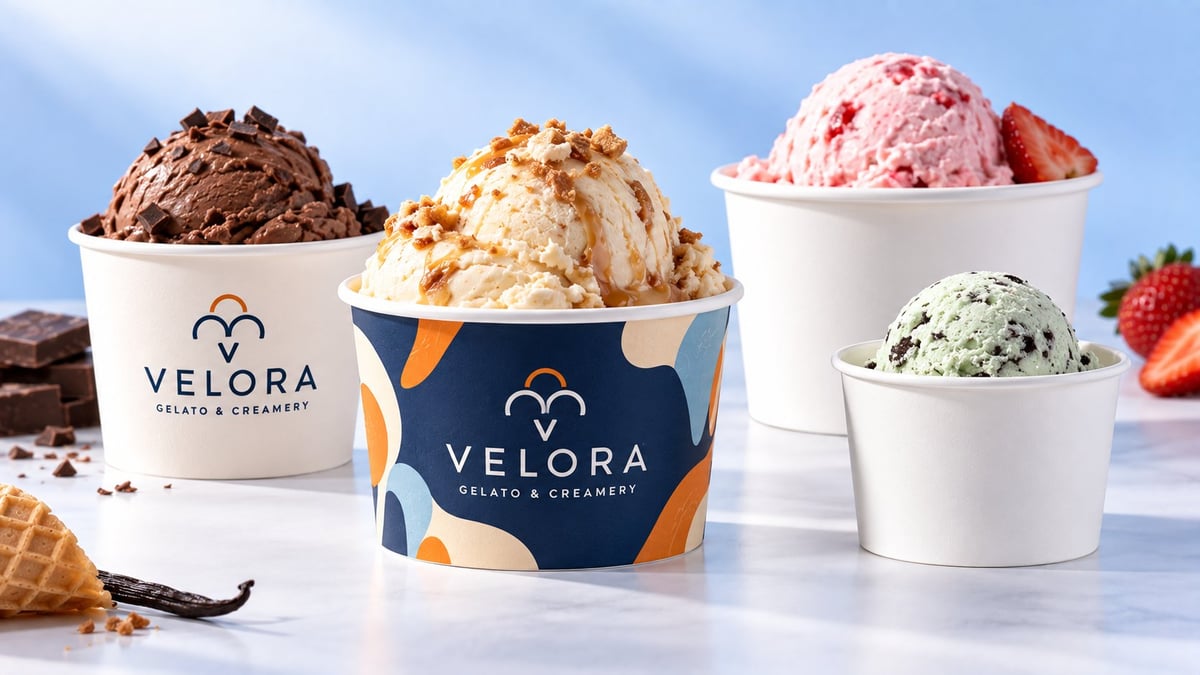
Custom Ice Cream Cups
Branded paper cups for scoops, soft serve, and gelato.
View & Configure →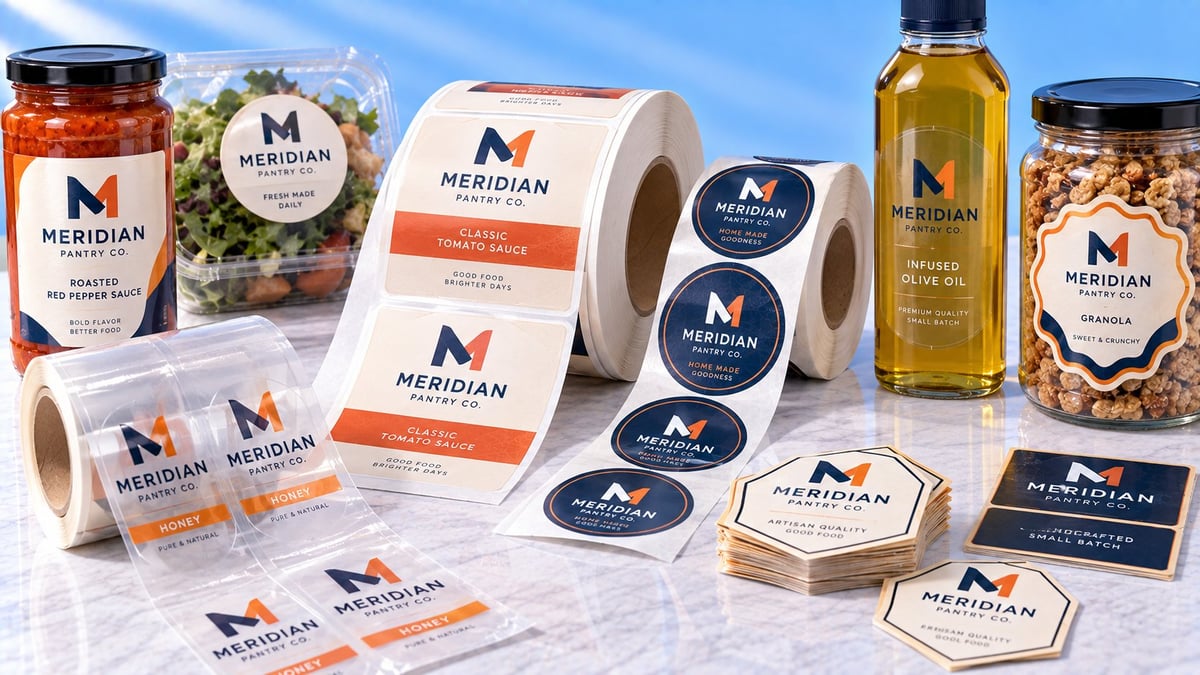
Custom Food Labels
Branded labels built for lids and containers.
View & Configure →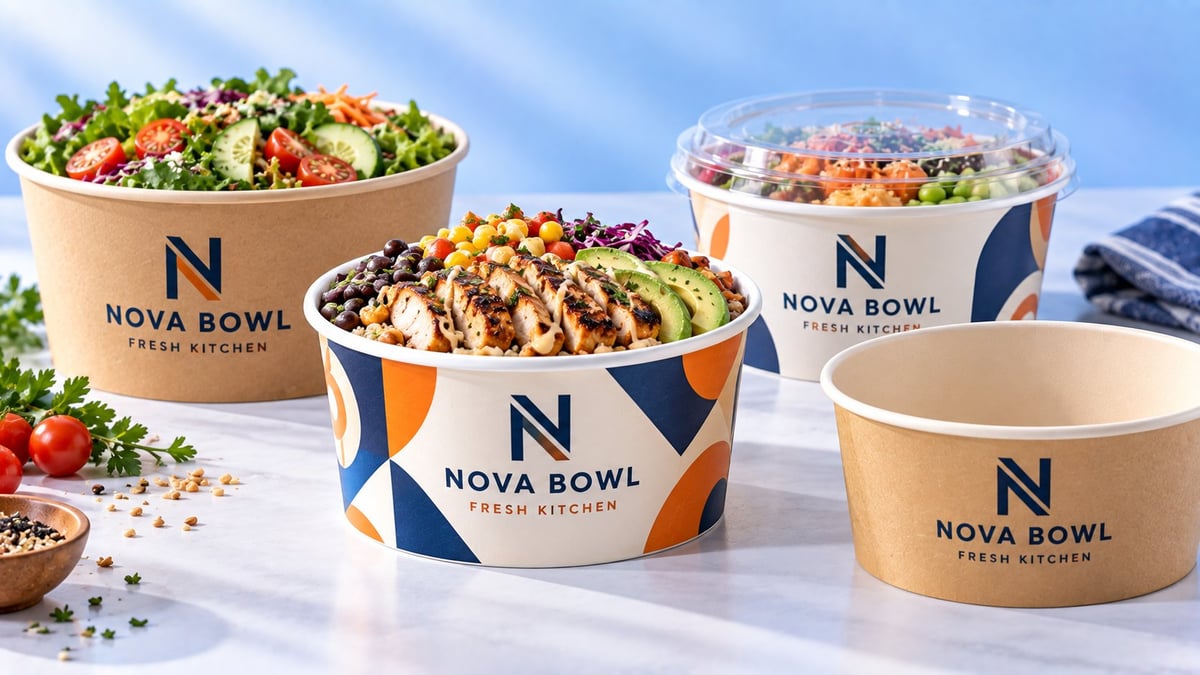
Custom Paper Bowls
Printed bowls for salads, grain bowls, and takeout.
View & Configure →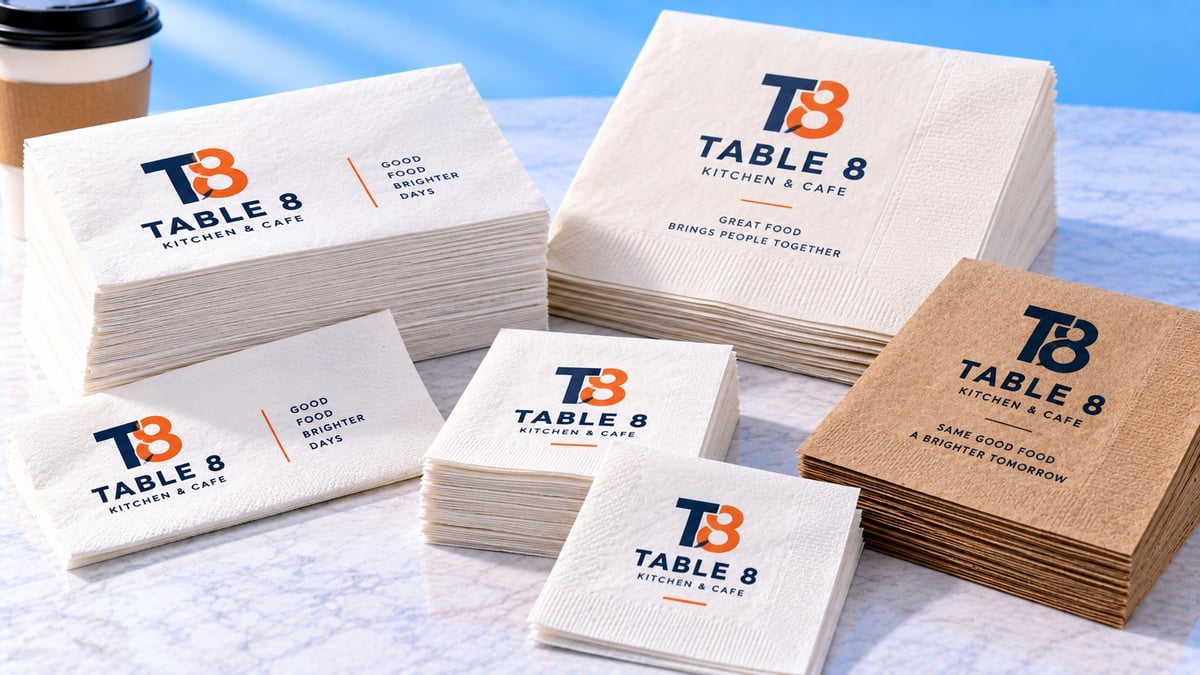
Custom Napkins
Printed napkins for counters and tables.
View & Configure →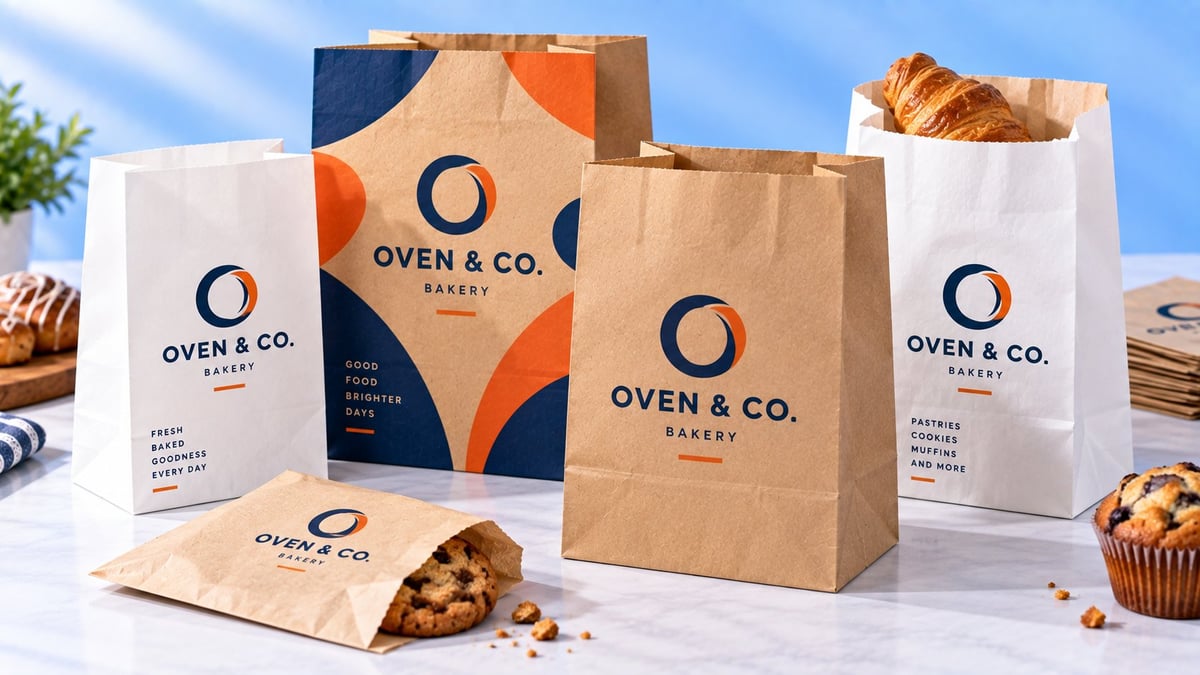
Custom Bakery Bags
Bags for pastries and counter bakery sales.
View & Configure →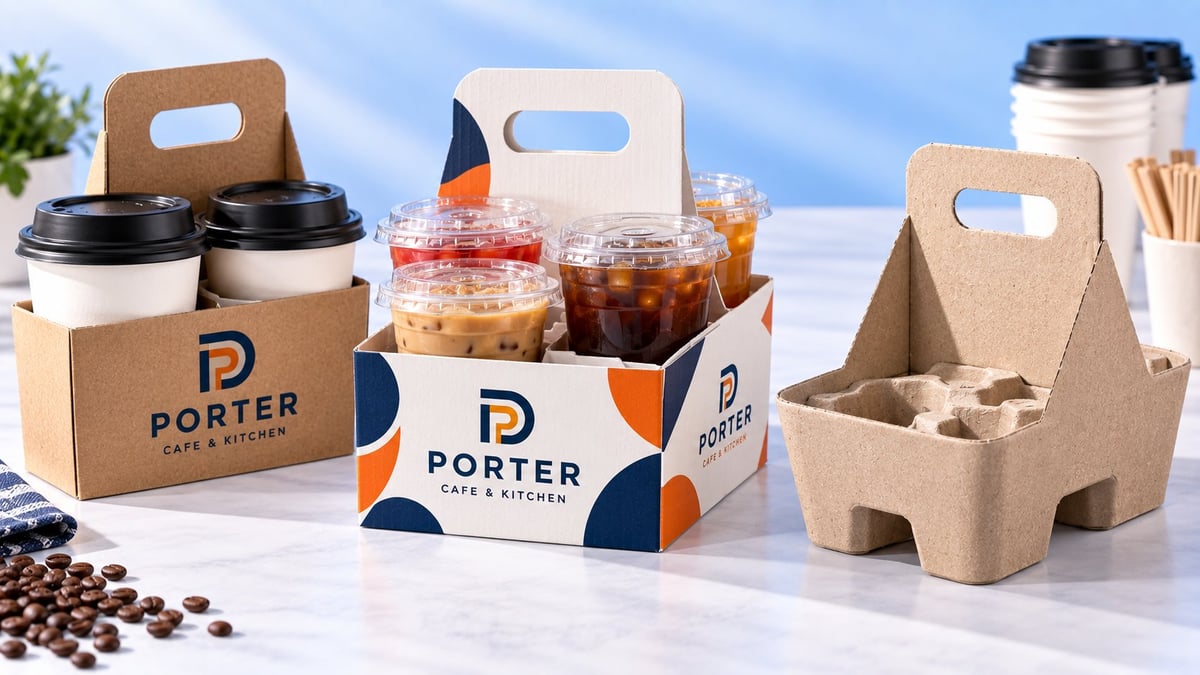
Custom Cup Carriers
Multi-cup carriers for takeout and delivery.
View & Configure →
Ready to Put Your Brand on Custom Dessert Cups?
Configure your packaging and we'll prepare a free digital mockup and custom pricing for your order.